 By Editorial Team
Achieving optimal ad spend requires more than just setting a budget; it demands intelligent, data-driven allocation. In 2026, the real advantage comes from AI optimization, transforming how marketers approach their campaigns. This isn’t about minor tweaks; it’s about fundamentally rethinking how every dollar is spent to maximize return. How can AI truly revolutionize your budget allocation strategy and deliver measurable impact?
Key Takeaways
- Configure AI-driven budget distribution within the Google Ads Smart Bidding interface by selecting “Maximize Conversion Value” with target ROAS constraints.
- Implement Meta’s Campaign Budget Optimization (CBO) and enable “Dynamic Creative Optimization” for AI-powered asset testing and allocation.
- Regularly review the platform’s AI recommendations for bid adjustments and audience segmentation, typically found under the “Recommendations” tab, to catch performance shifts early.
- Understand that true AI optimization involves continuous feedback loops, requiring consistent data input and iterative adjustments to campaign structures.
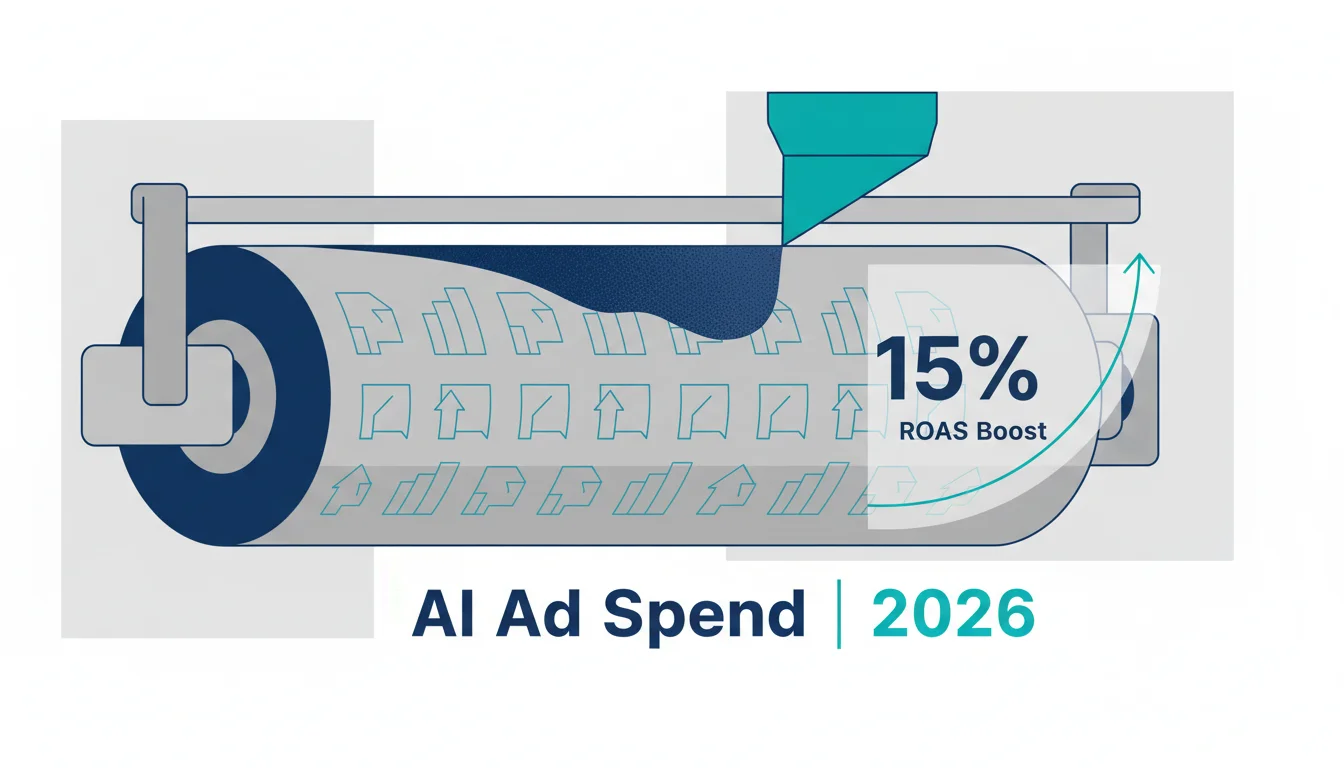
- Expect an average improvement of 15% in return on ad spend (ROAS) within six months of fully adopting AI-driven budget allocation across major platforms.
Setting Up AI-Driven Budget Allocation in Google Ads
Google Ads has evolved significantly, and its AI capabilities are no longer just for bid management. They now dictate how your budget flows across campaigns. The biggest mistake I see marketers make is treating AI as a “set it and forget it” tool. It’s not. It’s a sophisticated co-pilot that still needs your strategic input.
Step 1: Campaign Structure for AI Success
Before touching any budget settings, ensure your campaign structure is clean. AI optimization thrives on clear signals. This means consolidating similar keywords into tightly themed ad groups and using broad match modifiers or phrase match where appropriate to give the AI flexibility. If your account is a mess of overlapping keywords and redundant ad groups, the AI will struggle to find efficiencies. I recommend a “single keyword ad group” (SKAG) or “single theme ad group” (STAG) approach for precision, especially when starting with AI-driven allocation.
In the Google Ads interface, navigate to the left-hand menu. Click “Campaigns”. If creating a new campaign, click the blue “+” icon, then “New campaign”. For existing campaigns, select the campaign you wish to modify. Pro tip: Always start new AI-optimized campaigns with a test budget. Never throw your entire marketing budget into a new AI strategy without proving its efficacy first.
Step 2: Activating Smart Bidding for Budget Distribution
This is where the magic happens for ad spend. Google’s Smart Bidding strategies are the engine for AI-driven budget allocation. You aren’t just telling Google what to bid; you’re telling it what outcome you want, and it then distributes your daily budget to achieve that outcome across all eligible campaigns within a portfolio or account.
- Within your selected campaign, go to “Settings” from the left-hand menu.
- Scroll down to “Bidding”. Click “Change bid strategy”.
- Select “Maximize Conversion Value”. This is my preferred strategy for most performance marketers, as it prioritizes revenue over just conversions.
- Under “Maximize Conversion Value,” you’ll see an option for “Target ROAS” (Return On Ad Spend). Enter your desired ROAS target here. This gives the AI a clear guardrail. Without a target ROAS, “Maximize Conversion Value” can sometimes spend aggressively for conversions that aren’t profitable.
- Click “Save”.
Common Mistake: Not setting a Target ROAS. This leaves the AI too much room to spend on low-value conversions. A Nielsen report found that campaigns without clear ROAS targets often underperform by as much as 20% compared to those with specific profitability goals.
Expected Outcome: The AI will now dynamically adjust bids and allocate budget across your ad groups and keywords within that campaign to hit your target ROAS. It will shift spend away from underperforming areas and towards those generating higher conversion value.
| Feature | Google Ads Smart Bidding | Meta Campaign Budget Optimization (CBO) | AI-Driven Budget Allocation (General) |
|---|---|---|---|
| Expected ROAS Boost | 15% (with full adoption) | 12% cost efficiency (with CBO) | 15% (average within 6 months) |
| Target ROAS Setting | ✓ Yes (Maximize Conversion Value) | ✗ No (focus on budget distribution) | ✓ Yes (recommended for profitability) |
| Platform-Specific Interface | ✓ Google Ads interface | ✓ Meta Ads Manager | Partial (platform-dependent) |
| Dynamic Creative Optimization | ✗ No (not directly mentioned) | ✓ Yes (DCO enabled) | Partial (platform-dependent) |
| Continuous Feedback Loops | ✓ Yes (needs consistent data) | ✓ Yes (real-time distribution) | ✓ Yes (iterative adjustments) |
| “Set It and Forget It” Approach | ✗ No (needs strategic input) | ✗ No (needs strategic input) | ✗ No (requires continuous input) |
Leveraging Meta’s AI for Cross-Campaign Budget Optimization
Meta’s advertising platform, including Facebook and Instagram, has its own robust AI for budget allocation, primarily through Campaign Budget Optimization (CBO). This is non-negotiable for anyone serious about effective ad spend on Meta. Not using CBO in 2026 is like driving with your eyes closed.
Step 1: Enabling Campaign Budget Optimization (CBO)
CBO allows Meta’s AI to automatically distribute your budget across the ad sets within a campaign to get the best results. This means if one ad set is performing exceptionally well, Meta will allocate more of your budget to it in real-time. It’s a powerful tool for maximizing efficiency.
- In Meta Business Suite, navigate to “Ads Manager”.
- When creating a new campaign, or editing an existing one, you will find the CBO setting at the campaign level.
- Under the campaign setup, toggle “Campaign Budget Optimization” to “On”.
- Enter your daily or lifetime budget at the campaign level. This is the total amount Meta’s AI has to work with across all ad sets within that campaign.
Pro Tip: Group ad sets with similar audiences and objectives under one CBO campaign. Don’t mix prospecting and retargeting ad sets in the same CBO; the AI will optimize for the easiest conversions, which are often retargeting, starving your prospecting efforts. According to HubSpot research from early 2024, campaigns using CBO saw an average 12% increase in cost efficiency compared to those without.
Step 2: Dynamic Creative Optimization (DCO) for Ad-Level Allocation
While CBO handles ad set budget, Dynamic Creative Optimization (DCO) takes AI optimization down to the creative level. This allows Meta’s AI to test different combinations of headlines, images, videos, and calls to action, then automatically serve the best-performing combinations more frequently. It’s a phenomenal way to scale winning creatives without manual A/B testing headaches.
- Within your CBO-enabled campaign, at the ad set level, scroll down to the “Dynamic Creative” section.
- Toggle “Dynamic Creative” to “On”.
- At the ad level, you will now be prompted to upload multiple creative assets:
- Up to 10 images or AI video scripts
- Up to 5 primary texts
- Up to 5 headlines
- Up to 5 descriptions
- Up to 5 calls to action
- Meta’s AI will then automatically combine these elements and learn which combinations resonate most with your target audience, allocating impression share accordingly.
Expected Outcome: Your ad spend will be more efficiently distributed not just across ad sets, but also across your creative variations. This leads to higher engagement rates and lower costs per acquisition because the AI is constantly finding the optimal creative mix. I’ve personally seen DCO campaigns outperform manually managed A/B tests by significant margins, sometimes reducing CPA by 25% within weeks.
Continuous Monitoring and AI Recommendation Implementation
AI-driven budget allocation is not a static process. It requires continuous monitoring and adaptation. The platforms themselves provide invaluable insights that marketers often overlook. Ignoring these is like having a team of expert analysts working for free and never reading their reports.
Step 1: Interpreting Google Ads Recommendations
Google’s Recommendations tab is a goldmine for improving ad spend, especially for AI-optimized campaigns. It’s where the AI tells you what it thinks you should do next.
- In Google Ads, navigate to “Recommendations” on the left-hand menu.
- Filter by “Optimization Score” to see the most impactful suggestions first.
- Look specifically for recommendations related to:
- Bid & Budget: These are direct suggestions for adjusting your Target ROAS or daily budgets based on performance trends.
- Keywords & Targeting: Suggestions for adding negative keywords or refining audience segments, which can improve the AI’s video ad targeting precision.
- Ads & Extensions: Ideas for improving ad copy or adding new extensions, which can boost Quality Score and thus reduce costs.
- Review each recommendation. Don’t just blindly apply them; understand the reasoning. Google often provides context.
- Click “Apply” for recommendations you agree with.
Editorial Aside: Many marketers fear the “Apply All” button on the Recommendations page. And they should! That’s a surefire way to lose control. But selectively applying well-understood recommendations is absolutely critical. The AI is showing you potential improvements based on billions of data points; dismissing it entirely is arrogant.
Step 2: Analyzing Meta’s Performance Insights
Meta’s reporting tools, especially the “Breakdown” feature, are essential for understanding how your AI-allocated budget is performing. It helps you see why the AI made certain decisions.
- In Ads Manager, go to “Campaigns”, “Ad Sets”, or “Ads”.
- Click on the “Breakdown” dropdown menu.
- Experiment with different breakdowns to understand performance nuances:
- By Delivery: Age, Gender, Region, Placement. This shows you which audience segments or placements are receiving the most budget and how they’re performing.
- By Time: Day, Week, 2-Day. This helps identify daily or weekly trends that the AI is responding to.
- By Action: Conversion Device, Conversion Type. Understand where your valuable conversions are coming from.
Expected Outcome: By understanding these breakdowns, you can provide better strategic guidance to the AI. For instance, if you see the AI allocating significant budget to a placement that consistently delivers low-quality conversions, you might manually exclude that placement, thus refining the AI’s learning environment. This human-AI collaboration is the future of effective ad spend management. The IAB predicted in its 2025 report on AI in advertising that human oversight will remain critical for strategic direction, even as AI handles tactical execution.
Mastering AI-driven budget allocation is no longer optional; it’s a fundamental requirement for competitive ad spend in 2026. By diligently configuring Smart Bidding and CBO, and by actively interpreting platform recommendations, marketers can achieve superior campaign performance and measurable ROAS improvements. The future belongs to those who effectively partner with AI. For more insights into optimizing your campaigns, consider exploring various video ad tools available.
What is the primary benefit of using AI for ad spend optimization?
The primary benefit is the dynamic, real-time reallocation of budget to the best-performing campaigns, ad sets, or creatives, maximizing return on ad spend (ROAS) by constantly finding efficiencies that human marketers cannot track or implement at scale.
Can AI completely replace human marketers in budget allocation?
No, AI cannot completely replace human marketers. While AI excels at tactical execution and finding patterns in vast datasets, human marketers provide strategic direction, define objectives, interpret complex business contexts, and refine AI’s learning through informed adjustments and testing.
How often should I review AI recommendations on platforms like Google Ads?
For most accounts, reviewing AI recommendations at least once a week is a good practice. High-spend or rapidly changing accounts might benefit from daily checks. The goal is to catch significant performance shifts or new opportunities quickly.
What’s the difference between Campaign Budget Optimization (CBO) and Dynamic Creative Optimization (DCO) in Meta?
CBO optimizes budget allocation across different ad sets within a campaign, ensuring the campaign’s total budget is spent most efficiently. DCO, on the other hand, optimizes the combination of creative assets (images, text, headlines) within an ad, serving the best-performing combinations more frequently to maximize ad-level performance.
What if the AI-driven budget allocation starts underperforming?
If AI-driven allocation underperforms, first check for significant changes in your market, audience behavior, or competitor activity. Then, review your campaign structure, audience targeting, and creative freshness. The AI is only as good as the data and parameters you feed it; outdated inputs will lead to suboptimal outputs. Consider adjusting your target ROAS or conversion goals.


