 By Editorial Team
The sheer volume of video content running across ad channels today means you need a serious way to manage your creative library. Digital Asset Management (DAM) platforms have become the go-to for marketing teams trying to get a handle on video ad production, distribution, and performance tracking. In short, these systems put all your creative files in one spot, which keeps your brand looking consistent and helps get campaigns launched faster. So, how do they actually bring order to the chaos of video asset management?
Key Takeaways
- Get a DAM to pull all your video ad files into one place. We’ve seen this cut search time for creatives by up to 70%.
- Let the DAM’s AI do the grunt work. Features like auto-tagging and metadata enrichment will organize your assets automatically so everything is categorized the same way, campaign after campaign.
- Connect your DAM to your ad platforms and project management software. A truly connected workflow means no more downloading and re-uploading files by hand.
- Use the DAM’s version control features religiously. It’s the only way to stop mistakes and make sure only the final, approved version of a video ad ever gets published.
The Challenge of Video Ad Asset Sprawl
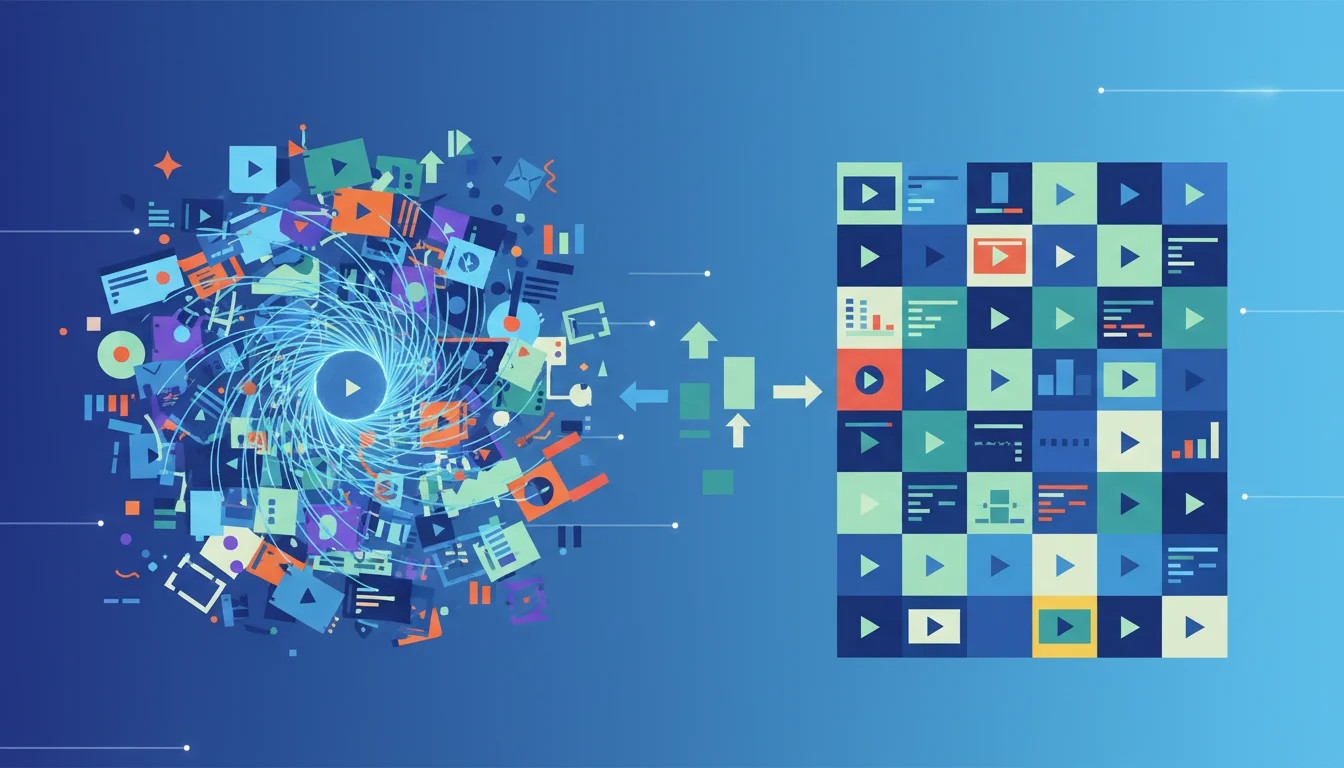
It’s 2026, and video advertising is the whole game. Projections from the IAB show that digital video ad spend just keeps climbing to new global highs, which creates a huge operational headache for marketing departments. Imagine a typical ad agency making video campaigns for multiple clients on YouTube, Meta, TikTok, connected TV, and programmatic display, every single platform wants its own specs for aspect ratios, file sizes, and duration. A single campaign can easily spawn dozens of variations of one core video. Without a central system, those assets get scattered across shared drives, random cloud folders, and individual employee hard drives. Your creative team then wastes a huge amount of time just hunting for the right file or confirming which version is the final one. That’s not just annoying. It costs real money and delays your campaign launches. A 2025 Statista report showed that creative teams can spend up to 25% of their time on admin tasks like finding files, and that number only gets bigger with video. This is exactly the problem that DAM platforms are built to solve.
Centralizing and Organizing Video Assets with DAM
A DAM’s first job is to create a single source of truth for your creative. All your video files, from raw footage and final cuts to motion graphics and audio tracks, live in one place that everyone on the team can get to. That centralization alone is a big win, but the real power is in how a DAM organizes everything. Modern DAM systems are built around metadata. When a video gets uploaded, it’s wrapped in descriptive info like the campaign name, client, target audience, platform (e.g., “YouTube Shorts,” “Meta Feed”), aspect ratio (“9:16,” “16:9”), usage rights, and even expiration dates. Many platforms now use artificial intelligence (AI) to automate tagging by identifying objects, scenes, or even emotions within the video itself. For example, a system could automatically tag a video of a new car with “automotive,” “luxury sedan,” and “city driving.” This makes your assets incredibly easy to find. A media buyer in Atlanta, for example, could instantly find all 15-second video ads featuring a specific product that are approved for Instagram Stories in the Southeast region. On top of that, version control is an absolute must-have for video. Imagine a client asks for one last tiny text change on an ad that’s already been through three review cycles. Without a proper system, tracking that change and ensuring the correct file gets used is a high-stakes gamble. DAM platforms track every version automatically, letting you revert to old ones, compare changes, and see an audit trail of who changed what and when, which prevents the costly mistake of publishing an outdated or unapproved ad.
Simplifying Creative Workflows and Collaboration
A DAM doesn’t just store and organize files. It fundamentally changes how your team actually works. Think of the old hand-off process: a video editor finishes a cut, uploads it to a shared drive, messages a project manager, who then shares it with the legal team for review, before finally sending it to the media buyers. That manual process is slow and creates tons of opportunities for miscommunication. DAM systems create a much more integrated and fluid workflow.
- Direct Integrations: Many DAMs connect directly with editing software like Adobe Premiere Pro and After Effects, which lets editors access and save assets without constantly exporting and importing. They also connect with project management tools like Asana or Monday.com, so asset status updates are automatically synced with project timelines.
- Review and Approval Workflows: Built-in review tools let stakeholders comment directly on video frames, draw annotations, and approve or reject assets right inside the platform. This gets rid of confusing email chains and makes sure all feedback is captured in one place. Legal can check usage rights and compliance issues on the asset itself.
- Automated Transcoding and Distribution: Preparing assets for different platforms is a huge time-suck. You have to re-encode a 30-second broadcast spot for YouTube, then crop and resize it for TikTok. DAMs can automate this transcoding, turning a master video file into all the different formats you need for distribution with just a few clicks. This saves a massive amount of manual work for your creative operations team.
This connected setup cuts turnaround times significantly which frees up your creative people to do their actual jobs instead of getting bogged down in admin tasks. We’ve seen agencies reduce their time-to-market for new video campaigns by 30% or more just by implementing a solid DAM strategy.
Measuring Impact and Ensuring Brand Consistency
A DAM also helps you maintain a consistent brand image and make creative decisions based on data. When your brand has to show up across dozens of different places online, making sure every single video ad follows the guidelines for logo placement, colors, and tone is a huge challenge. A DAM helps you enforce those standards. Brand Guidelines Enforcement: By creating a central library for all your approved brand assets, logos, motion graphics packages, fonts, a DAM ensures that creators are always using the right elements. Some platforms even have AI-powered compliance checks that can flag videos that don’t follow the rules before they get published. It’s a proactive way to stop off-brand content from ever getting out. Performance Tracking and Iteration: The best DAM systems can integrate with ad platforms like Google Ads or Meta Business Manager and pull performance data right onto the asset. Imagine being able to see which specific video ads are getting the best engagement or conversion rates, with that data linked directly to the file in your DAM. This connects creative production to actual business performance. Your creative team can then analyze what’s working, maybe a certain call-to-action in a 15-second YouTube ad targeting Small Business Wins is performing really well, and use that insight for future campaigns. It’s how you move from guessing what works to building genuinely effective creative strategies. The investment in a DAM for your video ads is about making smarter, faster, and more effective creative decisions.
Choosing the Right DAM for Video Advertising
Picking a DAM platform requires some serious thought, especially if your team is heavy into video. There’s no single solution that fits everyone. The right choice depends on your team’s specific needs, your current tech, and your budget. Here are the key features I would prioritize:
- Scalability and Storage: Video files are large. You need to make sure the platform can handle high-resolution video and a growing library without slowing down. It’s smart to ask about bandwidth and egress fees upfront.
- Advanced Search and AI Tagging: You’re going to rely on search. Look for systems with AI-driven auto-tagging, object detection, and speech-to-text transcription. These are the features that let you find specific moments in your videos quickly.
- Workflow and Collaboration Tools: For video production, you’ll need good review and approval features, annotation tools, and solid version control. The ability to create custom workflows that match your team’s process is a huge advantage.
- Integrations: Make sure the platform integrates well with your existing creative tools (like Adobe Creative Cloud), project management software, and ad platforms. An open API is usually a good sign of future flexibility.
- Security and Permissions: You’re dealing with sensitive brand assets, so you need granular control over who can access, edit, and publish content. Look for enterprise-grade security features.
- Analytics and Reporting: While not all DAMs do this, some offer reporting on asset usage or even integrate with ad platforms to show performance. This can be a great way to understand the ROI on your assets.
Don’t underestimate the importance of the user experience. A DAM is only effective if your team actually uses it, so an intuitive interface and good training resources are important for getting adoption. Running a pilot program with a small group of users can give you valuable feedback before a full rollout. The advertising world in 2026 demands a better way to manage video. A dedicated DAM platform is a requirement for any marketing team that wants to be efficient, maintain brand consistency, and drive real results with video campaigns. In the end, your ability to centralize, organize, and intelligently use your video assets will define your creative team’s success.
What is a DAM platform in the context of video advertising?
A Digital Asset Management (DAM) platform for video advertising is a central hub to store, organize, manage, and distribute all your video ad creative, from raw footage to the final ads running on different channels.
How do DAM platforms improve creative workflow for video ads?
DAMs speed up creative work by centralizing assets so they’re easy to find, providing built-in tools for review and approval, and automating the tedious process of transcoding videos for different platforms. It cuts out a huge amount of manual work.
Can DAM systems help with brand consistency for video campaigns?
Yes, definitely. A DAM acts as the single source of truth for all approved brand assets like logos, graphics, and fonts. This ensures everyone uses the right creative and helps maintain a consistent brand look across all video campaigns.
What are the key features to look for in a DAM for video advertising?
Look for scalable storage for large video files, smart search powered by AI, good collaboration tools for version control and reviews, solid integrations with your creative and ad software, and strong security with permission controls.
How does a DAM integrate with existing ad platforms like Google Ads or Meta Business Manager?
Many DAMs offer direct integrations or use an API to connect to ad platforms. This allows you to push approved video assets directly into your ad campaigns and, in some advanced cases, pull performance data back into the DAM to see what’s working.


