 By Editorial Team
The strategic deployment of diverse video ad formats has become a foundation of effective digital marketing campaigns in 2026. With audiences consuming content across an ever-expanding array of platforms, mere presence is insufficient. True impact comes from precision targeting and dynamic creative optimization. This necessitates advanced tools and methodologies, particularly those using AI optimization, to ensure content variety resonates with specific viewer segments. But how do marketers truly achieve this elusive blend of reach and relevance?
Key Takeaways
- Implement a minimum of three distinct video ad formats per campaign (e.g., in-stream, out-stream, shoppable) to maximize audience engagement across platforms.
- Use AI-driven content intelligence platforms to analyze performance data and automatically suggest creative variations, improving click-through rates by up to 15%.
- Integrate dynamic creative optimization (DCO) tools to personalize video ad elements like calls-to-action and product imagery for individual viewers in real-time.
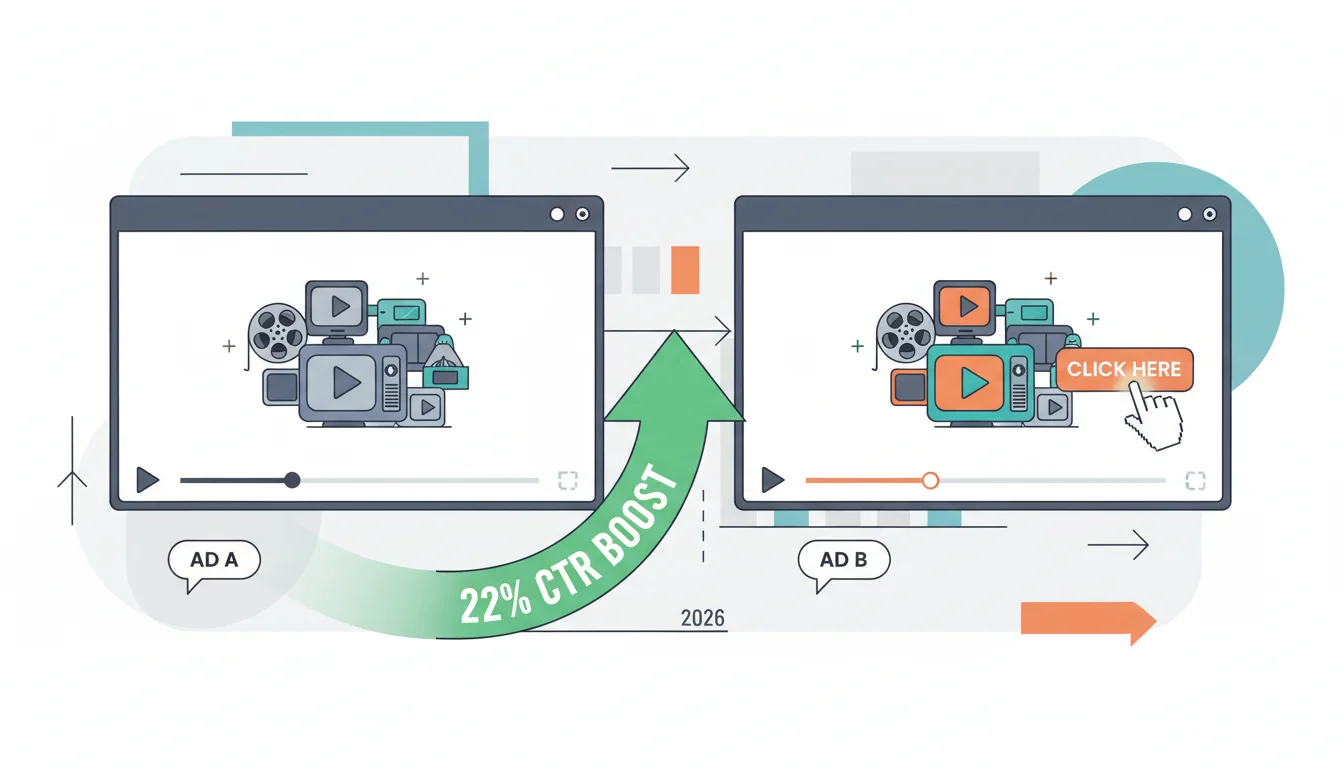
- Establish clear A/B testing protocols for video ad formats, focusing on metrics such as completion rate, conversion rate, and cost per acquisition (CPA).
- Allocate at least 20% of your video advertising budget to experimentation with emerging formats and AI-powered personalization features to maintain competitive advantage.
The Evolving Field of Video Ad Formats
Video advertising is no longer a monolithic entity. It’s a rich ecosystem of formats, each with unique strengths and optimal use cases. From the traditional pre-roll and in-stream ads to the more interactive and immersive experiences, understanding these distinctions is paramount. For instance, in-stream video ads, often seen before or during video content on platforms like YouTube or connected TV (CTV) services, typically command higher completion rates due to their captive audience. However, their intrusive nature can lead to viewer fatigue if not executed thoughtfully.
Conversely, out-stream video ads, which appear within editorial content on websites and apps, offer a less disruptive experience. They auto-play when visible and pause when scrolled out of view, giving users more control. Then there are the increasingly popular shoppable video ads, which embed direct purchase links or interactive elements, transforming passive viewing into active commerce. According to a eMarketer report, global CTV ad spending continues its upward trajectory, demonstrating the growing importance of these premium placements. The challenge for marketers is not simply picking a format, but orchestrating a symphony of formats that work together.
We also have the rise of vertical video, driven by mobile consumption habits and platforms like Snapchat Ads and LinkedIn Video Ads. These formats demand a different creative approach, often requiring tighter cuts, on-screen text, and rapid pacing to capture attention in a scroll-heavy environment. Ignoring these platform-specific nuances is a costly mistake. My experience working with brands across various sectors shows a consistent pattern: those who tailor their video assets for each format and platform consistently outperform those who simply repurpose horizontal content for vertical feeds. It’s an investment in creative production that always pays dividends.
AI Optimization: The Engine Behind Dynamic Video Content
The sheer volume of video ad formats and the need for personalized content across diverse audiences make manual optimization an impossible task. This is where AI optimization becomes indispensable. AI-powered platforms can analyze vast datasets, identifying patterns in viewer behavior, creative performance, and contextual relevance at a scale no human team could ever manage. This allows for real-time adjustments to campaign parameters, bidding strategies, and, most critically, the creative itself.
Consider the capabilities of dynamic creative optimization (DCO) platforms. These systems, often integrated with larger marketing clouds, can assemble personalized video ads on the fly. For example, a single video template can be populated with different product images, calls-to-action, or even localized text based on a viewer’s demographic, browsing history, or geographic location. This level of granular personalization significantly boosts engagement and conversion rates. A Nielsen study on advertising effectiveness highlighted that ads perceived as highly relevant by consumers saw a substantial increase in recall and purchase intent. AI facilitates this personalization at scale, ensuring that each viewer sees the most compelling version of an ad.
Beyond personalization, AI excels at predictive analytics. It can forecast which creative elements will perform best with specific audience segments, allowing marketers to pre-emptively deploy high-performing variations. This isn’t just about A/B testing. It’s about intelligent, multi-variate testing that continuously learns and refines. The system might identify that a particular product shot performs better with younger demographics on mobile, while a longer narrative ad resonates more with older audiences on CTV. These insights are not just theoretical. They are actionable directives that directly impact return on ad spend (ROAS). Many marketers are still underutilizing these capabilities, sticking to basic A/B tests when the technology allows for far more sophisticated experimentation.
Achieving Content Variety with Intelligent Automation
Maintaining content variety across numerous video ad formats without overwhelming creative teams is a significant challenge. Intelligent automation, powered by AI, offers a solution. Instead of producing dozens of completely unique video ads for every campaign, marketers can create a core set of assets (footage, voiceovers, graphics) and then use AI to generate permutations. This might involve automatically re-editing clips for different aspect ratios, generating multiple voiceover options with AI text-to-speech, or dynamically placing different product overlays.
The goal is to create a strong library of modular video assets that an AI system can then mix and match, testing various combinations in real-time. This approach not only saves time and resources but also ensures that campaigns remain fresh and engaging. Stale creative is a death knell for ad performance, and AI provides the means to constantly refresh and iterate. For example, a campaign promoting a new line of athletic wear could have core footage of athletes. AI could then generate variations showing different apparel colors, different calls to action (“Shop Now,” “Learn More”), and even different background music tracks, all tested automatically to see which combinations resonate most with specific audience segments on Google Ads or other platforms.
Plus, AI can assist in identifying content gaps. By analyzing performance data, it might reveal that a particular audience segment responds poorly to existing creative. The AI can then suggest new creative directions or highlight types of content that are missing from the current asset library. This proactive insight allows creative teams to focus their efforts on producing assets that fill genuine needs, rather than guessing what might work. It’s a fundamental shift from reactive optimization to predictive content strategy. We’re moving beyond “what performed well” to “what will perform well, and why.”
Measuring Success: Metrics and Attribution in AI-Optimized Video Campaigns
The sophistication of AI-optimized video ad campaigns demands equally sophisticated measurement and attribution strategies. Traditional metrics like impressions and clicks are still relevant, but they don’t tell the whole story. Marketers need to delve deeper into metrics such as video completion rate (VCR), engagement rate (e.g., interactions with shoppable elements), and cost per completed view (CPCV). For performance-driven campaigns, tracking conversion rate and cost per acquisition (CPA) directly linked to specific video ad formats and creative variations is critical.
Attribution models also become more complex. With multiple video formats touching a customer at different points in their journey, a simple last-click model often misrepresents the true impact of each ad. AI-driven attribution models can assign credit more accurately across various touchpoints, providing a well-rounded view of campaign effectiveness. This helps in understanding the true ROI of different video ad formats and the personalized creative generated by AI. Without this granular attribution, it’s impossible to know which elements of an AI-optimized campaign are truly driving results. I’ve seen countless instances where brands, relying solely on last-click, heavily underinvest in top-of-funnel video formats that actually initiate the customer journey.
On top of that, AI platforms can provide detailed analytics on creative elements themselves. Which scene was skipped most often? Which call-to-action button received the most clicks? This granular data allows for continuous learning and refinement of the creative strategy, informing future content production. The goal is a feedback loop where AI not only optimizes distribution but also informs creative development, leading to an iterative improvement cycle. This is where the true power of an integrated AI approach lies: it doesn’t just manage campaigns. It makes them smarter over time.
The Future is Dynamic: Embracing AI for Competitive Advantage
The pace of innovation in digital advertising, particularly in video, shows no signs of slowing. Brands that embrace AI optimization for their video ad formats and prioritize content variety will gain a significant competitive advantage. This isn’t just about adopting new tools. It’s about a fundamental shift in how marketing teams operate, moving towards more data-driven and automated creative processes. The human element remains vital, of course, in setting strategic direction, defining brand voice, and overseeing the creative vision. AI enhances, rather than replaces, human ingenuity.
Marketers should begin by auditing their current video ad strategies, identifying areas where manual processes are creating bottlenecks or limiting personalization. Investing in platforms that offer strong AI capabilities for dynamic creative optimization and automated content generation is a logical next step. Plus, fostering a culture of experimentation within marketing teams is essential. The capabilities of AI are constantly evolving, and staying abreast of the latest advancements requires an openness to testing new formats and optimization techniques. The future of video advertising is dynamic, personalized, and powered by intelligent automation. Ignoring this reality is not an option. Embracing it is a necessity for sustained growth.
The future of video advertising lies in dynamic, personalized experiences delivered at scale. Marketers must integrate AI-driven optimization into their strategies to manage diverse video ad formats and maintain content variety, ensuring campaigns resonate deeply with individual audiences.
What are the primary benefits of using AI for video ad optimization?
AI optimization for video ads provides several key benefits, including real-time personalization of ad content, automated testing of creative variations, predictive analytics for performance, and efficient management of content variety across numerous formats. These capabilities lead to improved engagement, higher conversion rates, and better return on ad spend by ensuring the right message reaches the right audience at the right time.
How can AI help manage content variety for different video ad formats?
AI assists in managing content variety by enabling dynamic creative optimization (DCO). This allows marketers to create modular video assets that AI can then automatically combine and adapt into various formats (e.g., horizontal, vertical, square) with personalized elements like product images or calls-to-action. This reduces the manual effort required to produce numerous unique ads while maintaining freshness and relevance.
What specific video ad formats should marketers consider in 2026?
In 2026, marketers should consider a diverse range of video ad formats to maximize reach and impact. These include traditional in-stream (pre-roll, mid-roll, post-roll) and out-stream ads, interactive shoppable video ads, vertical video ads optimized for mobile social platforms, and connected TV (CTV) ads. Each format offers unique opportunities for engagement based on platform and audience behavior.
What metrics are most important for evaluating AI-optimized video ad campaigns?
Beyond standard metrics like impressions and clicks, important metrics for AI-optimized video ad campaigns include video completion rate (VCR), engagement rate (e.g., interactions with shoppable elements), cost per completed view (CPCV), conversion rate, and cost per acquisition (CPA). Advanced AI-driven attribution models are also vital for understanding the true impact of each format and creative variation across the customer journey.
Is AI replacing human creativity in video advertising?
No, AI is not replacing human creativity in video advertising. Rather, it augments and enhances it. AI handles the data analysis, personalization at scale, and automated optimization, freeing human creative teams to focus on strategic direction, conceptual development, and overall brand storytelling. AI provides insights and tools that enable creatives to produce more impactful and targeted content more efficiently.


