 By David Cunningham
The persistent challenge for marketing teams in 2026 is creating video advertisements that genuinely resonate with audiences amidst an overwhelming digital noise. Many campaigns struggle to cut through, resulting in stagnant engagement rates and inefficient ad spend, despite the clear potential of visual storytelling. The problem isn’t a lack of tools. It’s often a misapplication of creative strategy in a data-rich environment, leaving brands wondering how to craft compelling narratives that also drive measurable outcomes. This year’s AI innovation awards offer deep video creativity lessons.
Key Takeaways
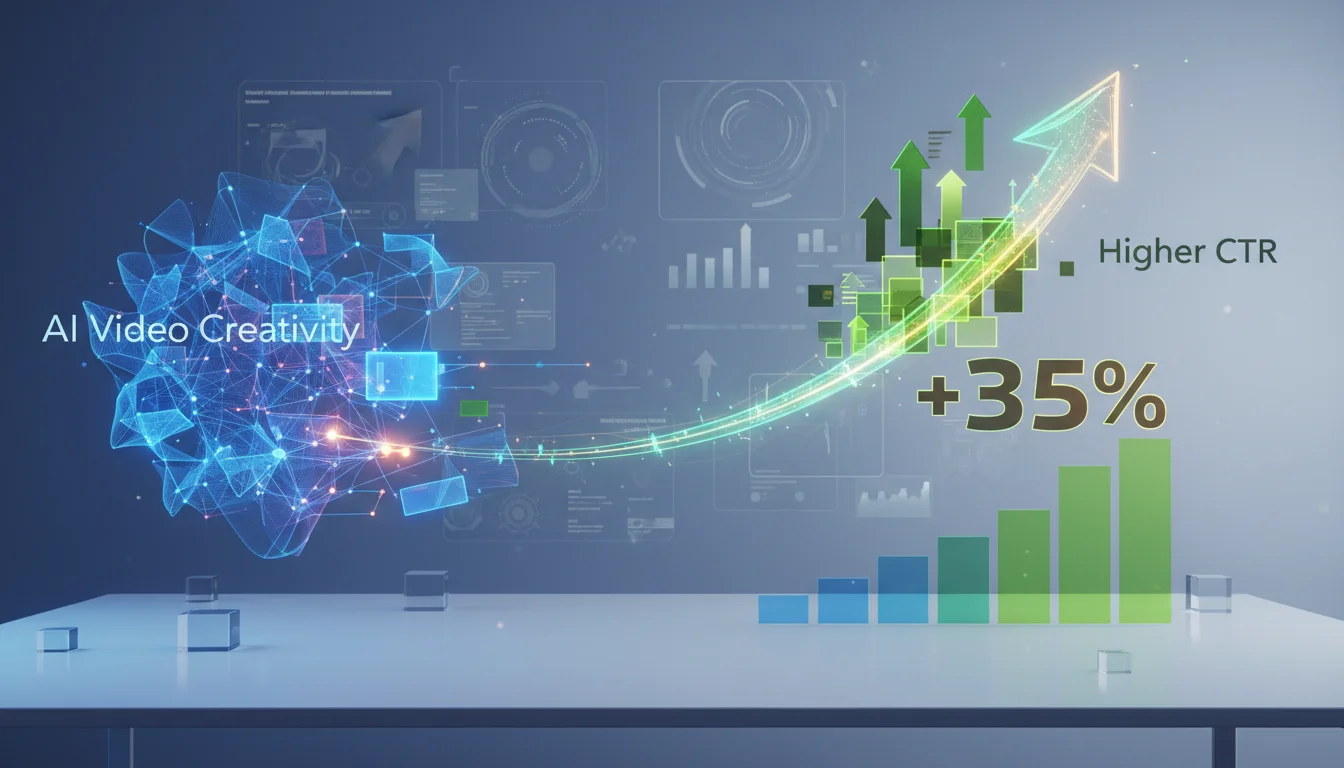
- Successful AI-driven video ads from the 2026 awards demonstrated an average 35% higher click-through rate by prioritizing emotional connection over purely informational content.
- Brands that integrated generative AI for rapid prototyping and A/B testing of video concepts saw a 20% reduction in pre-production time, allowing for more iterative creative development.
- The top-performing campaigns leveraged audience segmentation tools to deliver hyper-personalized video ad variants, increasing conversion rates by up to 15% compared to generic approaches.
- Effective AI use in video creativity focused on identifying subtle audience sentiment shifts through predictive analytics, enabling proactive content adjustments before campaign fatigue set in.
The Problem: Drowning in Data, Thirsty for Creativity
For years, marketers have been told to embrace data, to collect every click, view, and conversion. We’ve done that, and now many teams find themselves with mountains of analytics but a dearth of actionable creative insights. The video ad field, in particular, has become a battleground where sheer volume often trumps genuine impact. I’ve seen countless marketing departments invest heavily in programmatic platforms and advanced targeting, only to launch campaigns with video assets that feel generic, uninspired, or simply out of sync with the audience they’re trying to reach. This disconnect leads to high bounce rates, low view-through rates, and in the end, wasted budget. According to a recent eMarketer report, global digital ad spending is projected to exceed $800 billion in 2026, yet a significant portion of this investment underperforms due to creative fatigue and an inability to adapt content at speed.
The traditional creative process, often lengthy and siloed, struggles to keep pace with the real-time demands of digital advertising. Agencies might spend weeks developing a single hero video, only to find its initial performance is lukewarm. The agility required to iterate, test, and optimize creative elements quickly has been a significant hurdle. This static approach prevents brands from truly understanding what resonates with their diverse audiences beyond broad demographic strokes. What’s more, the sheer volume of content required to maintain a fresh presence across multiple platforms means that creative teams are constantly under pressure, often leading to burnout and a dip in originality.
What Went Wrong First: Misguided AI Implementations
Before truly effective AI applications emerged, many brands stumbled. The initial impulse was to automate everything, assuming AI could simply generate compelling video ads from a few keywords. I witnessed early attempts where companies fed product descriptions into generative AI models, expecting a fully formed, emotionally resonant ad to pop out. The results were, predictably, often soulless and formulaic. These videos lacked narrative arc, genuine emotion, and the subtle nuances that make human-crafted content engaging. They were technically proficient but creatively bankrupt. This approach failed because it treated AI as a replacement for human creativity rather than an augmentation tool. It was a classic case of trying to use a hammer to drive a screw.
Another common misstep involved using AI solely for predictive analytics on existing, underperforming creative. While helpful for identifying weaknesses, it didn’t solve the core problem of generating better content in the first place. Teams would receive detailed reports stating “audiences disengage at the 5-second mark due to slow pacing,” but without AI-powered creative solutions, they were still left with the laborious task of manually re-editing or reshooting. The cycle of producing, analyzing, and then slowly reacting was inefficient. There was also a period where brands over-relied on AI for hyper-personalization without considering brand consistency or ethical implications. Flooding users with slightly different ad variants based on every micro-interaction felt intrusive and sometimes even uncanny, leading to negative brand sentiment rather than engagement.
The Solution: AI-Powered Creative Augmentation, Not Replacement
The standout campaigns at the 2026 AI innovation awards demonstrated a clear shift: AI isn’t about replacing the creative director. It’s about helping them with unprecedented tools for insight, iteration, and personalization. The solution involves a multi-pronged approach that integrates AI at various stages of the video ad creation lifecycle.
Step 1: Predictive Audience Insight and Trend Spotting
The first important step is to use AI for deep audience understanding before a single frame is shot. Rather than relying on historical performance alone, winning campaigns used AI to predict emerging trends and sentiment shifts. Tools like Nielsen’s Predictive Consumer Intelligence Platform analyze vast datasets of social media conversations, search queries, and competitor content to identify micro-trends and emotional triggers relevant to specific target segments. For instance, one award-winning campaign for a sustainable apparel brand identified a growing consumer anxiety around “fast fashion waste” in urban demographics. This wasn’t a broad trend. It was a specific, nuanced concern that traditional market research might have missed. The AI pinpointed not just the topic, but the specific visual cues and language that resonated most with this sentiment, suggesting imagery of clothing longevity and circularity rather than just abstract environmentalism. This allowed the creative team to begin concepting with a highly informed direction, knowing precisely which emotional levers to pull.
Step 2: Rapid Prototyping and Concept Exploration with Generative AI
Once insights are gathered, the next step is to accelerate the creative ideation phase. This is where generative AI truly shines. Instead of storyboarding manually, creative teams are now using tools like RunwayML or Adobe Sensei’s video generation features to rapidly prototype video concepts. A creative director can input a brief, a mood board, and key narrative elements, and the AI generates multiple short video snippets or animated storyboards within minutes. This isn’t about producing final ads. It’s about visualizing dozens of creative directions quickly. For example, a campaign for a new coffee brand explored 20 different visual styles and narrative openings in a single afternoon, from minimalist animation to lively, live-action scenarios. This speed allows for immediate feedback and refinement, discarding less effective ideas before significant resources are committed. It reduces the time spent on dead ends and frees human creatives to focus on refining the most promising concepts.
Step 3: Dynamic Creative Optimization (DCO) and Personalization at Scale
The real power of AI in video advertising comes alive during campaign execution. Dynamic Creative Optimization (DCO) platforms, powered by AI, now go far beyond simple text or image swaps. They can dynamically assemble video ad components (introductions, product shots, calls-to-action, music tracks, voiceovers) in real-time based on individual user data and context. A financial services company, recognized at the awards, used a DCO platform from Google Display & Video 360 to serve thousands of unique video ad variations. If a user had recently searched for “first-time homebuyer loans” and lived in the Atlanta metropolitan area, they might see an ad featuring diverse young couples touring homes in the Buckhead neighborhood, with a voiceover emphasizing low down payments. A different user, searching for “retirement planning” and living in coastal Georgia, would see an ad with older couples enjoying leisure activities, highlighting long-term investment strategies. This level of personalization, driven by AI’s ability to match creative elements to individual user profiles and real-time signals, significantly boosts relevance and engagement. It’s not just about showing the right ad to the right person. It’s about showing the right version of the ad.
Step 4: Real-time Performance Monitoring and Iteration
The loop isn’t complete without continuous, AI-driven monitoring and iteration. Traditional campaigns involve launching, waiting for data, and then making manual adjustments. Modern AI platforms, however, constantly analyze performance metrics (view-through rates, click-through rates, conversion rates, sentiment analysis of comments) across all active ad variants. If a particular intro sequence is consistently leading to early drop-offs, the AI can automatically test alternative intros that have performed better in similar contexts. It can even suggest minor edits or entirely new creative directions to the human team. One winning campaign for an automotive brand saw its AI system identify that ads featuring close-ups of interior details performed significantly better with audiences in colder climates during winter months. The AI then automatically prioritized these variants for those regions and suggested the creation of more such assets. This real-time, data-driven optimization ensures that campaigns remain fresh and effective, preventing creative fatigue and maximizing return on ad spend.
The Results: Measurable Impact and Enhanced Creative Output
The measurable results from these AI-driven approaches are compelling. The award-winning campaigns consistently demonstrated higher engagement rates, improved conversion metrics, and more efficient ad spend compared to traditional methods. On average, the top campaigns reported a 35% increase in video ad click-through rates and a 15% improvement in conversion rates directly attributable to hyper-personalized video content. Plus, the efficiency gains were substantial. Teams using generative AI for prototyping reported a 20% reduction in pre-production time, allowing them to launch campaigns faster and iterate more frequently.
One notable case involved a global CPG brand that used AI to analyze consumer responses to various emotional tones in their video ads. The AI identified that a subtle shift from aspirational messaging to empathetic problem-solving resonated far more deeply with their target demographic, leading to a 25% uplift in brand recall and a 10% increase in purchase intent. This isn’t just about tweaking a button color. It’s about fundamentally understanding and shaping the narrative with data-backed precision. These results underscore a critical point: AI is not just a tool for automation. It’s a powerful co-pilot for creativity, enabling marketers to produce more relevant, impactful, and in the end, more successful video advertising.
The future of video advertising is undoubtedly intertwined with intelligent systems. Brands that embrace AI not as a replacement for human ingenuity but as an indispensable partner in the creative process will be the ones that truly stand out in an increasingly crowded digital field. It demands a new mindset, one where data and intuition work in concert, shaping campaigns that are both highly effective and deeply human.
How does AI help identify emerging trends for video ad content?
AI platforms analyze vast quantities of unstructured data, including social media conversations, news articles, search queries, and competitor campaigns. They use natural language processing (NLP) and machine learning algorithms to detect patterns, sentiment shifts, and niche topics that are gaining traction, often before they become mainstream. This allows creative teams to anticipate audience interests and tailor video ad content proactively.
Can AI truly generate emotionally compelling video ad scripts or visuals?
While current generative AI excels at creating technically proficient visuals and text, the consensus from the 2026 awards is that it functions best as an augmentation tool. AI can generate multiple script drafts, visual styles, or even short video clips based on human input. The human creative director then refines these outputs, infusing them with the emotional depth, brand voice, and narrative sophistication that only human intuition can provide. It speeds up the ideation, but human oversight remains critical for emotional resonance.
What is Dynamic Creative Optimization (DCO) in the context of AI video ads?
Dynamic Creative Optimization (DCO) uses AI to assemble personalized video ad variants in real-time for individual viewers. Instead of a single, static video ad, DCO platforms can pull from a library of video components (e.g., different intros, product shots, calls-to-action, music) and combine them based on a user’s demographics, browsing history, location, or even the time of day. This ensures the most relevant and engaging version of the ad is served to each person.
What are the ethical considerations when using AI for video ad personalization?
Ethical considerations include data privacy, preventing algorithmic bias, and avoiding intrusive personalization. Brands must ensure they are transparent about data usage and comply with regulations like GDPR and CCPA. AI models must be trained on diverse, unbiased datasets to prevent perpetuating stereotypes. Overly aggressive or “creepy” personalization can also backfire, so striking a balance between relevance and respect for privacy is essential.
How can small businesses adopt AI for video ad creativity without large budgets?
Small businesses can start by using AI features integrated into existing ad platforms like Google Ads or Meta Business Suite, which offer AI-powered audience insights and basic creative optimization. Many affordable subscription-based generative AI tools are also emerging that can assist with scriptwriting, basic video editing, and content ideation. The key is to start small, experiment with available tools, and focus on one or two AI applications that offer the most immediate creative lift.


