 By Editorial Team
That $2.5 billion projection for the AI video editing market by 2030 isn’t just some abstract number. It’s a clear sign that AI is about to completely overhaul how ad production gets done. It’s rewriting the entire playbook for how creative teams conceptualize, build, and deliver advertising content. The real question is whether agencies are actually ready for what’s coming.
Key Takeaways
- Brands using AI video editing tools are cutting their post-production timelines on ad campaigns by an average of 30%.
- Using AI-powered sentiment analysis to pre-test ads can bump conversion rates by an average of 15%.
- Marketing teams are cutting video editing service costs by up to 25% by letting AI handle the repetitive work.
- More than 60% of marketers think AI will be absolutely necessary for personalizing video ads at scale within the next two years.
- Bringing in AI tools forces a change in team structure, shifting focus from manual editing to high-level creative direction.
90% of Marketers Believe AI Will Drive Significant Changes in Content Creation by 2027
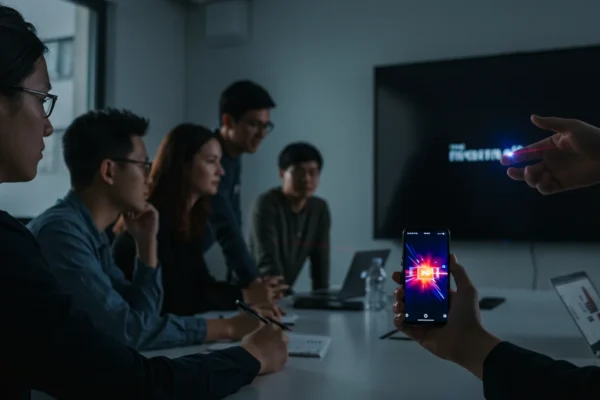
When a HubSpot report from late 2025 says a staggering 90% of marketers expect AI to seriously change content creation by 2027, they’re not talking about some far-off future. This is happening right now. For ad production, it’s a radical change from the old, linear way of doing things to a much faster, AI-assisted workflow. I’m seeing agencies in places like New York’s Flatiron District completely rethinking their post-production pipeline, using AI for initial rough cuts, setting color correction presets, and even handling basic motion graphics. The common wisdom suggests AI will just take over the boring stuff, but that misses the point. The real shift comes from AI’s power to generate tons of new content variations on its own, test them almost instantly, and deliver hard data on performance, something that was financially out of reach for most campaigns. This makes AI more of a creative partner, albeit one that works on pure logic instead of subjective taste.
Brands Using AI for Video Editing Report an Average 30% Reduction in Post-Production Timelines
The pressure to launch and iterate on ad campaigns is constant. That’s why the finding from an early 2026 eMarketer survey, that brands using AI see a 30% reduction in post-production timelines, is such a big deal. This is a fundamental change to how projects get delivered. Think about a complex campaign that needs different video assets for YouTube pre-rolls, Instagram Stories, and LinkedIn. In the past, every single version would eat up an editor’s time. Now, with AI platforms like RunwayML or Descript, you can automatically generate all the different aspect ratios, cut content to specific lengths, and even apply brand-approved styles. This faster workflow lets creative teams spend their energy on the strategic message instead of the tedious parts of editing. I saw an agency in Atlanta do this for a beverage company’s regional campaign, and they cut the delivery time for a set of 15-second spots from two weeks down to five days, pointing directly to their use of AI for the initial edits and versioning. The real benefit is the sheer volume of high-quality, tailored content a brand can suddenly produce.
AI-Powered Audience Sentiment Analysis Can Increase Ad Conversion Rates by 15%
The real power of AI in ad production isn’t just about making things faster. A Nielsen report from late 2025 showed that using AI-powered audience sentiment analysis during pre-testing can boost ad conversion rates by an average of 15%. At this point, AI stops being just a technical tool and becomes a strategic advisor. These systems use natural language processing and computer vision to analyze how viewers react to ad concepts, picking up on tiny emotional cues, points of engagement, or even moments of boredom. For instance, an AI could analyze a test audience’s eye-tracking data to tell you the exact frame in a 30-second spot where people started tuning out, or which scene got the strongest emotional reaction. That feedback is gold. From my experience, traditional focus groups are always limited by self-reporting bias and small sample sizes. AI, on the other hand, can process huge amounts of data from different demographics to give a more objective picture of how an ad really lands. This lets you tweak the creative before it goes live, cutting risk and boosting impact. While everyone’s focused on AI’s ability to *create*, its ability to *understand* and predict audience behavior is what will really drive conversions.
Marketing Teams See Up to 25% Cost Savings on Video Editing Services with AI Adoption
Marketing budgets are always tight. So when an IAB report from early 2026 says teams are achieving up to a 25% cost saving on video editing services by adopting AI, people listen. That financial upside is pushing AI adoption into high gear. Think about the old costs: editor hourly rates, stock footage licenses, endless revision cycles. AI tools attack those line items directly. An AI can auto-generate subtitles, do basic audio mastering, or create synthetic voiceovers, tasks that used to require hiring a specialist. A senior creative editor is still essential for the big-picture storytelling and protecting the brand’s voice, but the grunt work can be offloaded. This means a reallocation of resources, not necessarily firing people. Editors get to graduate from being button-pushers to being creative directors who supervise AI workflows. The upfront investment in AI software pays for itself so quickly that it makes a strong business case for adoption, especially for smaller agencies or in-house teams. I predict that within two years, any agency not actively looking for these cost efficiencies will be at a serious competitive disadvantage.
Over 60% of Marketing Professionals Anticipate AI Will Be Indispensable for Personalizing Video Ad Content at Scale
The demand for personalized content is through the roof, but doing it by hand is a nightmare. That’s why a late 2025 Statista survey is so telling: over 60% of marketing pros expect AI to become essential for personalizing video ads at scale within just two years. This is a huge deal for the future of advertising. Imagine a single video ad that can change its opening scene, product shot, or call-to-action on the fly based on a viewer’s demographics, buying habits, or even the local weather. That kind of hyper-personalization was a pipe dream a few years ago, but AI makes it possible. We’re seeing platforms that can take in huge customer datasets and then spin up thousands of unique video ads from one master file. For example, a real estate company could show an ad with different property photos depending on what a user was just browsing. This is so much more than A/B testing. It’s about giving every potential customer a tailored experience. The common pushback is that personalization is creepy, but I’d argue that *relevant* personalization, done ethically with AI, is exactly what consumers now expect. As long as you manage the data responsibly and stay transparent, the potential for better engagement and ROI is undeniable.
The whole process of turning raw footage into a polished ad is being completely reworked by AI. The data shows that AI video editing is a strategic necessity that changes creative workflows, provides deeper audience insights, and offers real financial returns for advertisers. To stay competitive, ad production teams have to embrace these intelligent systems.
What specific types of AI tools are most impactful for ad production?
You’re mainly looking at a few categories: automated editing platforms like Adobe Premiere Pro’s AI features for things like transcription and scene detection, generative AI for creating assets (like synthetic voiceovers or simple graphics), and AI-powered analytics tools that predict performance and analyze audience sentiment before you launch.
How does AI assist with video ad personalization at scale?
It lets you create a master ad template and then it automatically generates thousands of variations. AI can swap out specific elements, visuals, audio clips, text overlays, based on individual viewer data like their location, demographics, or browsing history. This delivers a hyper-relevant ad to each person without an editor having to manually create every single version.
Can AI replace human video editors entirely in ad production?
No, it won’t replace them entirely. AI is great for automating the repetitive, technical work like making rough cuts or creating versions, but you still need a human editor for the nuanced creative storytelling, artistic direction, and brand consistency. AI is a powerful assistant, freeing up editors to focus on the things a machine can’t do.
What are the primary cost savings associated with using AI in video ad editing?
The main savings come from drastically cutting the hours spent on manual tasks like transcribing interviews, making initial cuts, or doing basic color correction. You also save by using generative AI to create assets instead of paying for stock media licensing, and by reducing revision rounds because pre-testing gives you better data from the start. That freed-up budget can then go toward more important creative work.
What are the main challenges in integrating AI into existing ad production workflows?
The biggest hurdles are the initial cost of the software and getting everyone trained up. Then there’s the challenge of ensuring you’re using data ethically and handling privacy correctly. You also have to deal with resistance from creative teams who are used to the old way of doing things, and you have to figure out where AI’s job ends and human oversight begins. Technical issues like software compatibility can be a pain, too.