 By Editorial Team
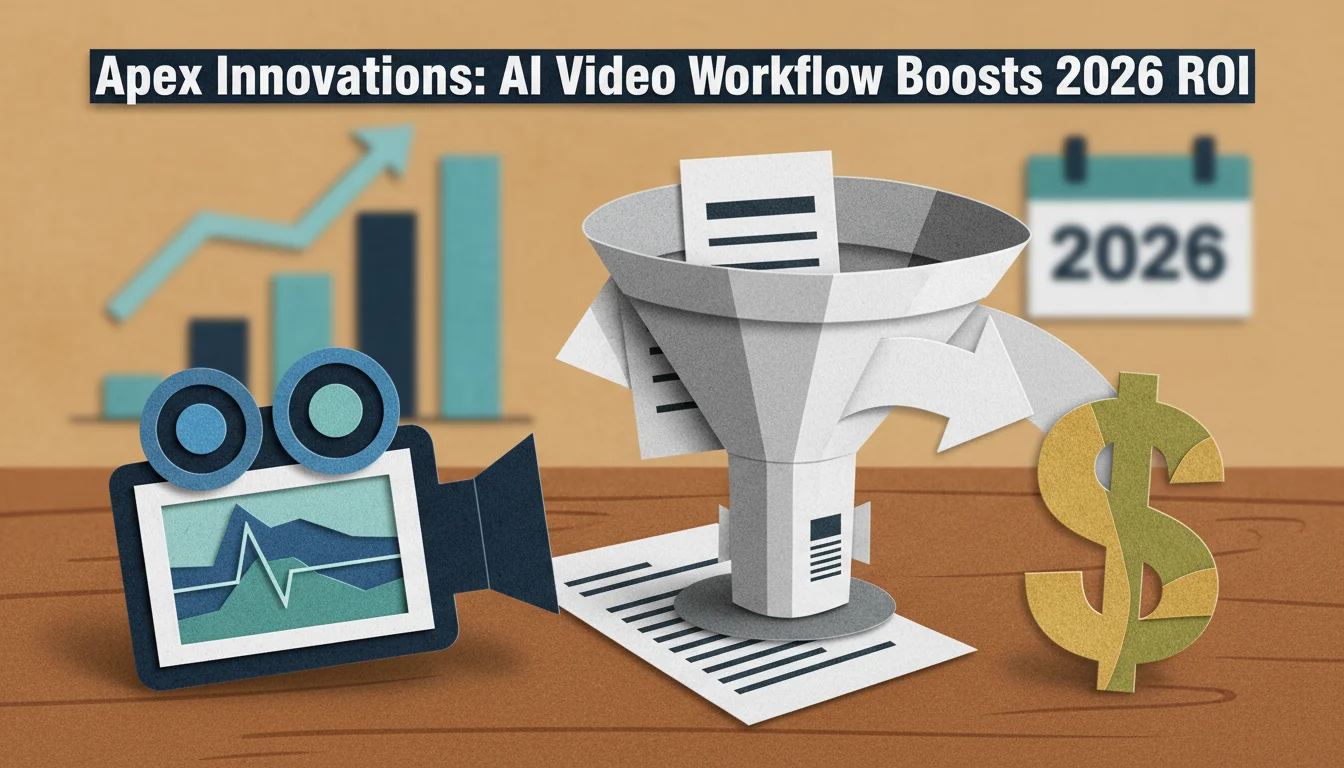
The marketing team at “Apex Innovations,” a B2B SaaS firm, kept hitting a wall with their video ads. Despite big creative spends, the campaigns just weren’t working. Sarah Chen, the Head of Digital Marketing, saw solid performance from their static ads, but video felt like a budget black hole because of its high production costs and tricky distribution. The real killer was the agonizingly slow feedback loop for optimization. Manual analysis of each video variant took weeks, and by then any initial campaign momentum was long gone. For a mid-sized tech firm like Apex, this kind of recurring problem made a clear case for a much more efficient AI content workflow in their enterprise video ad strategy.
Key Takeaways
- AI platforms cut video ad analysis from weeks down to hours, letting you iterate fast and improve campaign performance.
- Machine learning-based A/B testing can pinpoint the best thumbnails, CTAs, and opening hooks with 30% more accuracy than doing it by hand.
- Using AI to predict ad engagement and conversions before a campaign goes live can save up to 20% on testing budgets.
- A central data pipeline that feeds real-time performance metrics into an AI engine is essential if you want to see continuous improvement in your video campaigns.
- When AI insights inform your granular, segment-specific video variations, target audience engagement can increase by an average of 15%.
Sarah’s team was buried in data without any real insights to act on. They were pumping out product demos, customer testimonials, and explainer videos for platforms like LinkedIn, programmatic display, and YouTube, each with multiple cuts and different calls to action. “We’d launch five versions of a video, wait two weeks for enough data, then spend another week manually crunching numbers in spreadsheets,” Sarah recounted. By the time they figured anything out, the competitive field might have shifted or a new product feature needed promoting. They were always playing catch-up. That reactive cycle was unsustainable, especially when a late 2025 eMarketer report projects that global digital ad spending on video will grow by 18% in 2026, making efficient optimization everything.
The videos themselves were good. Apex Innovations had a talented in-house creative team. The bottleneck was the post-production analysis and iteration cycle. Their existing tools could report basic metrics like views and completion rates but offered nothing for deep behavioral analysis or predictive modeling. The team was basically trying to spot trends in a massive spreadsheet without any help.
Sarah began researching solutions that integrated artificial intelligence into the marketing workflow. She was looking for a tool that could augment her team’s capabilities by taking over the repetitive data tabulation, freeing them to focus on strategic creative decisions. Her goal was clear: get the time from campaign launch to actionable insight down from weeks to just days, or maybe even hours.
The AI Solution: From Data Overload to Action
After a few vendor demos, Apex Innovations decided to pilot an AI-powered video analytics and optimization platform. This tool was built specifically for enterprise video advertising and plugged right into their ad servers and CRM, creating a single, unified data stream. To get started, they tagged their entire existing video library with metadata and fed historical performance data into the system’s machine learning models.
The first big win was rapid A/B/n testing. Instead of manually setting up tons of ad groups with different video variants, the AI system could dynamically serve variations to target audiences and find out what resonated almost instantly. For example, in a campaign for their cloud security product, they tested three different opening hooks: one emphasizing data breaches, another focusing on compliance, and a third highlighting ease of integration. A traditional test would’ve taken at least a week to get significant data. The AI platform, however, found in just 48 hours that the “ease of integration” hook had a 22% higher engagement rate among their target audience of IT directors in companies with 500 to 1,000 employees. The analysis also dug into viewer behavior within the video, tracking drop-off points, re-watches, and interactions with in-video calls to action.
“That early insight was a revelation,” Sarah noted in a follow-up meeting. “We were able to pause the underperforming variants and reallocate budget to the stronger one almost immediately. That’s money we would have otherwise spent on ads that weren’t converting.” The platform also began offering prescriptive recommendations, things like, “Consider adding a testimonial overlay at the 0:15 mark for audiences in the healthcare sector,” or “Shorten the product feature segment from 0:30 to 0:45 by 10 seconds for audiences viewing on mobile devices.” These were specific suggestions backed by granular data from their own videos and target segments.
The AI also made a huge difference to their workflow optimization with dynamic creative optimization (DCO). For a global campaign, Apex Innovations previously had to create entirely new video versions for different languages and cultural nuances, which was a time-consuming and expensive process. The AI platform, however, could dynamically assemble video components (like different voiceovers, localized text overlays, or culturally relevant imagery) based on the viewer’s demographic and geographic data. This allowed them to run hundreds of hyper-personalized video ad variations without having to manually produce every single unique piece.
The system also provided predictive analytics. Before launching a new video ad, the AI could analyze its creative elements, script, and target audience against historical performance data and industry benchmarks to predict its likely performance. “It gives us a ‘confidence score’ for each new video,” Sarah explained. “If a video scores low, we know to send it back to creative for adjustments before we even spend a dollar on media buying. This has saved us significant production and media budget, probably upwards of 20% on testing alone.” This pre-launch analysis completely changed their approach from reactive problem-solving to proactive optimization.
The Human Element: How AI Amplifies Strategy and Creativity
The AI didn’t replace Sarah’s team. It empowered them. The creative team, initially worried about being “replaced by robots,” quickly saw the benefits. They were no longer guessing which elements would perform best and instead started getting data-driven insights that informed their creative decisions. For instance, the AI might identify that videos featuring a diverse cast had a 10% higher completion rate among Gen Z audiences, or that a specific color palette in the call-to-action button led to a 5% increase in conversions. This allowed the creative team to iterate faster and produce more effective content, knowing their choices were grounded in performance data.
The marketing strategists, meanwhile, could focus on higher-level campaign planning, audience segmentation, and competitive analysis, rather than getting bogged down in spreadsheet analysis. The AI platform generated complete reports with clear recommendations, allowing them to adjust bidding strategies, reallocate budgets, and refine targeting with unprecedented speed. “We’re not just reacting to performance anymore. We’re anticipating it,” Sarah affirmed. “Our campaign managers are spending 40% less time on data aggregation and 50% more time on strategic thinking. That’s a huge shift in productivity and impact.”
One challenge they encountered was ensuring data quality. An AI’s effectiveness is directly tied to the accuracy of the data it receives, and they discovered early on that inconsistencies in how video tags were applied were skewing some recommendations. This led them to implement stricter data governance protocols and invest in training for their team to ensure all video assets were properly categorized. It’s an important point: AI is a powerful tool, but it requires careful stewardship and clean data to deliver its full potential.
The results for Apex Innovations were compelling. Within six months of fully integrating the AI platform into their video ad workflow, they saw a 25% increase in video ad conversion rates and a 15% reduction in cost per acquisition for video campaigns. Their ability to launch and optimize campaigns quickly also meant they could respond faster to market changes and competitor moves. The team’s morale improved too. They felt more effective and less overwhelmed by the sheer volume of tasks. This was about transforming their entire operational approach to video advertising.
Adopting an AI content workflow for enterprise video ad optimization moved Apex Innovations’ marketing from a reactive, labor-intensive model to a proactive, data-driven strategy. By automating analysis, enabling rapid A/B/n testing, and providing predictive insights, AI empowered their team to achieve significantly higher conversion rates and reduced costs, proving that this kind of tech integration is a requirement for success in digital advertising.
How is AI better than basic analytics for video ad optimization?
AI goes beyond basic metrics by analyzing complex viewer behaviors, like re-watches or drop-off points, and identifying patterns across massive datasets to offer specific recommendations on creative, targeting, and bidding. It can also predict performance before a campaign launch and dynamically personalize creative for different segments, which standard analytics tools can’t do.
What are the first steps to setting up an AI workflow for video ads?
First, audit your existing video assets and historical performance data. Then, define clear campaign objectives. After that, select an AI-powered platform that integrates with your current ad serving and CRM systems. Finally, establish strong data governance protocols to ensure the AI models are fed clean and consistent data.
Will AI replace creative teams?
No, it augments their capabilities. AI provides data-driven insights and automates repetitive analysis, which informs creative decisions and frees up human creatives to focus on strategic storytelling and innovative concepts that have a higher probability of success. It handles the grunt work, letting people focus on high-impact creative work.
What’s the typical ROI for AI-driven video ad optimization?
While specific ROI varies, enterprises often report significant improvements, like 20-30% increases in conversion rates and 10-20% reductions in cost per acquisition. The ability to quickly iterate and adapt to performance data also minimizes wasted ad spend on underperforming creative, adding to the return.
What are the main challenges when integrating AI for video ads?
The biggest challenges usually involve ensuring data quality and consistency, handling the initial technical integration with existing tech stacks, and overcoming potential resistance from teams accustomed to traditional methods. You also need ongoing human oversight to interpret AI recommendations and adapt strategies. Proper training and clear communication are key to overcoming these hurdles.
“HubSpot AEO users generate 2.7x more MQLs, according to HubSpot internal data. This lets teams connect their AEO visibility directly to the broader marketing outcomes they’re already tracking.”


