 By Editorial Team
Key Takeaways
- Get interactive elements in your video, clickable overlays, 360-degree views, they can bump engagement by up to 20% compared to a static, passive ad.
- Show your tech solving a real, tangible problem. Create clear scenarios in your ads that demonstrate exactly how it fixes a pain point and delivers a measurable result.
- You have to A/B test your video creatives. Specifically, test different story structures and calls to action to find out what actually works on people who are already skeptical.
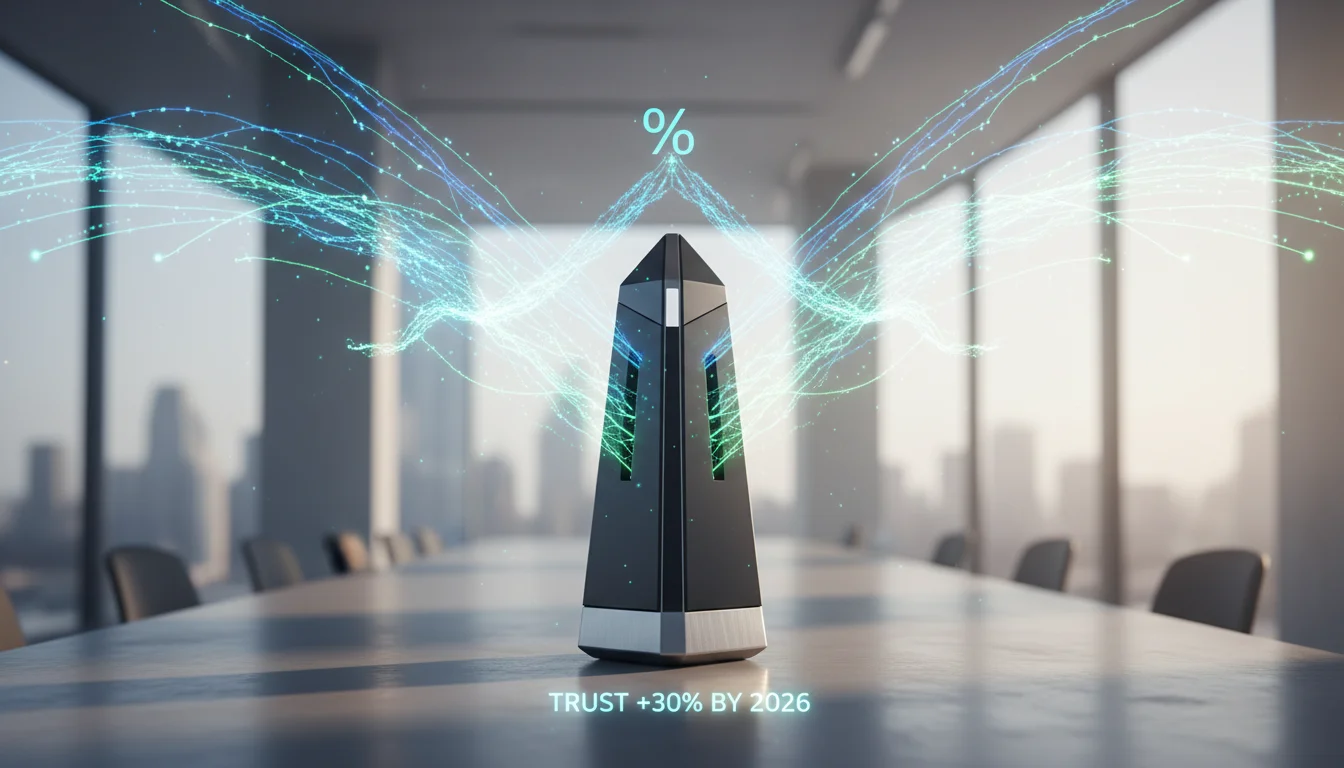
- Weave authentic testimonials and endorsements from experts into the video content itself, because third-party validation can increase trust by over 30% for complicated tech products.
- Don’t just spray your ads everywhere. Distribute them on platforms like LinkedIn and through targeted programmatic networks where you can segment down to the job title, reaching early adopters and tech-savvy pros.
Let’s be honest, autonomous technology, from self-driving trucks to AI running a factory floor, has a serious trust problem. Good tech marketing for this stuff has to do more than just show off features. It has to build real trust by making these complex innovations easy to grasp. Video advertising is your best tool for overcoming skepticism because it can turn abstract code and algorithms into relatable experiences and show an audience the tangible value. So, how do you actually make video ads that persuade a wary audience to convert?
The Challenge of Trust in Autonomous Tech Marketing
The newness and complexity of autonomous tech naturally makes people nervous. They worry about safety, their jobs, and a general loss of human control. This isn’t a new feeling. A 2025 Pew Research Center survey pointed out that over 60% of adults are significantly concerned about fully autonomous vehicles in cities, and that number has been stubbornly high for years. The challenge is overcoming deeply ingrained psychological barriers. The traditional ad playbook which is often heavy on technical jargon and vague promises, just doesn’t bridge this trust gap. We’ve all seen campaigns that focus on the “what” but completely fail to explain the “why” or “how” in a way that feels reassuring. To build trust, you have to confront those fears directly with clear, verifiable evidence that the tech is reliable and beneficial. This means you have to shift the narrative from just announcing a product to showing how it integrates responsibly and helpfully into our lives. This is exactly where video shines. Video gives you dynamic storytelling, visual proof, and an emotional hook, which are all essential for breaking down that skepticism. Think about a video showing a robot arm precisely assembling a delicate watch, or a self-driving shuttle working through a busy campus with smooth efficiency. Seeing is believing, and these visual proofs are far more powerful than any spec sheet.
Crafting Persuasive Video Narratives for Skeptics
Effective video ads for autonomous tech tell a story that gets right at the viewer’s underlying concerns. The narrative structure is everything. You can start by acknowledging the common skepticism or the specific pain point the tech is designed to fix. For example, a video for an autonomous delivery drone could open with the all-too-familiar frustration of a slow, unpredictable delivery service, which makes the ad immediately relevant. Then, you introduce the drone as a reliable, efficient alternative by showing it in action. A killer strategy is the before-and-after scenario. First, show the risk or inefficiency of the current method, then provide a vivid contrast with the autonomous solution. For autonomous farm equipment, you could show the slow, labor-intensive process of someone walking the fields to monitor crops, and then cut to a smart tractor doing the same job with perfect precision, collecting continuous data and performing automated interventions. This comparison makes the benefits obvious and minimizes the perceived risk because it frames the tech as a problem-solver. Even when you’re promoting a machine, you have to focus on the human angle. How does it improve our lives or make us safer? That’s your core message.
Demonstrating Reliability and Safety Visually
Safety is usually the number one objection, so your video ads have to go way beyond simple assurances. You have to show it. For an autonomous driving system, this means using actual footage of the vehicle handling complex scenarios while you highlight the sensor arrays, the real-time decision-making, and the built-in fail-safes. Animations work really well here, too, by illustrating how LiDAR, radar, and cameras work together to paint a complete picture of the environment. A 2024 report from the Insurance Institute for Highway Safety (IIHS) even emphasized that giving people detailed visual explanations of advanced driver-assistance systems (ADAS) made them significantly more confident in the tech. You should also consider bringing in expert testimonials. A quick clip of a respected engineer or a safety expert explaining a specific feature, maybe detailing the redundant systems built into the tech, adds a massive amount of credibility. They aren’t just talking heads, they’re validators. Footage from your controlled testing environments, where the autonomous systems perform perfectly under simulated bad weather or emergencies, is also powerful proof. When showing complex machinery, a short, well-produced segment on your rigorous testing protocols can put a lot of fears to rest. It’s about making your safety protocols transparent.
Using Interactive and Immersive Video Formats
To really connect with a skeptical audience, a standard, passive video often isn’t enough. Interactive video ads let viewers explore the technology at their own pace and get answers to their own specific questions. Imagine an ad for an autonomous warehouse robot where a viewer can click on different hotspots to pull up details about its navigation system, battery life, or payload. This kind of self-directed exploration gives them a sense of control and understanding, which directly fights the fear of the unknown. (Platforms like Spott.ai and Adventr provide good tools for building these experiences.) 360-degree video and virtual reality (VR) experiences are also incredibly potent. For a self-driving car, a 360-degree video can put the viewer right in the driver’s seat, letting them look around and see how the system perceives the world and makes its decisions. That level of immersion can explain the technology in a way no flat video ever could, giving people a “try before you buy” feeling, even if it’s all virtual. While not everyone has a VR headset, it’s a great tool for targeted B2B campaigns, like showing new autonomous industrial equipment to factory managers. A virtual tour of an automated facility is a lot more convincing than a brochure.
Beyond the Screen: Augmented Reality Integration
Augmented reality (AR) in video ads is another practical tool. Think about an ad for an autonomous lawnmower where, using your phone, you can place a virtual model of the mower on your actual lawn to see its size and how it would move. This kind of personalized, contextual experience makes an abstract product tangible and answers practical questions about how it will fit into someone’s life. Snapchat and Instagram have already shown how powerful AR can be for product visualization. The goal is simply to make it easier for people to understand how the technology would apply to them.
| Video Ad Element | Traditional Approach | Recommended for Autonomous Tech |
|---|---|---|
| Engagement Level | Passive, one-way video | Interactive elements (can lift engagement 20%) |
| Trust Building | Jargon & vague promises | Real testimonials & expert validation (can boost trust 30%+) |
| Problem Solving | Listing features | Showing clear, tangible problem-solving |
| Audience Skepticism | Often ignored or dismissed | Confronts fears with verifiable evidence |
| Safety Communication | “Trust us, it’s safe” | Visual proof of ADAS, rigorous testing footage |
| Effectiveness for Skeptics | Focuses on the “what” | Explains the “why” and “how” reassuringly |
Targeting and Distribution: Reaching the Right Skeptics
A great video ad is worthless if the right people don’t see it. For autonomous tech, that means getting much more granular than broad demographics. You want to find the early adopters, tech enthusiasts, and industry pros who are less skeptical and can become your biggest advocates. LinkedIn’s ad platform is invaluable here, letting you target by job title, industry, and skills to ensure your detailed video content reaches the people who will actually appreciate it. Programmatic ad platforms also give you highly specific targeting based on online behavior and interests. Using data from intent signals, like when someone searches for “AI in manufacturing” or “self-driving truck safety,” helps you serve your videos to people who are actively looking for information, even if they’re still on the fence. Retargeting campaigns are also critical. Someone who visited your product page but didn’t convert might be convinced by a video ad that directly tackles a common objection or shows a specific use case they were looking at.
Measuring Impact and Iterating for Success
The effectiveness of your video ads isn’t measured in views. It’s measured in engagement and conversions. You have to track metrics like watch time, click-through rates on your interactive elements, and post-view actions. A high drop-off rate in the first few seconds probably means your hook is failing. A low CTR on your call to action suggests your argument wasn’t strong enough. A/B testing different video creatives is non-negotiable. You might test a version that focuses on safety features against one that emphasizes efficiency gains. Analyze what resonates with your specific audience and then refine your strategy. This data-driven, iterative process is the only way to ensure your budget is being spent on content that actually works.
The Future of Persuasion: Real-World Applications and Transparency
As autonomous tech keeps advancing, our marketing has to get even more transparent and focused on real-world proof. The real future in overcoming skepticism is showing these systems operating live in their intended environments, maybe with an expert on hand for commentary. Imagine a live feed of an autonomous robot working in a factory, allowing viewers to ask questions in real time. That kind of openness completely demolishes any perception that you’re hiding flaws. You should also partner with trusted third-party organizations for independent testing and validation. If your system gets a certification from a respected industry body, featuring that certification prominently in your video ads adds a layer of objective credibility your own claims can’t match. The goal is to get past marketing hype and present undeniable evidence of functionality, safety, and benefit. The less these technologies feel like a “black box,” the more readily people will accept them. Overcoming skepticism requires a smart, strategic approach to video advertising. By crafting compelling stories, showing transparent demos, using interactive formats, and precisely targeting your audience, you can turn doubt into understanding and, finally, adoption. Video has the power to humanize the machine and build that bridge of trust.
Why does video work so well for marketing autonomous tech?
Because it can show a complex system working in the real world which is far more convincing than just talking about it. You can visually demonstrate safety features, operational efficiency, and problem-solving capabilities in a direct way that builds trust and makes the technology feel less foreign.
What’s the best story to tell a skeptical audience?
The most effective stories start by acknowledging a common concern or a pain point the audience already has, then introduce the autonomous tech as the direct solution. Before-and-after scenarios are extremely persuasive because they clearly show the benefit. Always focus on how the technology helps real people.
How do I use video to prove my tech is safe?
Show, don’t just tell. Use actual footage of safety features in action, like sensor arrays and fail-safe mechanisms working. It’s also very powerful to integrate testimonials from your engineers or safety specialists and include clips from your most rigorous testing environments to prove the tech is reliable.
Why should I bother with interactive video?
Interactive elements like clickable hotspots, 360-degree views, and AR give viewers a sense of control by letting them explore the technology on their own terms. This self-directed learning makes complex systems feel more accessible and less intimidating, which helps reduce their apprehension.
Where should I run these video ads?
LinkedIn is a go-to for B2B targeting because of its detailed professional segmentation. Programmatic advertising platforms are also great for finding audiences based on their online behavior and search history. And you should always use retargeting campaigns to re-engage users who have already shown interest in your tech.


