 By Editorial Team
The beverage industry’s tastes change fast. For 2026, video ads aren’t just for market adaptation. They’re how you connect with customers and actually drive sales. Brands that are still relying on static images are getting left behind, you have to use rich media to get anyone’s attention. So, how can beverage companies get video into their marketing and see a real, measurable impact?
Key Takeaways
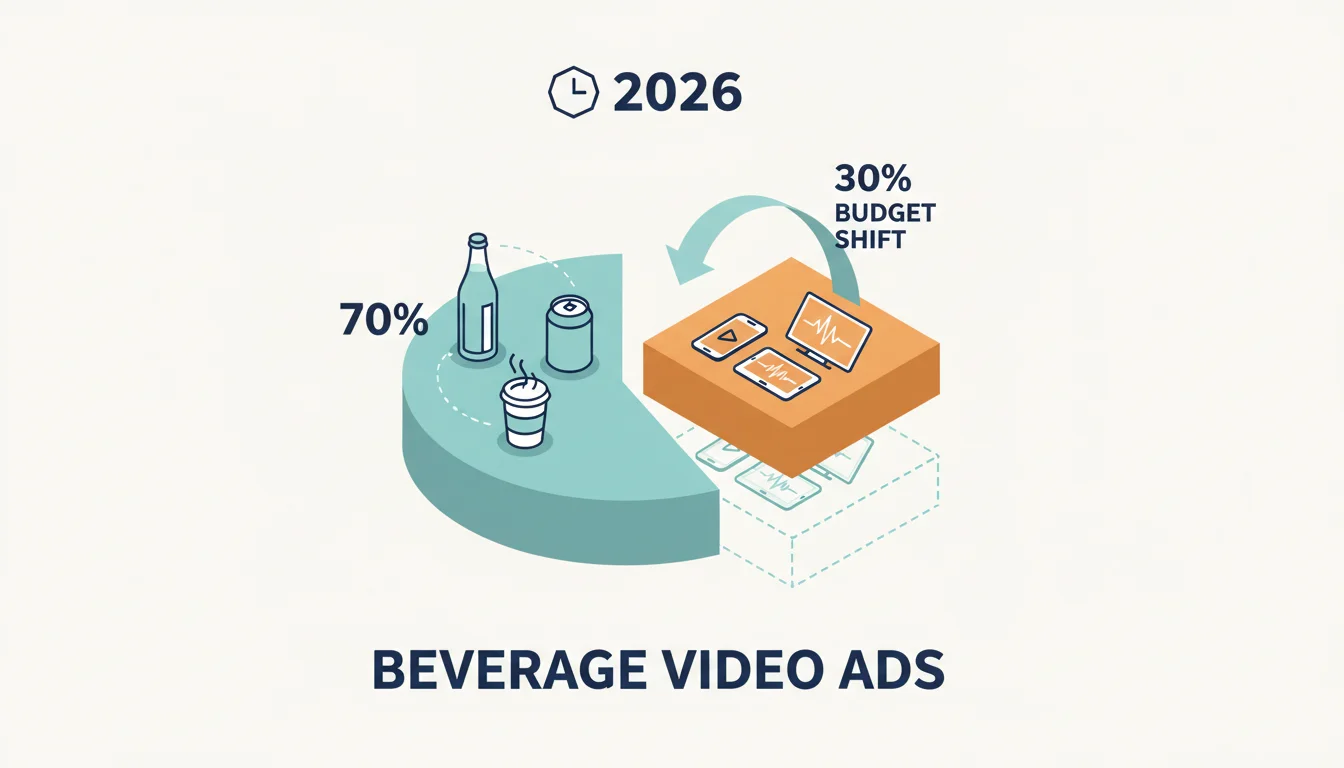
- Put at least 30% of your digital ad budget into video campaigns on Meta Ads and Google Ads. It’s the only way to reach enough different audiences.
- A/B test your video creatives. Specifically, test different calls to action and opening scenes to figure out which ads are your winners.
- Live in your platform analytics. You need to be tracking view-through rate, cost per completed view, and conversion rates to make smart changes on the fly.
- Plan your content with a mix of short, 15-second “snackable” ads for platforms like TikTok and longer 30-second story ads for pre-roll spots on YouTube.
- Make sure every video looks good on a phone. Over 70% of digital video is watched on smartphones, so mobile optimization is not optional.
1. Define Your Target Audience and Platform Strategy
Before you even think about filming, you have to know exactly who you’re trying to reach and where they hang out online. I’m talking about their psychographics, what they drink and when, and their favorite digital platforms. A Gen Z crowd on TikTok or YouTube Shorts wants quick, authentic-looking content, while millennials might be more receptive to a polished story on Instagram or their connected TV (CTV). Pro Tip: Don’t spray the same ad across every platform. You have to tailor it. That 60-second brand film that kills on YouTube will be a complete dud as a 15-second ad interrupting a mobile game. Common Mistake: Just using broad demographic targeting. That’s how you waste ad spend. Get into the weeds with the detailed audience tools inside platforms like Meta Ads Manager (business.facebook.com/adsmanager) or Google Ads (ads.google.com). For example, inside Meta, you can target people interested in “craft beer” or “sustainable products,” and then add a layer for behaviors like “frequent travelers” to get really specific.
“For example, in the UK, two companies were fined £150,000 for sending 7.5 million unwanted messages. Third-party suppliers were unable to prove valid consent.”
2. Develop Compelling Creative Concepts and Storyboards
The beverage market is completely saturated, so your video ad has to do more than just show the product. Think about the feeling your brand is selling. Is it refreshment? Community? Adventure? The creative concept needs to bring that feeling to life. A sparkling water brand could show moments of energy and hydration on a hike, for instance, while a coffee brand could focus on the warm, comforting ritual of a morning cup. There’s a 2025 IAB report (iab.com/insights/iab-digital-video-report-2025/) that found campaigns with a real story had 2.5 times higher brand recall than the ones that just showed the product. You don’t need a Hollywood budget, you just need a clear story. A simple storyboard, even one you sketch out by hand, that maps out each shot, the dialogue, and the call to action is an incredibly valuable tool. Pro Tip: The first three seconds are everything. That’s the hook. If you don’t grab them right away, they’re gone. Use fast cuts, ask a question, or hit them with an unexpected sound. Common Mistake: Trying to say too much. An ad isn’t a documentary. Pick one main message and stick to it, because too many ideas just dilute the impact.
3. Produce High-Quality Video Assets
Quality is important, but “quality” doesn’t have to mean expensive. I’ve seen well-lit smartphone videos with crisp audio crush poorly made professional shoots. If you’re going to spend money anywhere, spend it on a good microphone. Bad audio is way more of a turn-off for viewers than slightly grainy video. You also have to think in different shapes: shoot horizontal for YouTube, vertical for Stories and TikTok, and square for the feed. When you’re shooting, think about how the brand shows up. Is the product integrated in a way that feels natural? Can you see the logo without it being shoved in your face? Is the color scheme on-brand? We’ve seen purchase intent jump when brands just show their product in a relatable, aspirational setting instead of on a boring white background. Pro Tip: Don’t sleep on user-generated content (UGC). Authentic clips from actual customers can be gold, especially for new brands trying to reach younger people. Just make sure you get permission first. Common Mistake: Forgetting about mobile. According to Nielsen’s 2025 Digital Media Report (nielsen.com/insights/2025-digital-media-report/), over 70% of video is watched on phones. Your text has to be big enough to read on a small screen and the visuals need to make sense with the sound off.
4. Implement A/B Testing for Maximum Impact
Never, ever assume your first ad is the best one. A/B testing is not negotiable. Test everything: the opening hook, the call to action (CTA), the music, even the video length. For instance, you could run two versions of a 15-second ad, one with “Shop Now” and one with “Learn More”, to see which one performs better. Google Ads and Meta Ads Manager have great built-in testing features for this. In Google Ads, you can run Experiments for your video campaigns to directly compare metrics like view-through rate (VTR) and conversions between your different ad versions. My advice is to only test one thing at a time. If you change the hook and the CTA and the music all at once, you’ll have no idea which change actually made the difference. Pro Tip: Test your thumbnails. The thumbnail is often the very first thing people see. A great thumbnail can get you way more clicks. Common Mistake: Not giving your tests enough time or budget to work. You need to collect enough data for the results to be statistically significant, which means letting tests run for at least a week or two with enough spend on each version to get a real read.
5. Monitor Performance and Iterate
The day your campaign launches is just day one of the real work: optimization. You have to be in your analytics dashboards constantly, watching the performance. The key numbers I watch are:
- View-Through Rate (VTR): The percentage of people who actually finished the video.
- Cost Per Completed View (CPCV): How much you’re paying every time someone watches the whole ad.
- Click-Through Rate (CTR): The percentage of viewers who clicked your link.
- Conversion Rate: The percentage of those clicks that turned into a sale or sign-up.
You’ll start to see patterns. Maybe shorter videos are crushing it on mobile, or a certain message is really landing with a specific demographic. You use those insights to tweak your live campaigns and to make your next batch of ads even better. This back-and-forth process is what true market adaptation with your beverage video ads looks like. A 2025 HubSpot report (hubspot.com/marketing-statistics) found that marketers who are constantly optimizing their video ads see their ROI improve by an average of 20% within six months. Pro Tip: Don’t be sentimental. If an ad isn’t working, kill it fast and move that budget to the ads that are. The digital space moves quickly, and your strategy has to keep up. Common Mistake: Setting up a campaign and then just letting it run. Consumer trends in the beverage world are always shifting. What worked last quarter might totally bomb this quarter. Constant monitoring and tweaking are the only way to get sustained success. The beverage industry is too competitive to be lazy. Agility is key, and video gives you a direct path to your customer. If you define your audience, tell good stories, produce solid content, test relentlessly, and never stop optimizing, you can cut through the noise and solidify your spot in the market.
Ideal length for a beverage video ad in 2026?
It totally depends on the platform. For TikTok or Instagram Reels, you’re looking at 6 to 15 seconds, max. For a pre-roll ad on YouTube, 15 to 30 seconds gives you enough time for a quick story. If you’re on connected TV (CTV), you can sometimes get away with a longer 60-second spot.
How can a small beverage brand compete with the big guys on video?
Smaller brands win by being authentic, targeting a very specific niche, and getting creative with their stories. Use user-generated content, run campaigns focused on a single city, or work with micro-influencers. These tactics can create really powerful, cheap video ads that connect with a community in a way a generic ad from a huge corporation can’t.
Do beverage video ads always need a call to action?
Yes, pretty much. Every video ad needs a clear call to action (CTA). It can be direct, like “Shop Now” or “Find a Store Near You,” or something softer like “Learn More” or “Visit Our Site.” Even if your main goal is just brand awareness, a little nudge to get the viewer to do something is always a good idea.
What’s the role of sound in a good beverage ad?
Sound is huge, even though a lot of people see the ad first with the sound off. The right music, a clear voiceover, and good sound effects make the ad way more memorable and emotional for people who do have the sound on. And you must always include captions for the silent-watchers.
How often should a beverage brand refresh its video ads?
You should plan on refreshing your main video ads every 2 or 3 months to avoid ad fatigue. Your metrics will tell you when it’s time. If you see your view-through rates dropping and your cost per acquisition creeping up, that’s your signal that the creative has gone stale and it’s time for a change.


