 By Editorial Team
Key Takeaways
- An abysmal 18% of consumers actually like your video ads following them around online, which means it’s time to audit your retargeting funnel.
- To get a 30% higher video completion rate on social, you have to design the first 3 seconds for silent viewing, that means captions and strong visuals are non-negotiable.
- A 2025 Google Ads study confirms what we all should know: personalized CTAs get 2.5x higher click-throughs, which is impossible without smart audience segmentation.
- Want to lift customer retention by 15% in 90 days? Use post-purchase videos like tutorials and thank-yous to extend the customer experience beyond the initial conversion.
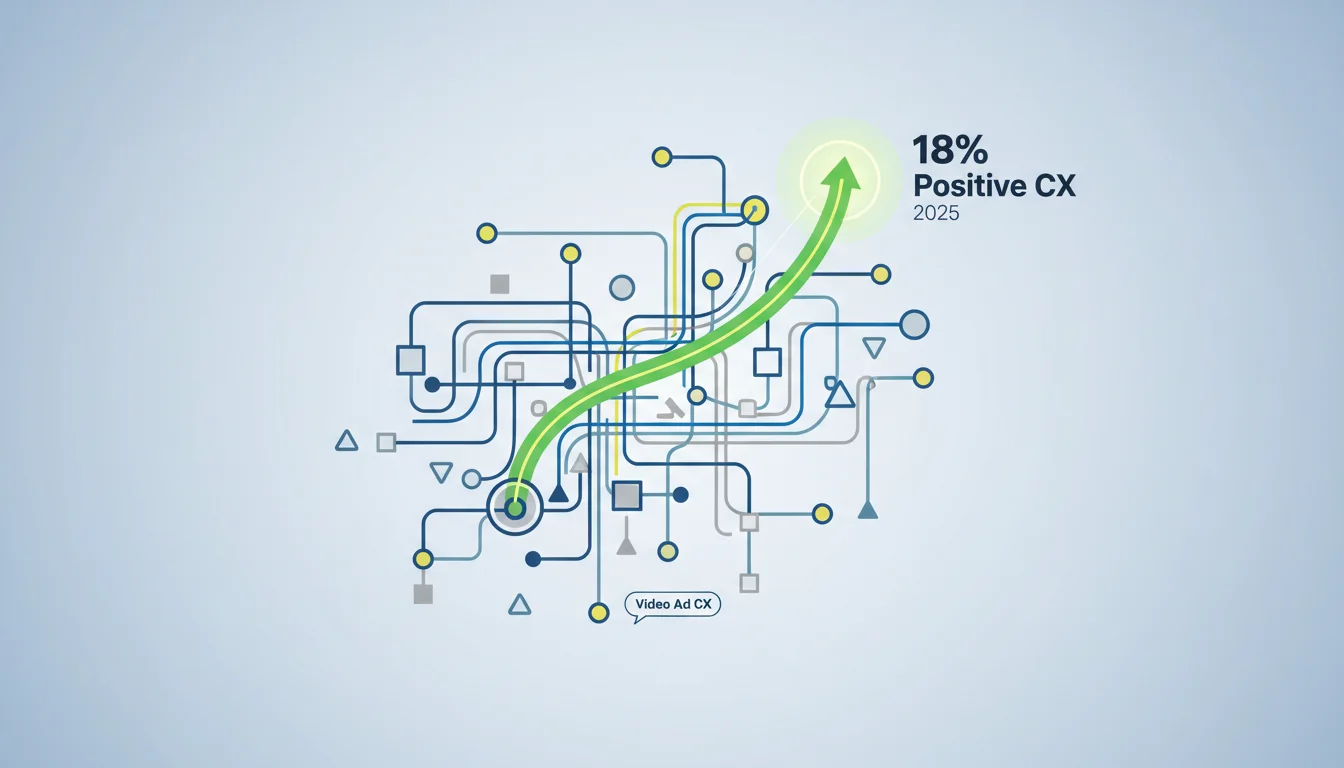
In 2025, a NielsenIQ report dropped a bomb: only 18% of people have a positive thing to say about video ads that follow them across the web. This points to a massive disconnect in how we’re auditing customer experience for video ad funnels. So, how do we marketers fix this problem where our ads are everywhere, but genuine customer satisfaction is nowhere to be found?
Only 18% of Consumers Report a Positive Experience with Retargeted Video Ads
That NielsenIQ number is pretty stark. Almost four out of five consumers are annoyed by those retargeted video ads, the digital ghosts that stalk them from one site to another. This reflects a fundamental breakdown in the value exchange. When a video ad pops up again and again, usually with the exact same tired message, it feels creepy, not helpful. My own work doing CX audits for B2B and B2C clients confirms this over and over. I constantly find video re-engagement strategies are just “set it and forget it,” with none of the fine-tuning needed to stay relevant and stop burning people out. The first video might have been great, but every follow-up fails to acknowledge the user’s previous interaction or change the script.
The problem is unintelligent retargeting. A user who watched 90% of your product demo on YouTube should never see the same 30-second intro video on LinkedIn an hour later. It’s just lazy. Instead, the next ad they see should build on that first touchpoint, maybe showing a customer testimonial or a deeper dive into a feature they seemed interested in. But this requires actually understanding user behavior inside the video player, something most ad setups just don’t track. Without that data, brands are just shouting the same thing on repeat. In a proper CX audit, we have to forensically examine these retargeting sequences to pinpoint the lazy repetition and figure out where a smarter, progressive story could be told.
30% Higher Completion Rates for Videos Designed for Silent Social Media Viewing
A 2025 Statista study showed that videos on social media get a 30% higher completion rate if the first 3 seconds are built for silent viewing. This is a huge piece of data that so many teams miss in the race to create slick content. Most social feeds are sound-off by default, so your video’s opening has to grab attention without making a peep. If the visual story can’t stand on its own or there are no captions, people just keep scrolling. I’ve seen beautiful campaigns with amazing audio fall completely flat because the visual intro depended entirely on the sound, leading to a terrible drop-off rate right out of the gate.
This involves layering the experience, not compromising on the sound design for people who do turn it on. Those first three seconds are everything. Is your main message visible on screen? Are captions burned-in and easy to read? Too many brands still treat captions as a compliance box to check instead of a core creative element. A good CX audit scrutinizes the creative choices in these silent openers, from the visual hooks and motion graphics to the clarity of the on-screen text. It also means A/B testing different silent intros to see what visual cues actually work with your audience. The goal is to make the video so visually engaging that users *want* to tap for sound.
Personalized Calls to Action Generate 2.5x Higher Click-Through Rates
That a 2025 Google Ads study found video campaigns with personalized calls to action (CTAs) get 2.5 times higher click-throughs shouldn’t be a surprise, but it’s still a tactic most brands aren’t using. Conventional wisdom leads to a single, boring CTA like “Learn More” or “Shop Now.” They’re fine, I guess, but they completely ignore the viewer’s specific journey or intent. A personalized CTA speaks to what the user actually cares about. For instance, if someone just watched a video about a specific software feature, the CTA should be “Explore [Feature Name] Benefits,” not some generic command.
The real work, and where a CX audit pays for itself, is in the segmentation and dynamic delivery of these CTAs. This means getting your audience segmentation right, which often requires integrating data from your CRM with your ad platform’s tools. Are you tracking which product pages a user visited on your site? Did they abandon a cart? Why isn’t that information reflected in the video ad’s CTA? I always push clients to develop a library of context-specific CTAs that can be swapped in dynamically based on audience segments and where they are in the funnel. This is about the strategic relevance of what you’re asking them to do, not just A/B testing button colors. A generic CTA is a wasted chance to connect on a much more relevant level, and it absolutely kills your conversion rates.
Post-Purchase Video Follow-ups Increase Retention by 15%
Here’s a statistic that gets ignored in the endless hunt for new customers: post-purchase videos, like tutorials, unboxing guides, or a simple thank-you, can boost customer retention by 15% within the first 90 days. This points to a massive CX optimization opportunity that most video ad funnels miss: the post-conversion phase. Most video strategies just stop cold once a purchase happens. But the customer’s journey keeps going. That window right after a purchase is your best chance to build real loyalty and stop churn. A simple “Thank You” video from the CEO or a product manager can go a long way in humanizing your brand and making the customer feel good about their decision.
Even better are instructional videos that help customers actually use what they just bought. Imagine you just signed up for a complex software and immediately got a personalized video walking you through the key features for your specific subscription tier. This kind of proactive support cuts down on user frustration and support tickets, which builds a much better long-term relationship. When I do a CX audit, I look specifically at the post-purchase video content. Is it easy to find? Is it personalized at all? Does it answer obvious questions? So many companies pour money into pre-purchase video but have nothing for after the sale. This is a huge mistake, because satisfied customers repurchase and become your best advocates. This goes beyond just retention. It’s about building a community.
Challenging the “Short-Form Video for Everything” Dogma
The current dogma in video advertising says short-form content is king, especially for top-of-funnel awareness on social media. We hear it all the time: “keep it under 15 seconds,” “attention spans are dead.” While quick, punchy videos have their place, I completely disagree that short-form is the best format for every single stage of the video ad funnel. This one-size-fits-all advice leads to dumbed-down messaging and completely misses chances for deeper engagement, especially when a customer is seriously considering a purchase. For a complex product, a 15-second spot is basically useless for communicating real value or setting your brand apart.
Think about a high-ticket B2B software sale. A short video might get your name out there, but a prospect who’s actually evaluating options needs more. They need details on features, benefits, and real-world use cases. For that person, a 2- or 3-minute video showing a workflow integration or a detailed client case study is infinitely more persuasive than a bunch of disconnected 15-second clips. The key is relevance and value, not just length. If a longer video gives someone genuine insight, answers their questions, and builds trust, they will watch it. A CX audit should judge video length against the goals of that specific funnel stage and the complexity of the message, not against some arbitrary time limit. You have to earn their attention with substance, not demand it with brevity.
Running a full customer experience audit on your video ad funnels isn’t a nice-to-have. It’s essential for any real growth in 2026. By digging into every touchpoint, from the first ad they see to the videos they get after buying, you can turn generic, wasteful campaigns into personalized experiences that perform and actually connect with your audience.
What is a video ad funnel CX audit?
A customer experience audit for a video ad funnel is a top-to-bottom analysis of every video touchpoint a customer sees, from the first ad to post-purchase content. We assess everything for relevance, effectiveness, and emotional impact to find what’s working and what’s not.
Why is a CX audit so important for video ads?
It’s important because a CX audit looks past vanity metrics like impressions. It focuses on the quality of the customer’s interaction and their emotional response, which are the things that actually drive conversions, satisfaction, and long-term brand loyalty.
How often should we audit our video ad funnel?
You should be doing a video ad funnel CX audit quarterly, or at the very least twice a year. Things change fast, audience behavior, platform algorithms, your competition, and a regular audit ensures your video strategy doesn’t go stale.
What are the most common problems you find in these audits?
The most common pitfalls are almost always the same: annoying and repetitive retargeting, generic calls to action, videos that are useless without sound on social media, and a complete lack of post-purchase video content. All of them create a poor customer experience.
Can a CX audit actually improve video ad ROI?
Yes, absolutely. A good CX audit improves ROI by finding and fixing what’s broken in your funnel. You stop wasting money on bad creative, optimize content to get better engagement and more conversions, and build stronger customer relationships that lead to repeat business.


