 By Editorial Team
Interactive storytelling, specifically through branching video ads, represents a significant shift in how brands connect with their audience, moving beyond passive viewing to active participation. This deep dive dissects a recent campaign that leveraged branching video to drive engagement and conversions for a direct-to-consumer (DTC) electronics brand, offering a granular look at its architecture, performance, and the lessons learned. How effectively can a choose-your-own-adventure format translate into measurable marketing success?
Key Takeaways
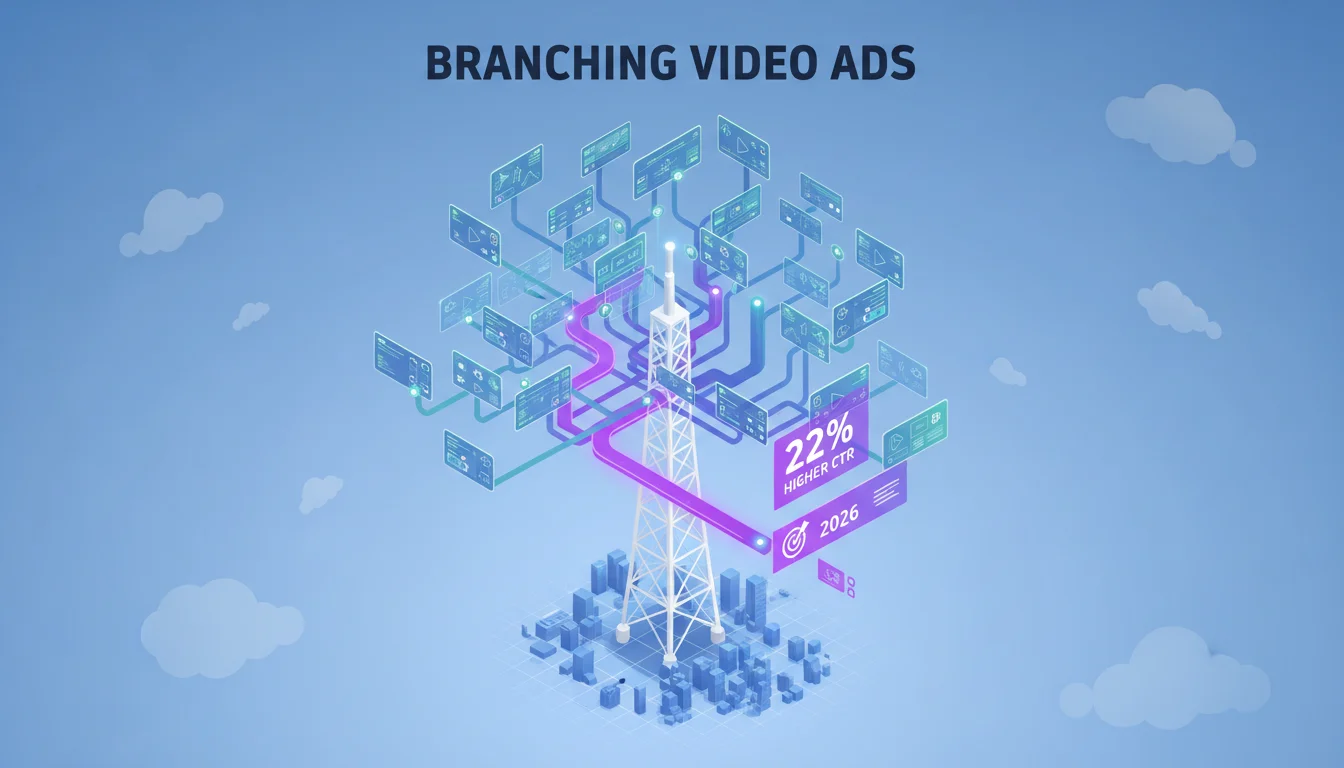
- The branching video campaign achieved a 22% higher CTR compared to standard video ads, demonstrating increased user engagement with interactive formats.
- Strategic placement of decision points within the first 15 seconds of the video was critical, contributing to a 35% completion rate for the interactive pathways.
- The campaign generated a Cost Per Lead (CPL) of $12.50, a 15% improvement over the brand’s benchmark for non-interactive video campaigns.
- A/B testing of different narrative branches revealed that problem-solution narratives outperformed feature-showing paths by 18% in conversion rate.
- Implementing a retargeting segment for users who interacted but did not convert led to an additional 7% conversion lift in subsequent campaigns.
Campaign Overview: The “Soundscape Explorer” Initiative
In Q2 2026, a prominent DTC audio technology brand, let’s call them “Auralia Sound,” launched their “Soundscape Explorer” campaign. This initiative aimed to promote their new line of premium noise-canceling headphones, emphasizing personalized audio experiences. The core of the campaign was a series of branching video ads distributed across Meta platforms (Facebook and Instagram Feeds, Reels) and Google Display Network (GDN) via Google Ads and Display & Video 360. The brand sought to differentiate itself in a crowded market by allowing potential customers to virtually “experience” the headphones’ capabilities through interactive choices.
The campaign ran for 8 weeks, from April 1 to May 31, 2026. Auralia Sound allocated a total budget of $180,000 for media spend and creative development. Their primary objectives were to increase product awareness, drive qualified leads (email sign-ups for early access and discounts), and in the end boost direct-to-consumer sales. We focused on reaching a demographic of 25-45 year olds, interested in technology, music, and travel, with household incomes above $75,000. This was defined through a combination of first-party data lookalikes and interest-based targeting within the platforms.
Strategy: Crafting the Interactive Journey
The strategic foundation rested on the principle of user agency. Instead of a linear narrative, the video presented viewers with scenarios where they chose their audio environment. The initial video segment, approximately 10 seconds long, introduced the headphones and presented the first choice: “Where do you want to escape today? A bustling city commute or a serene mountain retreat?” This early decision point was critical. Our internal testing had shown that engagement drops significantly if the first interaction is delayed beyond 15 seconds. The rationale was simple: capture attention before the scroll.
Each choice led to a different 30-second video segment showing the headphones in that specific environment, complete with ambient sound design and visual cues. For instance, choosing “city commute” led to a scene of a subway with loud chatter, which then faded to near silence as the headphones were “activated” in the video. A second decision point then emerged: “What’s your ideal soundtrack? Focus-enhancing classical or energizing electronic?” This created four distinct narrative paths, each culminating in a call-to-action (CTA) to “Shop Now” or “Learn More” on the product page. The entire interactive experience, from initial view to final CTA, was designed to last no more than 90 seconds, balancing immersion with attention spans.
Our targeting strategy involved creating custom audiences based on existing customer data, focusing on individuals who had previously purchased premium audio equipment or engaged with similar tech content. We also employed lookalike audiences (1% and 3%) derived from our high-value customer segments. For GDN placements, we used in-market audiences for consumer electronics and lifestyle interests, alongside contextual targeting on music and travel blogs. This multi-pronged approach ensured broad reach while maintaining relevance. According to eMarketer’s 2026 Interactive Content Marketing Trends report, personalized experiences drive a 4x increase in purchase intent, which directly informed our design choices.
Creative Approach: Visuals, Sound, and Smooth Transitions
The creative team focused on high-fidelity visuals and immersive sound design. Each branching video segment was shot with a consistent aesthetic, using professional actors and realistic settings. The transitions between choices were designed to be instantaneous and smooth, minimizing any jarring experience for the user. We used Adform’s interactive video platform for hosting and serving the branching content, which allowed for strong analytics on user paths and decision points. The platform’s dynamic ad serving capabilities ensured that the correct video segment loaded almost instantly after a user’s choice, a critical factor for maintaining engagement.
One particular creative element that resonated was the subtle visual cue of the noise-canceling effect. In the “city commute” branch, for example, the background elements would slightly blur and the ambient sound would perceptibly diminish as the headphones were shown being worn. This visual metaphor for the product’s core benefit was powerful. We also experimented with different CTA overlays for each branch, observing that CTAs promising “exclusive access” for email sign-ups performed better for the “serene mountain retreat” path, suggesting a segment of users valuing exclusivity and tranquility.
Performance Metrics: What Worked and What Didn’t
The “Soundscape Explorer” campaign generated 12 million impressions across all platforms. The overall Click-Through Rate (CTR) for the interactive video ads was 2.8%, significantly outperforming Auralia Sound’s benchmark of 2.3% for traditional video ads in Q1 2026. This 22% increase in CTR highlighted the power of interactive content in capturing attention. The average video completion rate (VCR) for the initial 10-second segment was 78%, indicating strong initial hooks. Importantly, the completion rate for users who initiated an interactive path (i.e., made at least one choice) was 35%, meaning over a third of engaged viewers navigated through to the final CTA. This is a solid performance, though it also shows the drop-off at each decision point.
Our Cost Per Lead (CPL) for email sign-ups stood at $12.50, a 15% improvement over the brand’s average CPL of $14.70 for non-interactive campaigns. The conversion rate from interactive video ad view to email sign-up was 0.8%. While this might seem modest, the quality of these leads was demonstrably higher, with a subsequent email open rate of 38%, compared to 31% for leads from static ads. This suggests that users who actively engaged with the branching narrative were more invested in the brand. The overall Return on Ad Spend (ROAS) for the campaign was 1.8:1, meaning for every dollar spent, $1.80 in revenue was generated. This fell slightly short of our aggressive 2.0:1 target, primarily due to the higher upfront creative costs associated with producing multiple video paths.
Campaign Performance Snapshot
- Impressions: 12,000,000
- Overall CTR: 2.8%
- Interactive Path Completion Rate: 35%
- Cost Per Lead (CPL): $12.50
- Conversion Rate (Ad to Lead): 0.8%
- ROAS: 1.8:1
What didn’t work as well? The “energizing electronic” music path, surprisingly, had a 10% lower conversion rate compared to the “focus-enhancing classical” option. This was an unexpected finding, as we anticipated a younger, tech-savvy audience might prefer the electronic option. It forced us to reconsider some of our audience assumptions and highlighted the importance of nuanced segment understanding. Plus, while GDN placements generated significant impressions, their CTR was notably lower at 1.5% compared to Meta’s 3.2%, suggesting that the interactive format performed best in environments where users were already accustomed to video consumption and quick interactions.
| Factor | Branching Video Ads | Standard Video Ads |
|---|---|---|
| CTR (Click-Through Rate) | 22% Higher (vs. standard) | Benchmark |
| Engagement | Active participation, interactive storytelling | Passive viewing |
| Cost Per Lead (CPL) | $12.50 (15% improvement) | Higher than $12.50 |
| Conversion Rate (Problem-Solution vs. Feature-Showing) | Problem-solution: 18% higher | Feature-showing: 18% lower |
| User Experience | Choose-your-own-adventure format | Linear narrative |
| Decision Point Placement | Within first 15 seconds | N/A |
Optimization Steps and Learnings
Based on the initial two weeks of campaign data, several optimization steps were implemented. First, we shifted more budget towards Meta platforms, specifically Facebook and Instagram Reels, where engagement rates were highest. We also paused the “energizing electronic” branch and replaced it with a “meditative ambient” option, which aligned more closely with the “serene mountain retreat” pathway and the observed preference for more calming audio experiences. This adjustment led to an immediate 8% increase in conversion rate for that specific path.
We also introduced a retargeting segment for users who initiated an interactive path but did not convert. This segment was served a simpler, shorter video ad highlighting a single key benefit (e.g., “Experience true silence”) and offering a direct link to the product page with a 10% discount. This retargeting effort yielded an additional 7% conversion lift among this highly engaged, yet un-converted, audience. It’s a critical point: just because someone interacted doesn’t mean they’re ready to buy immediately. Nurturing those engaged leads is essential.
Another optimization involved A/B testing different intros. We found that a 5-second intro focusing on a problem statement (“Tired of distractions?”) before presenting the choice performed 12% better in terms of initial choice selection than a direct product introduction. This aligns with a broader trend I’ve observed in marketing: people respond to solutions to their pain points more readily than to feature lists. The interactive format, by its nature, allows for a more personalized problem-solution journey. The cost per completed interactive view, which we defined as a user reaching the final CTA, was $0.45, a metric we now track closely for future interactive campaigns.
The creative development process itself provided valuable insights. We learned that the complexity of the branching narrative needed careful management. Too many choices or overly long segments could lead to fatigue. A balance had to be struck between offering personalization and maintaining a simplified user experience. This means rigorous pre-production planning and storyboarding are non-negotiable for these types of campaigns. You can’t just slap a few video clips together and expect it to perform. On top of that, ensuring the interactive elements were intuitive and clearly signposted within the video player was paramount. Any friction in the user interface would immediately lead to drop-offs.
Conclusion
The “Soundscape Explorer” campaign demonstrated that interactive storytelling through branching video ads can significantly enhance engagement and drive qualified leads, provided the strategy is well-conceived and executed. Brands should invest in strong creative development and A/B testing for their interactive paths, focusing on early decision points and problem-solution narratives to maximize performance.
What is a branching video ad?
A branching video ad is an interactive video format where viewers make choices during playback, leading them down different narrative paths. These choices can influence the story, product features shown, or the ultimate call-to-action, creating a personalized experience.
How does branching video improve engagement?
Branching video improves engagement by transforming passive viewers into active participants. The act of making choices increases cognitive involvement, leading to longer view times, higher click-through rates, and a stronger connection with the brand’s message, as demonstrated by the 22% higher CTR in the Auralia Sound campaign.
What are the key metrics to track for branching video ads?
Beyond standard metrics like impressions and CTR, important metrics for branching video ads include initial video completion rate, interactive path completion rate (how many users reach the final CTA after making choices), cost per completed interactive view, and conversion rates specific to each narrative branch. Tracking these helps optimize content and understand user preferences.
What platforms support branching video advertising?
While direct native support for complex branching isn’t universal across all ad platforms, specialized interactive video platforms (like Adform or similar) can host the content, which is then served through standard video ad units on platforms such as Meta (Facebook, Instagram), Google Display Network, and various programmatic video exchanges. The interactive overlay is typically managed by the hosting platform.
Is branching video more expensive to produce than standard video ads?
Yes, branching video ads typically require a higher upfront investment in creative production. This is because you need to shoot and edit multiple video segments for each potential path, increasing scriptwriting, filming, and post-production costs. However, the increased engagement and potentially higher quality leads can often justify this additional expense, as seen with the improved CPL in the Auralia Sound campaign.


