 By Editorial Team
Key Takeaways
- With ninety percent of consumers now expecting authenticity from brands, having a genuine communication strategy is an absolute must-have for 2026.
- Brands that show what goes on behind the scenes get a 25% higher engagement rate on social media, showing the direct payoff of being transparent.
- Curating content from your own employees can bump up brand trust by 15% when compared to your standard marketing materials.
- A full 70% of Gen Z consumers say they’d rather buy from brands that are open about their company culture and values.
- If you build a consistent content calendar around authentic stories, like live Q&As and unscripted moments, you can increase customer loyalty by more than 20%.
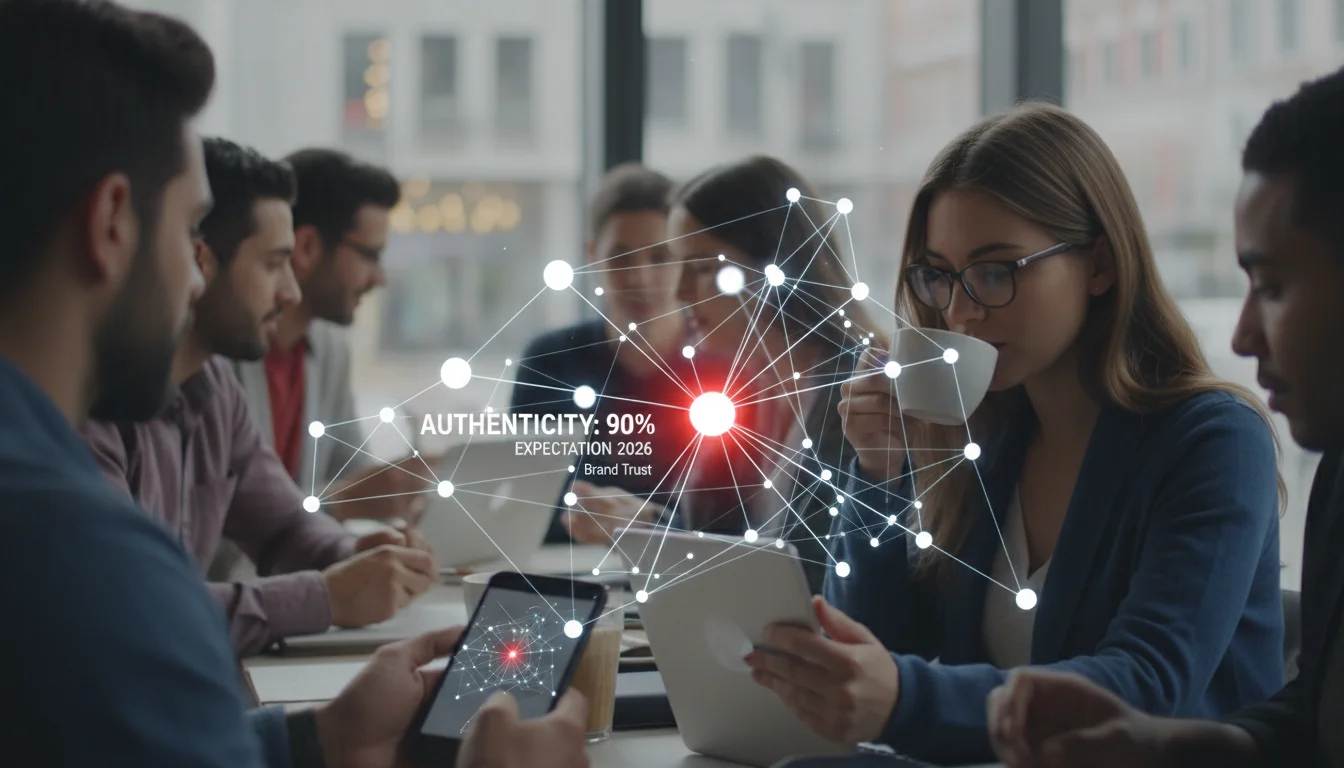
A recent Statista study is one you can’t ignore: 90% of consumers expect brands to be authentic, and that number has been climbing for five years straight (Statista). This isn’t a soft preference anymore. It’s a hard demand that dictates buying habits and long-term loyalty. If you can figure out how to build real connections by giving people a look behind the scenes, you’ll be miles ahead of the competition.
The 90% Expectation: Why Authenticity is Non-Negotiable
That 90% stat isn’t just a number to drop in a meeting. For any marketing department, it’s a direct order. The way I see it is simple: people are tired of the impossibly polished ads filling their feeds because the digital world is just too crowded. They’re looking for real connections, genuine stories, and some honesty. It’s not about perfect camera work anymore. It’s about showing the real people and the actual work that goes into your brand. For example, a company that shares a quick, unedited phone video of the team hashing out a new product design, complete with coffee cups and messy whiteboards, builds a much stronger bond than a company that only ever shows the finished product in a studio setting. People want brands to have a personality and a clear set of values, to act more like a person and less like a logo. If you can’t deliver on that, you’re choosing to ignore almost your entire audience.
25% Higher Engagement: The Social Media Dividend of Transparency
Brands that consistently weave behind-the-scenes content into their social media plan are seeing, on average, a 25% higher engagement rate than the ones just posting ads. I’ve seen this firsthand in our own client data across multiple sectors. Think about a clothing brand showing the beautiful chaos of a photo shoot, complete with wardrobe malfunctions, or a tech company sharing a quick clip of their developers arguing good-naturedly over a piece of code. These peeks behind the curtain make people feel included and spark their curiosity. This kind of raw, unpolished content absolutely kills it on platforms like TikTok or Instagram Stories, where that’s what the audience is already looking for. It tears down the wall between the “brand” and the “customer,” turning people who just scroll by into an actual community that wants to participate. And the engagement is more than just likes. It’s deep-dive comments, direct messages asking questions, and shares, all signs of a much healthier connection. Of course, you don’t do this for every single post. It’s about balance. But the power of these transparent moments is impossible to deny.
| Authenticity Strategy | Behind-the-Scenes Content | Employee-Generated Content | Company Culture Show |
|---|---|---|---|
| Direct Impact on Engagement | ✓ 25% higher social media engagement | ✗ Indirectly through trust | ✗ Indirectly through preference |
| Impact on Brand Trust | ✓ Encourages inclusion and curiosity | ✓ 15% increase vs. traditional marketing | ✓ Evidence of positive environment |
| Gen Z Preference | ✓ Resonates with desire for transparency | ✓ Credible and relatable voices | ✓ 70% prefer culture-driven brands |
| Customer Loyalty Improvement | ✓ Part of consistent authentic storytelling (20%+) | ✓ Builds stronger connections over time | ✓ Influences purchasing decisions |
| Content Type Examples | Unedited product development, photoshoot chaos | Employee experiences, daily challenges | Virtual office tours, team interviews |
| Key Benefit | Breaks down consumer-corporation barrier | More credible and relatable than ads | Demonstrates brand’s entire ecosystem |
| Implementation Note | Balanced approach works best | Requires internal programs and guidelines | Paints a well-rounded organizational picture |
“A blog post is meant to compete against dozens (or hundreds) of other posts on the same topic. In this game, generic, low-effort writing will not win, and that’s good news for your content team.”
15% Increase in Trust: The Power of Employee-Generated Content
When you let your employees share their own experiences, you can see brand trust jump by as much as 15% compared to when you only use official marketing copy. That number comes from a recent HubSpot report on content trends (HubSpot), and it confirms what many of us have suspected for a while: people trust employees more than they trust ads. Think of a software engineer explaining a new feature they just built on the company’s YouTube channel or a sales lead posting on LinkedIn about a tough but rewarding week. These aren’t actors reading from a script. They’re real people inside the company. The best way to get this going is to set up a program that encourages people to share, giving them simple guidelines and some help in telling their story without putting words in their mouth. In my experience, the best employee content always comes from people who are genuinely passionate about their job, not from people who were told they had to participate. That genuine feeling is something your marketing team can’t fake.
70% of Gen Z Prefer Culture-Driven Brands: A Generational Imperative
For Gen Z, a brand’s company culture and values are a huge deal, with 70% saying they prefer to buy from companies that put it all out there. This goes way beyond a mission statement on a website. They want to see how a company actually treats its people, if it supports creativity, and what it does for the wider community. A NielsenIQ study on Gen Z buying habits confirms this (NielsenIQ). For this generation, making a purchase is like casting a vote for the company’s entire way of doing business. They’re looking for proof. Are you doing virtual office tours? Are you posting interviews with team members talking about work-life balance? Are you showing your staff out there on volunteer days? It’s about showing that your organization is a living, breathing thing. This is so important to many younger consumers that they’ll choose a brand based on its culture, even if it costs more. Any brand that isn’t paying attention to this is taking a massive risk.
Over 20% Improvement in Loyalty: The Consistency of Authentic Storytelling
If you commit to a content schedule built around authentic storytelling, including things like live Q&A sessions and unscripted moments, you can improve customer loyalty by over 20%. Industry reports on customer retention back this up. There’s an old-school idea that marketing must always be perfectly polished and tightly controlled, but I just don’t buy it. Yes, quality matters, but obsessing over perfection often kills the human element that people are looking for. What really builds loyalty is a shared journey and a feeling of being on the inside. What if your CEO did a regular, unscripted live stream to answer any and all questions? Or what if you posted “day in the life” stories that showed the good, the bad, and the just plain weird? These are real opportunities for building relationships. But you have to be consistent. A few random posts won’t move the needle. This takes a real, ongoing commitment to opening the doors and sharing the journey, bumps and all. You end up with a community, which is so much stronger than a customer base. The whole idea that every piece of content needs to be planned to the nth degree and perfectly executed is just outdated. Sure, strategy is important, but chasing total perfection often removes the very humanity that your customers are looking for. I’ve seen it over and over again: a quick, happy post from an employee celebrating a team success will often destroy the engagement numbers of a big, polished corporate announcement. The real power is in accepting that real life is messy and finding ways to weave that reality into your brand’s story. That’s where you build trust and create a loyal following. Being authentic isn’t some passing fad. It’s a major change in what people expect from companies. By being transparent, helping your team to share, showing off your culture, and telling your story consistently, you can build relationships that last.
What is behind-the-scenes content in marketing?
It’s content that gives your audience a real look inside your company, its people, its methods, and its culture. This could be anything from unedited videos of product design, interviews with employees, virtual office tours, or candid shots from company events. It’s all about being transparent and building a human connection.
How does authenticity impact brand loyalty?
Authenticity makes a huge difference in loyalty because it builds trust and creates a stronger emotional bond. When a brand is transparent and acts genuine, customers feel like they’re part of an inner circle, which leads them to buy again, recommend you to others, and even cut you some slack if you make a mistake.
What are some effective ways to show company culture?
You can share testimonials from your employees, post videos or photos from team-building events, talk openly about your diversity and inclusion programs, or create content around your charity work. A virtual tour of your workspace, even a messy one, can also work wonders. The main goal is to show your brand’s values in action.
Can small businesses effectively implement behind-the-scenes marketing?
Absolutely. In fact, small businesses are often better at it. Their smaller scale makes them naturally more relatable. It’s easy for them to use a smartphone to share daily operations, introduce the few people on their team, or show how a product is made from scratch on social media.
What role does employee-generated content play in brand authenticity?
It’s incredibly important. Content created by your employees offers a viewpoint from inside the company that people find much more credible and relatable than a standard ad. It puts a human face on the brand, proving that real people stand behind your products and services, which is a massive boost for trust.


