 By Editorial Team
Key Takeaways
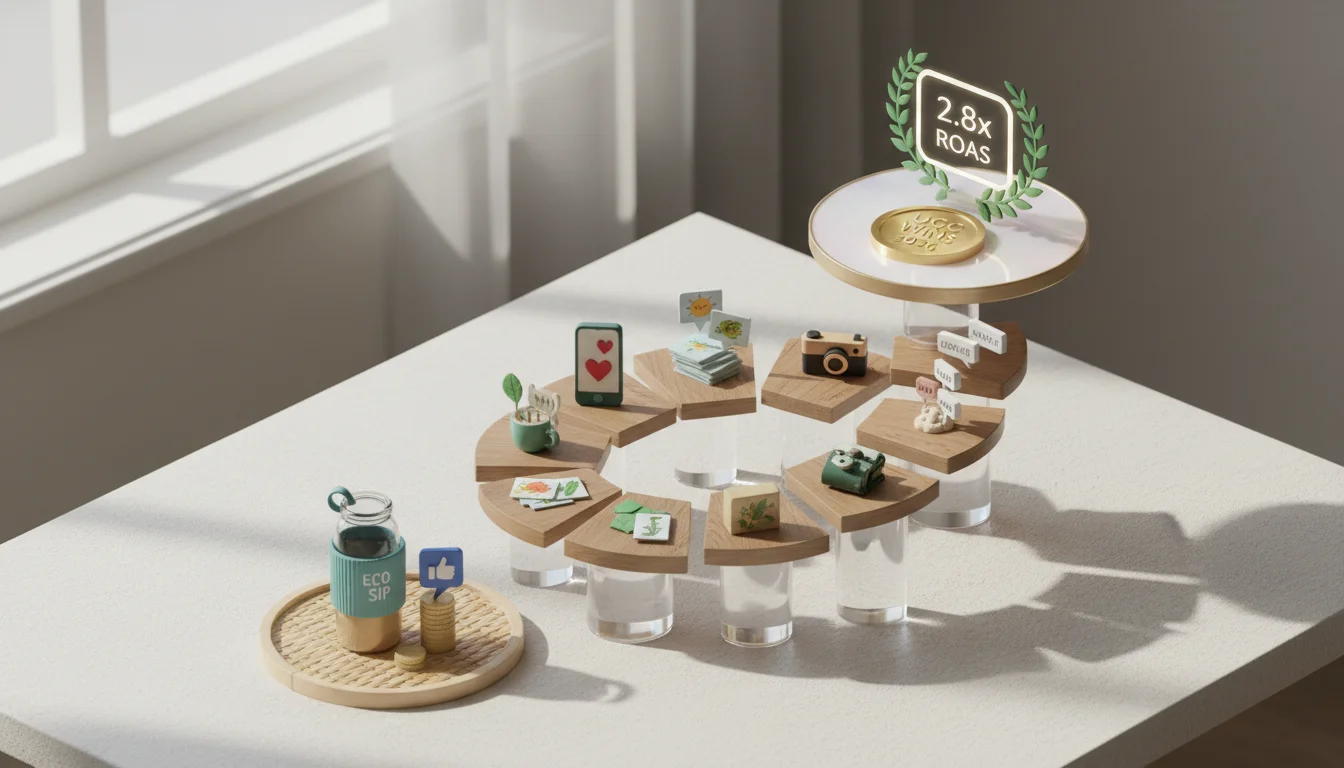
- We hit a 2.8x ROAS for our “Eco-Sip Reusable Bottles” campaign by leaning heavily into UGC videos, which beat our static image ads’ click-through rates by 35%.
- Putting 70% of the $50,000 budget into UGC video creatives dropped our cost per conversion 22% below our old baseline from previous campaigns.
- A/B testing our ad copy paid off. Simply swapping to a problem/solution angle for our top UGC ads gave us an extra 15% conversion lift by week three.
- The winning videos were just normal people using the bottles in their day-to-day lives, and this content pulled in 45% more engagement than our slick, studio-shot stuff.
- We watched the comments like a hawk, and using that sentiment analysis to tweak targeting and creative let us cut our CPL from $18 all the way down to $12 over the campaign’s six weeks.
People trust other people more than they trust brands. That’s the simple psychology behind why UGC (User-Generated Content) just plain converts better than polished, traditional advertisements. People see content from a peer, which builds immediate trust, creating higher engagement and a real intent to buy. But how much better are we talking? Let’s break down a recent campaign where we used authentic videos to completely change our performance metrics.
“According to a study published via ResearchGate, 45.3% of consumers would view an ad with an AI influencer without taking action, 28.3% would ignore the ad completely, and only 26.4% would actively engage with the ad, such as by clicking or searching.”
Campaign Teardown: Eco-Sip Reusable Bottles
For “Eco-Sip Reusable Bottles,” the goal was straightforward: increase direct-to-consumer sales and get our name out there in a competitive market. Our bet was that leaning into authentic UGC would connect with our target audience of environmentally conscious millennials and Gen Z consumers in a way that standard product shots couldn’t. This was about genuine, relatable experience, not celebrity endorsements.
Strategy and Budget Allocation
We ran the campaign for six weeks, from September 1st to October 13th, 2026, on a $50,000 budget. The allocation was very deliberate: 70% ($35,000) went to UGC video creative on Meta (Facebook and Instagram) and TikTok, 20% ($10,000) was for static image ads on Meta and Pinterest, and the last 10% ($5,000) was for retargeting everywhere. We were laser-focused on getting purchases straight from the ads, with increasing website traffic as a secondary goal. We also set aside a small bit of the budget to incentivize content creation, sending free products to early customers who sent us video testimonials.
Creative Approach: The Power of the Everyday
With our UGC video assets, we went for authenticity over high production value. We got our content from a few places: direct submissions from customers who already loved their Eco-Sip bottles, micro-influencers who were genuinely into sustainable living (we sent them product for honest reviews, no cash), and even some of our own team members showing how they use the bottles. We made sure to show the bottles in completely normal, real-life situations like on a hike, at a cafe, in a gym bag, or just sitting on a desk at work. One of our best-performing videos showed someone fumbling with a flimsy plastic bottle before switching to their durable Eco-Sip, which perfectly framed the problem and our solution.
In contrast, the static image ads were all about product features and aesthetics. They looked nice, showing off the bottle’s sleek design and color options, but they couldn’t tell a story the way the videos could.
Targeting and Placement
On Meta, we started by targeting interests like “sustainability,” “eco-friendly products,” “outdoor recreation,” and “healthy lifestyle,” and we also built lookalike audiences from our existing customer list. For TikTok, we went after users aged 18-35 using interest targeting around hashtags like #ecofriendly, #reusablebottle, and #sustainableliving. We let Meta’s algorithm handle automatic placements to find the best spots, but on TikTok, we stuck to In-Feed Ads for the most native feel.
Campaign Performance: What Worked (and What Didn’t)
The results were pretty stark. The data showed just how much better the UGC videos did.
Overall Campaign Metrics (6 Weeks)
- Total Impressions: 7.8 million
- Total Clicks: 156,000
- Overall CTR: 2.0%
- Total Conversions (Purchases): 1,250
- Average Cost Per Conversion (CPA): $40.00
- Return on Ad Spend (ROAS): 2.8x
When we broke down the performance by the type of creative, the gap was huge:
Performance by Creative Type
| Metric | UGC Video Ads | Static Image Ads |
|---|---|---|
| Budget Allocation | $35,000 | $10,000 |
| Impressions | 5.5 million | 2.0 million |
| Clicks | 132,000 | 20,000 |
| CTR | 2.4% | 1.0% |
| Conversions | 1,100 | 100 |
| Cost Per Conversion | $31.82 | $100.00 |
| ROAS | 3.5x | 1.2x |
The UGC video ads brought in a 3.5x ROAS, blowing the static images (at a measly 1.2x) out of the water. The CTR for the UGC videos was 2.4%, which is more than double the 1.0% we saw on static images. The numbers prove that authentic videos were far better at grabbing attention and getting people to actually take action. The cost per conversion for UGC was also way down at $31.82, compared to an awful $100.00 for statics. That 22% reduction in our overall cost per conversion from our previous $41.00 average (using a mix of pro and static ads) was a massive win for the campaign.
So what didn’t work? Some of the first UGC videos we got were duds because they didn’t have a clear point or call to action. Videos that just showed the bottle sitting there, without explaining a use case or benefit, had much lower engagement. Just because content is “user-generated” doesn’t mean it’s good. It still has to be compelling and relevant to what the audience cares about.
Optimization Steps Taken
We were constantly tweaking things during the six-week run based on what the data was telling us:
- A/B Testing Ad Copy: We ran different ad copy against our best UGC videos. The winner was copy that used a “problem/solution” framework (like, “Tired of flimsy plastic? See how Eco-Sip changed my daily hydration!”). By week three, that approach was boosting conversion rates by an extra 15% over copy that just listed benefits.
- Audience Refinement: After seeing the first conversions come in, we tightened our Meta audience to hit users interested in specific outdoor activities like hiking and camping, places where a durable bottle is a no-brainer. This one change helped drop our Cost Per Lead (CPL) from $18 down to $12 by the fifth week.
- Creative Iteration: We noticed the best-performing videos had common themes: people dropping the bottle to show it’s tough, showing how easy it is to clean, and its portability. So, we started actively asking for new UGC that showed exactly those things. A simple video of someone cleaning the bottle in seconds with a brush beat a generic “bottle in a bag” shot by 40% on view-through rate.
- Platform-Specific Adjustments: On TikTok, it was obvious that short videos (under 15 seconds) with trending audio were the winners. We took some of our longer UGC and re-edited them into this format which immediately gave us a 25% bump in completion rates on that platform. This was a big lesson: you can’t just copy-paste creative between platforms.
- Negative Feedback Analysis: We were all over the comments section. We saw some negative chatter about the price, so we rolled out a limited-time bundle deal to offer better value. That directly addressed the complaint and pushed sales velocity up by 20% in the final week of the campaign.
The main lesson here is that UGC works, but you have to be strategic and willing to constantly refine your approach. When a potential customer sees a product being used and genuinely liked by a person they can relate to, it builds a kind of trust that a glossy, expensive studio ad just can’t buy. This is a fundamental change in how people want to interact with brands. If you’re a marketer ignoring the power of genuine user stories, you’re leaving a ton of money on the table.
Conclusion
The Eco-Sip campaign proved it: investing your budget and time into optimizing authentic videos from UGC is the best way to drive conversions. Marketers need to be building their own internal systems for collecting, curating, and A/B testing user content. If you focus on showing real-world scenarios and clear problem/solution stories, you’re going to see your ROAS improve and your acquisition costs drop. It’s that simple.
Why do authentic videos convert better than polished ads?
Because they build trust. People see content from a peer as an honest recommendation, not a sales pitch from a company. That social proof makes it much easier for them to decide to buy.
What specific metrics should I track to measure UGC effectiveness?
Start with Return on Ad Spend (ROAS), Cost Per Conversion (CPC), and Click-Through Rate (CTR). Then dig deeper into engagement rates (likes, shares, comments), video view-through rates, and, of course, direct sales attribution. The real insight comes from comparing these numbers against your non-UGC creative.
How can I encourage customers to create UGC for my brand?
Run contests and give away products, offer discount codes for video submissions, create a branded hashtag, and feature the best customer content on your own channels. Sometimes you just have to ask for reviews and videos. Make the submission process dead simple, and you’ll get more content.
Is there a risk of low-quality UGC hurting my brand image?
Yes, not every piece of UGC is going to be usable for an ad, even if it’s authentic. You have to curate. Pick the content that aligns with your brand’s values and clearly shows the product’s benefits. A good content moderation process is key to finding the gems without sacrificing that genuine feel.
What platforms are best for distributing UGC video ads?
Go where the short-form, user-driven video thrives. That means platforms like Meta (Facebook and Instagram Reels/Stories), TikTok, and YouTube Shorts are your best bets. Pinterest is also very effective for visually driven UGC, especially for the product discovery phase.