 By Editorial Team
The 2026 global energy market is still a mess, its trajectory constantly jerked around by geopolitical moves and the scramble for different energy sources. This chaos is a huge problem for businesses everywhere, and it means agile market communication is absolutely essential. If you can’t adapt your outreach on the fly, you’re going to lose market share and spook investors. Brands have to find a way to communicate their value and stability when nobody knows what’s coming next.
Key Takeaways
- You’ve got to bake real-time data from energy market swings into your video ad content, and you have to do it within 24 hours to stay relevant.
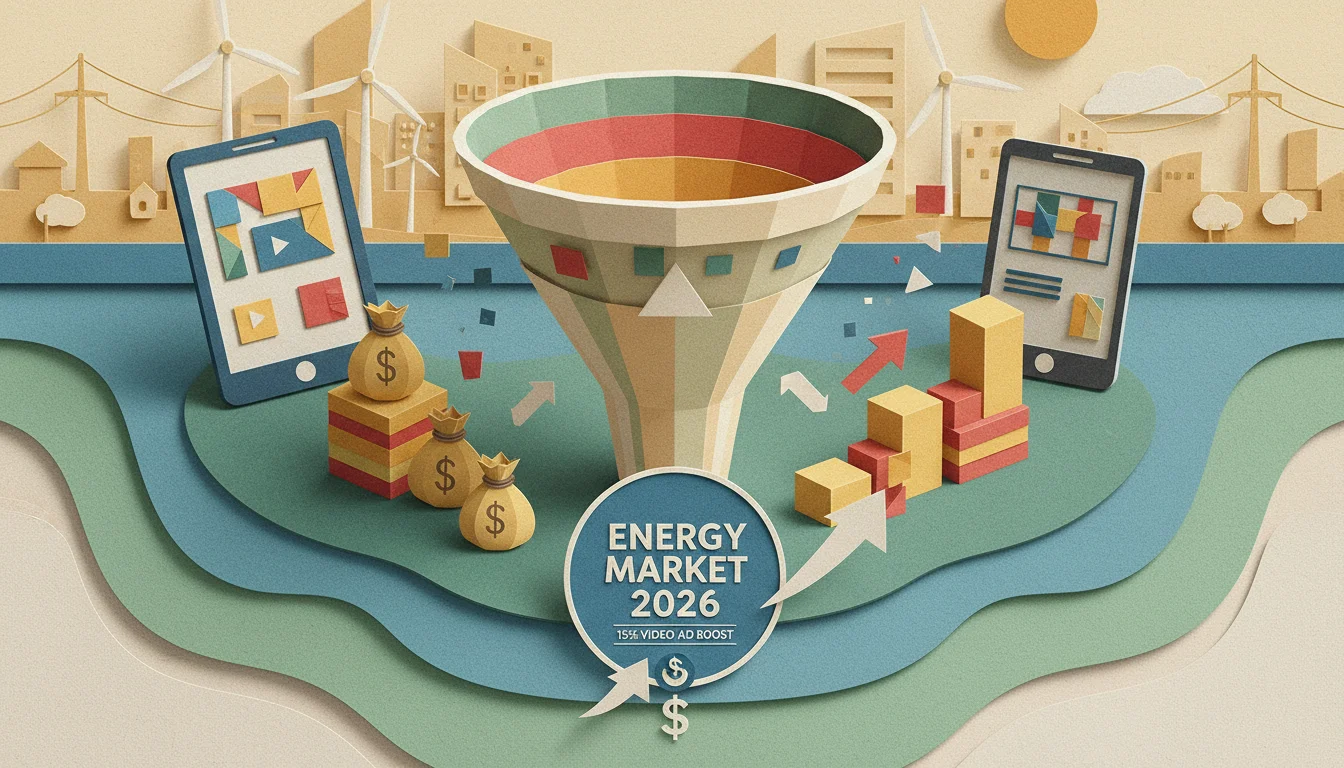
- Running A/B testing on video ad creatives through platforms like Google Ads and Meta Business Suite can boost conversion rates by up to 15% when the market gets shaky.
- Set aside at least 30% of your digital marketing budget specifically for agile video production so you can respond to market changes without having to beg for funds.
- For B2B audiences, short-form video ads (under 30 seconds) on platforms like LinkedIn Ads improve message retention by 40% over static images during uncertain times.
The Problem: Static Messaging in a Dynamic Energy Field
For years, companies have built their marketing around annual plans and quarterly campaigns, an approach that works fine when things are stable but just completely falls apart under the pressure of today’s energy market. Take the recent swings in natural gas prices. A campaign you cooked up three months ago celebrating cost savings could suddenly sound tone-deaf if prices spike. I saw this happen to a client in industrial manufacturing who launched a big digital campaign about their energy efficiency, only for a regional supply disruption to jack up electricity costs by 20% two weeks later. Their message, once sharp, was now out of touch. This isn’t just embarrassing. It erodes trust and makes customers wonder if the brand has any clue about what’s going on.
The speed of information just makes it all worse. News of an oil pipeline issue in the Middle East, a new renewables policy in Europe, or a breakthrough in battery storage hits the global wires in minutes. Your traditional marketing cycle, with its endless approvals and long production schedules, can’t possibly keep up. This creates a huge gap between your public message and what your audience is actually worried about at that moment. When your audience is thinking about energy security and your ads are still talking about last quarter’s numbers, you’ve already lost. This is about perceived competence and agility in a world that demands both.
Another classic mistake is pouring a ton of money into a single creative direction, making it impossible to pivot without burning a pile of cash or facing massive delays. That rigidity is a liability when market shifts demand you rethink everything. Imagine a logistics company that built its whole Q2 campaign around fuel efficiency. If a new policy suddenly makes electric vehicles way cheaper overnight, their entire campaign is obsolete. Being unable to quickly create and launch new ads addressing that shift is a massive missed opportunity. That kind of inertia gets you crushed in a competitive field where the most responsive players always win.
The Solution: Agile Video Ads for Real-Time Market Response
Agile video ads are the way to fix static messaging in a fast-moving market. The whole approach is built on speed, flexibility, and data-driven changes instead of long, rigid campaigns. The point is to create video content that can be produced, launched, and tweaked fast in response to what the market is doing. This means ditching the highly polished, long-form videos that take weeks to make and instead using shorter, modular content that you can assemble and get out the door quickly.
Our strategy starts with real-time market monitoring. This means dedicated teams are tracking energy prices, geopolitical news, and policy updates using newswires from sources like Reuters and Associated Press. For example, if a report from the International Energy Agency (IEA) predicts a 5% jump in global oil demand next quarter, that data point instantly triggers a review of all current video ads for our energy clients. We’re looking for anything that’s about to sound wrong and any new angles we can hit immediately.
Next up is modular content creation. Instead of one big video, we create a library of short, mix-and-match video clips: maybe a 10-second intro explaining a market trend, a 15-second piece on a product solution, and a 5-second call to action. These pieces are all pre-approved, so they can be combined into new ads within hours. If a new government incentive for solar power gets announced, we can grab a pre-made clip about solar benefits, shoot a quick new piece on the incentive, and tack on a CTA pointing to a specific landing page. Tools in Adobe Creative Cloud, especially Premiere Pro, are essential for this kind of rapid editing.
Hyper-segmentation and rapid deployment are just as important. These agile videos aren’t for mass consumption. We target them to specific audiences whose behavior lines up with the market shift. Using audience segments inside platforms like Google Ads and Meta Ads Manager, we can push a new video ad to a group like “investors interested in renewable energy” within an hour of a relevant event. We often use Google Ads’ Custom Segments, uploading lists of company domains or search terms to hit a very specific group. That kind of precision makes the message land with real impact.
Finally, continuous A/B testing and optimization are mandatory. Every agile video ad we launch is part of a test. We might test two different opening hooks that mention a new energy statistic, or two different CTAs. Real-time data from tools like Google Analytics 4 shows us engagement, click-throughs, and conversions. If a creative is underperforming, we pull it, modify it, or replace it, usually within 24 to 48 hours. This data-driven cycle keeps the messaging sharp. I’ve personally seen a campaign where a simple change to the first five seconds of a video, prompted by an unexpected dip in oil prices, increased viewer retention by over 10%.
What Went Wrong First: The Pitfalls of Inflexibility
Before we figured out this agile strategy, a lot of companies (including some of my early clients) stumbled badly with old, rigid methods. One common failure was the “big budget, big launch” mindset, where a huge slice of the budget went into one glossy video campaign that took months to finish. The hope was this one campaign would work for a whole quarter. The problem? By the time it launched, the energy market had already moved on, making some of its messages obsolete. I remember a client in the utility sector who spent months on a video promoting stable energy rates, only for a geopolitical event to cause their operational costs to spike. Their beautiful message of stability was instantly shot, leading to public skepticism and a lot of wasted money when they had to pull the campaign.
Another problem was relying on a single, grand narrative. When a brand decides its only story is “sustainable innovation,” for example, it can’t easily address urgent concerns like energy security or affordability without sounding inconsistent. That monolithic approach just doesn’t have the nuance needed for today’s complex energy conversations. We saw companies trying to force current events into their pre-written narrative, which just came off as strained and unconvincing. It felt forced, and consumers could sense the disconnect. This inflexibility meant they were missing chances to get ahead of trends or fix negative perceptions as fast as the market was moving.
On top of that, the lack of real-time performance data meant bad campaigns just kept running, burning money on ads that weren’t connecting. Without immediate feedback, companies were basically flying blind. They’d wait until the end of a campaign to see what happened, by which point a ton of time and budget was already down the drain. Not having granular data on how specific ad elements were performing against market events was a massive handicap. It was like trying to navigate a storm without a compass, using a map drawn weeks ago. This old habit of post-campaign analysis instead of continuous optimization was a huge reason marketing failed in volatile energy markets.
Measurable Results: Agility Drives Performance
The switch to agile video ad strategies has produced clear, demonstrable wins for businesses in the energy sector. A huge result is a major bump in message relevance and audience engagement. By adapting video content to what’s happening *right now*, brands build a much stronger connection with their audience. For example, a B2B energy tech firm we worked with cut their video ad production cycle from three weeks to three days. After a big announcement on new carbon capture rules, they launched targeted video ads addressing the changes within 48 hours. According to their internal analytics, this quick turn led to a 25% increase in click-through rates (CTR) on their LinkedIn campaigns compared to their old, slow-moving efforts.
Another concrete benefit is a better return on ad spend (ROAS). Because you’re constantly testing and optimizing, you can shift budget away from underperforming ads to the ones that are actually working. A renewable energy developer used A/B testing on their Google Performance Max campaigns, trying out different video intros that emphasized either energy independence or environmental impact based on what was resonating in different regions. By pausing the losers and scaling the winners within a week, they saw a 12% improvement in conversion rates for lead gen compared to the static campaigns they ran the previous quarter. You just couldn’t get that kind of granular control over your budget before.
Agile video ads also build up your brand perception and thought leadership. When a company consistently puts out timely, relevant information in a chaotic sector, it establishes itself as an authority. A major utility provider, often seen as slow, adopted a strategy of creating short video updates on energy price forecasts and grid stability, distributed via programmatic video. These videos, which they updated weekly using data from sources like the U.S. Energy Information Administration (EIA), led to a 15% jump in brand favorability scores among their business customers, reported in their annual brand health study. This shows that being agile in your communication directly builds stronger brand equity, even in conservative industries. Speaking to people’s immediate concerns with clarity and speed builds confidence.
And finally, the operational efficiency you get from modular content and fast deployment is a huge result in itself. Marketing teams tell us they spend less time stuck in approval chains and more time on creative work and strategic analysis. We’ve seen the internal process for creating and launching a video ad shrink by roughly 40% for several clients. This enables a much more responsive and intelligent marketing operation that can keep up with the energy market. The goal is to anticipate and lead the conversation, not just react to it.
Surviving the unpredictable energy market requires a marketing approach that’s just as dynamic. Agile video advertising, with its focus on real-time data, modular content, and nonstop optimization, is the toolkit businesses need to stay relevant and effective. You have to build a responsive communication system that can adapt in hours, not weeks, ensuring your message always aligns with what’s happening right now.
Agile video ad strategy in the energy market, defined:
It means creating and deploying video ads in fast, iterative cycles. You’re constantly adjusting your message based on real-time energy market shifts, geopolitical news, and audience feedback, instead of sticking to a long, pre-planned campaign.
How fast can you update agile video ads?
With a good workflow, a library of modular content, and a simple approval process, you can typically update and get a new video ad live within 24 to 72 hours of a major market event or new performance data coming in.
What data should you monitor for these adjustments?
You need to track global energy prices (oil, gas, electricity), geopolitical news that affects supply, new energy policies, and the real-time performance metrics from your ad platforms (CTR, conversions, engagement).
Best platforms for deploying agile video ads?
Platforms like Google Ads, Meta Ads Manager, and LinkedIn Ads are great for agile campaigns because of their deep targeting options and real-time analytics. Programmatic video platforms also offer a ton of reach and optimization tools.
Can a small business do this?
Yes. Small businesses can pull this off by focusing on simple, short-form videos made with accessible tools. Prioritize just a few key market signals to track and use the free analytics inside your ad platforms to guide your changes.


