 By Editorial Team
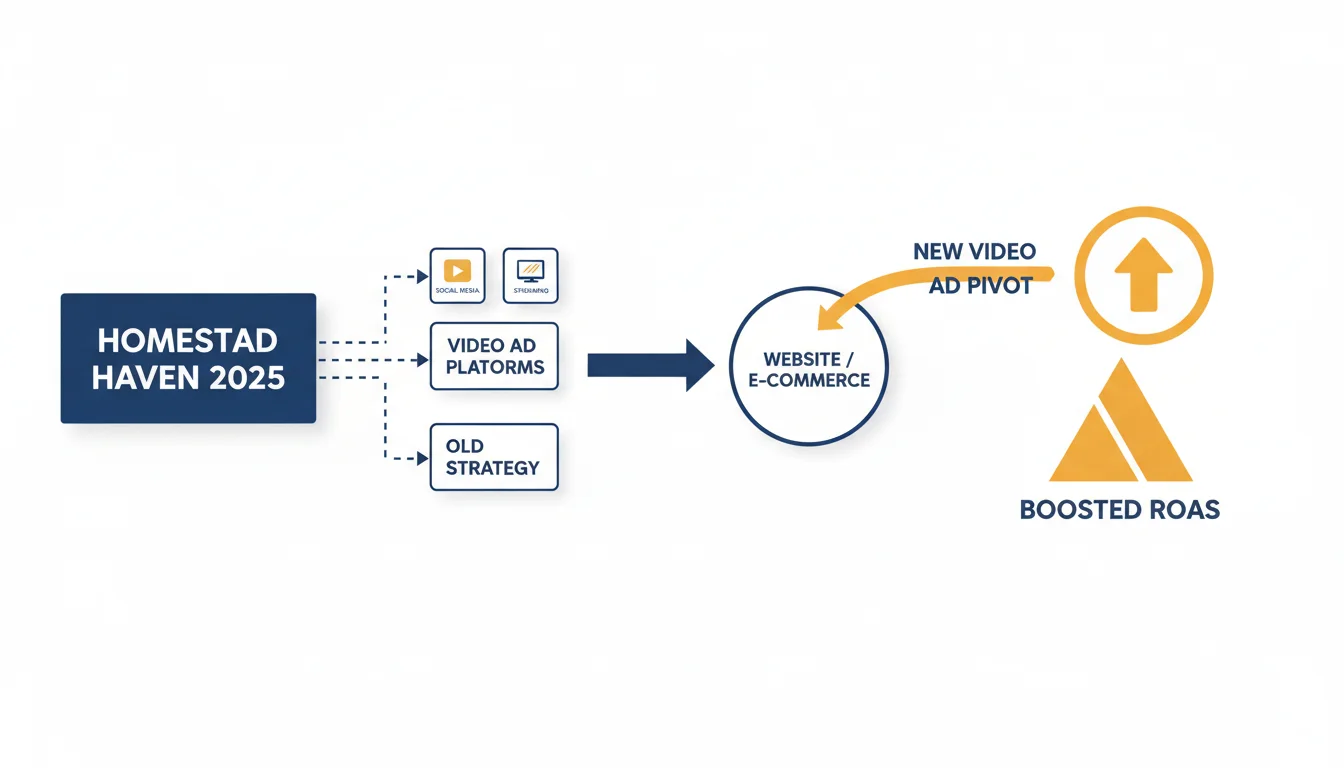
Eleanor Vance’s story is a classic one for e-commerce founders. In early 2025, her boutique store “Homestead Haven,” which sold beautiful handcrafted home goods, hit a wall. Her paid social campaigns were going nowhere. Despite having a gorgeous product line, from artisanal ceramics to reclaimed wood furniture, her cost-per-acquisition (CPA) from static image ads had climbed a painful 18% in just six months. She knew the products were great, but to get real home goods marketing results and boost e-commerce sales, she had to find a way to break through the noise without torching her budget. The answer, as she found out, was a full pivot to dynamic video ads.
Key Takeaways
- Run at least three different video ad formats (like product demos, lifestyle scenes, and user-generated content) to see what sticks with your audience.
- Put 60% of your first month’s video budget into A/B testing variations to find the winning creatives fast. Don’t guess.
- Shoot everything vertical for mobile. A recent eMarketer report confirms 75% of social video is watched on smartphones, so don’t fight it.
- Use platform tools like Meta’s Advantage+ Creative for automated video optimization, which can get you a click-through rate lift of up to 15% without extra work.
- Forget vanity metrics like impressions. Track what actually matters for e-commerce sales: add-to-cart rates and, most importantly, return on ad spend (ROAS).
The Stagnation Point: When Static Ads No Longer Cut It
Eleanor started out with what works for most brands: high-quality product photography. Her Instagram feed looked amazing, a collection of perfect flat lays and dreamy room shots. And it worked for a while, attracting an initial customer base that loved the aesthetic. But as social feeds got more and more saturated, her approach started to lose its punch. “We were getting clicks,” Eleanor recalled, “but the conversion rate was dropping. People would look, but they weren’t buying. It felt like we were just another pretty picture in a sea of pretty pictures.”
This is a super common problem. By 2026, every consumer is drowning in visual content. A static image, no matter how beautiful, just can’t communicate the actual texture of a hand-woven throw or the way light hits a ceramic vase. For home goods, where that tactile feel and emotional vibe are everything, a flat photo is a huge barrier to getting someone to click “buy.” I see it all the time: businesses that stick to the same old creative strategy watch their performance flatline or even drop, no matter how much more they spend on ads.
The Pivot to Motion: Crafting a Video Strategy
Eleanor knew she had to try something new. She started digging into ad trends and a 2025 IAB Video Advertising Spend Report caught her eye. It projected video ad spending would blow past $100 billion in the US alone by 2026. That data was all the convincing she needed: video was the path forward. But how does a small shop with a tight budget make good video ads?
Her first instinct was to hire a pro videographer, but the quotes she got back were insane. So she went with a scrappier, more agile plan. She got a good smartphone camera rig, a cheap set of LED lights, and a subscription to a simple video editor like CapCut. The goal wasn’t a Super Bowl commercial. It was authenticity and showing the products clearly.
For Homestead Haven, Eleanor decided to produce three main types of video ads:
- Product Show: Quick 15-30 second clips that zeroed in on one item. She used close-ups to show off unique details, materials, and craftsmanship, plus shots with a hand holding a mug to give a sense of scale.
- Lifestyle Narratives: These were a bit longer, maybe 30-60 seconds, and showed her products being used in a real home with a simple, relatable story, think a morning coffee routine with their mugs or someone getting cozy with a throw blanket.
- Behind-the-Scenes/Maker Stories: Really short 10-20 second clips that gave a peek at how things were made. This was perfect for building trust and showing off the value of a handmade product.
This strategy gave her a mix of content to test, hitting different parts of her audience with different messages. You can’t just make one video and expect it to work for everyone. You need variety to keep people from tuning you out.
Execution: Platform-Specific Optimization and A/B Testing
Once she had her videos, Eleanor focused on the ad platforms themselves. Her main channels were Meta Ads Manager (for Facebook and Instagram) and Pinterest Ads, which made sense for her home decor audience. She knew just uploading a video wasn’t the job. The real work was in the optimization.
On Meta, she made heavy use of tools like Advantage+ Creative, which automatically jumbles and tests different creative pieces, aspect ratios, and ad copy to find the best-performing combinations. This was a lifesaver for quickly testing different opening hooks or calls to action. She was also militant about mobile-first production, creating all her videos in a vertical (9:16) format because that’s how nearly all her customers saw them. “I learned quickly that a beautifully shot horizontal video looks terrible when it’s cropped awkwardly on a phone screen,” she noted. “It’s a small detail, but it makes a huge difference in user experience.”
On Pinterest, the visual search is everything. Eleanor used Idea Pins with video components to create what were essentially shoppable video catalogs. This allowed people to stumble upon her products organically while browsing for inspiration. By linking directly from the Idea Pins to her product pages, she made the path to purchase as short as possible.
Most importantly, Eleanor committed to rigorous A/B testing. For every single campaign, she launched at least two different video ads, changing one variable at a time, the music, the text on screen, the first three seconds, or the final call to action. She let these tests run for at least a week to get enough data before deciding on a winner. She evaluated everything based on click-through rate (CTR), add-to-cart rate, and in the end, return on ad spend (ROAS). This data-driven process took the guesswork out of it and gave her clear insights into what her audience actually wanted to see.
The Results: A Significant Uplift in E-commerce Sales
After just three months of running her new video-first ad strategy, Homestead Haven’s numbers were transformed. Her overall CPA dropped by 25%, way better than her target. Even better, her direct e-commerce sales shot up by 40% compared to the previous quarter. The average order value (AOV) also bumped up by 8%, which told her that customers who saw the products in action were more confident in their decision and bought more.
One campaign for a hand-thrown ceramic dinnerware set was a massive hit. Sales for that set tripled after she launched a lifestyle video ad showing a family using it for a meal. The video sold a feeling of warmth and connection that really clicked with her audience. “She wasn’t just selling plates,” Eleanor explained. “She was selling the feeling of gathering, of home. Video can sell an emotion that a static photo just can’t.”
This didn’t happen by accident. Her success was the direct result of a methodical process: digging into her audience’s desires, creating a variety of authentic videos, optimizing them for each platform, and testing everything relentlessly. Her brand’s story, which used to be just text on a page, was now alive, pulling customers right into the Homestead Haven experience.
Lessons Learned: What Every Home Goods Marketer Can Take Away
Eleanor’s journey offers a clear playbook for any home goods business trying to drive e-commerce sales with better home goods marketing. First, authenticity beats polish every time. Consumers connect with real, relatable content, even if it’s just shot on a phone in your living room. Second, know your platforms. What crushes it on Instagram Reels will likely bomb on Pinterest, and vice-versa. You have to make content for the environment it lives in. Third, the digital ad platforms are always changing, so what worked last month might not work now. You have to keep experimenting to stay ahead.
My own experience with dozens of e-commerce brands confirms all of this. I’ve seen too many businesses blow their budget on one perfect “hero” video, only to watch it fall flat. The real power is in building a whole library of diverse video assets and letting the data tell you what to run next. It’s about consistently delivering content that solves a problem or sparks an aspiration for your audience.
And remember the feeling. Home goods are personal. Video is your best tool for evoking emotion, showing how a product actually works in a space, and telling the story behind its creation. It turns a boring product listing into an experience. This is the real power of video ads for anyone selling home goods.
For any home goods e-commerce business feeling the pain of flat sales, embracing video advertising is a necessity. Eleanor’s story at Homestead Haven is proof that with a smart plan and consistent work, even a small business can get significant growth by bringing its products to life through motion. Video is the future of home goods marketing, period.
What types of video ads work best for home goods?
Product shows that highlight materials, lifestyle narratives that show products in a real home, and behind-the-scenes clips about craftsmanship are your most effective formats. A good strategy uses a mix of all three to keep your audience engaged and hit different customer motivations.
How long should my home goods video ads be?
Keep them short. The sweet spot is generally 15 to 60 seconds. Quick product demos and behind-the-scenes clips work well under 30 seconds, while you can push a lifestyle story to 60 seconds if it’s compelling. Shorter videos get higher completion rates on social media.
What KPIs should I track for video ad success?
Go beyond impressions and clicks to track metrics that actually affect your bottom line. You need to watch your click-through rate (CTR), add-to-cart rate, conversion rate, cost per acquisition (CPA), and most of all, return on ad spend (ROAS). These metrics show you if your campaigns are actually profitable.
Do I need an expensive camera for home goods video ads?
No, you absolutely don’t. Many top-performing home goods ads are shot on a modern smartphone with good natural light and edited on a simple app. Authenticity and clear storytelling resonate more with today’s audiences than a high-budget, polished production.
How do I make my video ads stand out in a crowded feed?
Grab attention in the first 3 seconds with a strong visual hook. Always shoot vertical video for mobile feeds like Reels and TikTok. Use good music or a clear voiceover, and make sure you’re showing how the product solves a problem or makes life better. Authentic storytelling and showing the real craftsmanship behind an item will always make you stand out.


