 By Editorial Team
Picking the right video ad platforms means you have to really understand what makes each one tick. You can’t just throw money at the big names anymore. In 2026, audiences are so fragmented that if you’re only on one platform, you’re leaving money on the table. The real question is, how do you split your budget across all these different video environments to get the best return?
Key Takeaways
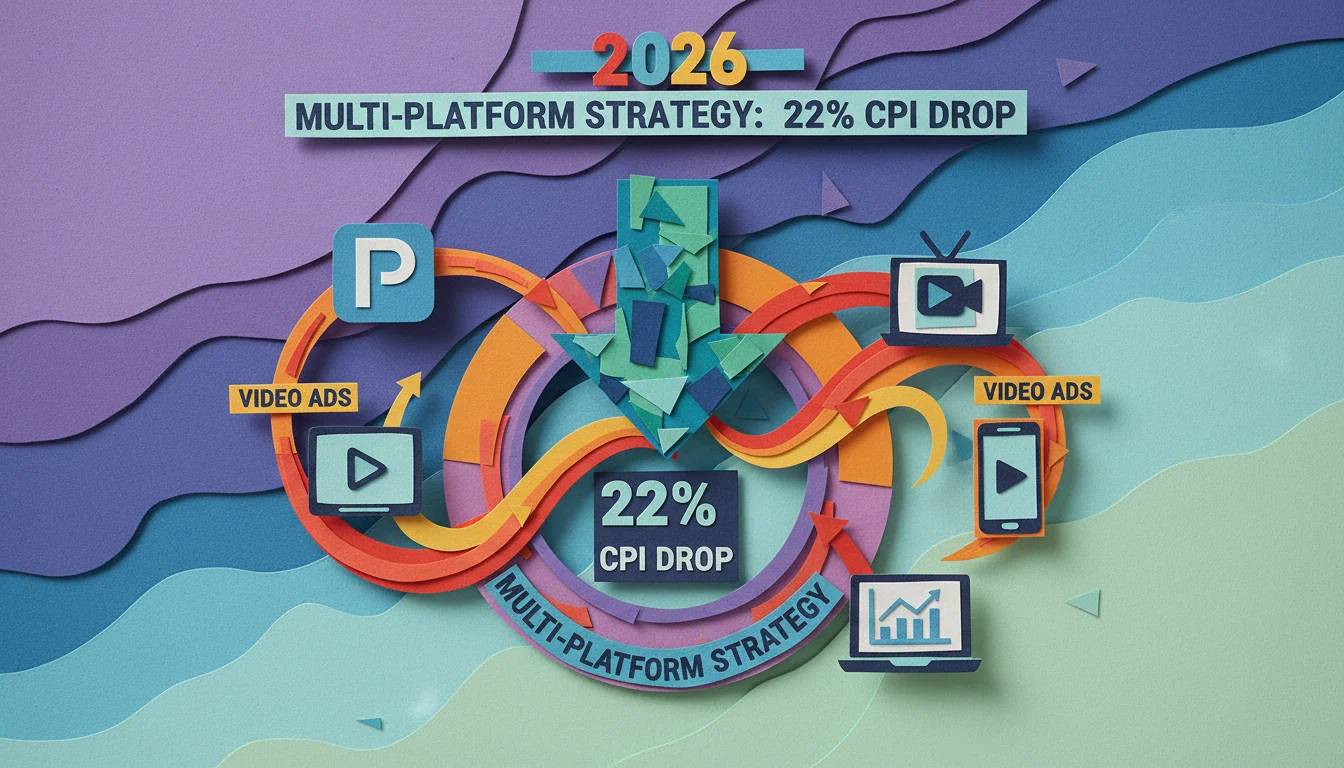
- Our multi-platform video ad strategy for a mobile app got a 22% lower Cost Per Install (CPI) on TikTok than on YouTube, which shows how much efficiency varies by platform.
- We built audience lookalikes from in-app purchase data on Meta Ads, which pushed our Return on Ad Spend (ROAS) up by 15% for those high-value user groups.
- We fought off creative fatigue by swapping in fresh ad creatives every 3 weeks, and that simple habit gave us a 0.5% point increase in our Click-Through Rate (CTR) on average.
- Putting money into short-form, user-generated content (UGC) style ads paid off big on vertical video platforms, hitting a 1.8% average CTR.
Campaign Teardown: “Game-On” Mobile App Launch
We just wrapped a full launch campaign for “Game-On,” a new casual mobile game. The main goal was straightforward: get app installs and then get those users to make in-app purchases (IAP) in a super-crowded market. Our strategy hinged on using several platforms to hit different demographics, playing to the strengths of each one. It was about making the channels work together to create a constant presence for the user.
Campaign Overview and Objectives
The “Game-On” campaign was an 8-week sprint, running from early February to the end of March 2026. We had a total media budget of $180,000, which we split between Google Ads (mostly for YouTube), Meta Ads (Facebook and Instagram Reels), and TikTok Ads. The Key Performance Indicators (KPIs) we lived and died by were Cost Per Install (CPI), Return on Ad Spend (ROAS) from IAPs, Click-Through Rate (CTR), and the conversion rate from a user installing to making their first purchase.
We set some tough initial targets: a CPI below $1.50, a 1.2x ROAS within 30 days of install, and an overall CTR of at least 1.0%. We pulled these numbers from industry benchmarks for hyper-casual games, specifically citing a recent Statista report on mobile game CPIs to keep us grounded in reality.
Strategy and Platform Allocation
We broke our audience down into three main groups: “Casual Gamers” (the largest group, just looking for a fun distraction), “Social Gamers” (who need to share their scores), and “Progressive Gamers” (who live for leaderboards and new levels). This thinking dictated our platform choices and how we designed the ads.
- Google Ads (YouTube): We put 35% of the budget here ($63,000). YouTube’s job was to give us massive reach and connect with users through longer, story-driven videos. We were trying to catch people in the discovery phase, targeting interests like mobile gaming and specific competitor apps using YouTube In-Stream and Bumper Ads.
- Meta Ads (Facebook/Instagram Reels): This got the biggest slice, 40% of the budget ($72,000). Meta’s detailed targeting was perfect for zeroing in on our “Social Gamers” persona. We went hard on Instagram Reels for our vertical video, while Facebook gave us broad reach and powerful retargeting using custom audiences built from website visitors.
- TikTok Ads: This was our 25% bet ($45,000). We used TikTok to go after the “Casual Gamers” with short, punchy, and funny ads. We were betting that the platform’s organic-feeling ad experience would give us a much lower CPI, especially with younger users.
Our budget split was based on a clear hypothesis: different platforms would perform better for different goals and user types. I’ve learned the hard way that if you under-invest in a platform like TikTok just because it feels new, you’re going to miss out on some serious cost efficiencies.
Creative Approach and Iteration
We couldn’t just run the same ad everywhere. Our creative strategy had to be just as segmented as our media buy. We ended up with over 20 unique video ads, all with different lengths and styles designed for each specific platform, focusing on the game’s puzzle mechanics and social features.
- YouTube: We ran 15-second and 30-second ads. The longer 30-second spots were mini-stories showing a player beating a tough level. The 15-second bumpers were just quick, exciting gameplay highlights.
- Meta Ads: On Instagram Reels, we used 10-15 second vertical videos with fast cuts of gameplay and big text overlays. For Facebook, we had a mix of 15-second and 30-second horizontal videos that often felt more like mini-tutorials or included user testimonials.
- TikTok Ads: Here, everything was 8-12 second vertical video. We went all-in on the user-generated content (UGC) look, making ads that showed real reactions, used trending audio, or felt like a challenge. Working with an agency like Moburst on this was a huge help. Their team knows how to make UGC that doesn’t feel like an ad, and their data-driven feedback helped us tweak things like text placement and audio choices that directly led to higher engagement.
We were militant about refreshing our creative, swapping out even our best ads with new versions every 3 weeks. It was a lot of work, but it stopped ad fatigue in its tracks and helped us get that 0.5% point increase in average CTR mentioned in the takeaways.
Targeting and Optimization
We didn’t just set and forget our targeting. We were in the ad accounts daily, tweaking parameters based on what the data was telling us.
Google Ads (YouTube)
- Initial Targeting: We started with custom intent audiences (people searching for games like ours), in-market audiences for mobile games, and broad interest categories like “Puzzle Games.”
- Optimization: After a couple of weeks, we saw that a few specific YouTube channels about mobile game reviews were sending us great traffic. So, we shifted budget to secure managed placements on those channels and cut a bunch of app categories that were giving us impressions but no conversions. We ended up with an average Cost Per View (CPV) of $0.03 and a solid 45% completion rate on our 30-second ads.
Meta Ads
- Initial Targeting: We started with 1% and 5% lookalike audiences from our existing user base, plus detailed interest targeting for things like “Candy Crush” and “Word Puzzles.”
- Optimization: The data showed a huge performance gap between operating systems, iOS users had a 1.5x higher ROAS. We immediately shifted the budget to favor iOS. The real breakthrough came when we built a lookalike audience based only on users who had already made an in-app purchase. That single change gave us a 15% increase in ROAS for users we acquired that way. We also let Meta’s Advantage+ App Campaigns do some of the heavy lifting for audience discovery.
TikTok Ads
- Initial Targeting: We started broad, just targeting by age (18-34) and letting TikTok’s algorithm do its thing. We also layered in some light interest targeting for “Gaming.”
- Optimization: The best move we made here was going all-in on the UGC-style creative. The more authentic an ad looked, the better it did. We also used TikTok’s “Spark Ads” to boost actual organic posts from users who mentioned our game. This combination got our Cost Per Install (CPI) down to $1.12, which blew away the $1.38 on Meta and $1.65 on Google. We beat our own CPI goal, proving how efficient this platform can be.
Campaign Performance Analysis
Here’s how the final numbers shook out:
| Metric | Overall | Google Ads | Meta Ads | TikTok Ads |
|---|---|---|---|---|
| Total Budget | $180,000 | $63,000 | $72,000 | $45,000 |
| Impressions | 18.5M | 7.2M | 7.8M | 3.5M |
| Clicks | 280,000 | 68,000 | 125,000 | 87,000 |
| CTR | 1.5% | 0.95% | 1.6% | 2.4% |
| Total Installs | 135,000 | 38,000 | 52,000 | 45,000 |
| Average CPI | $1.33 | $1.65 | $1.38 | $1.00 |
| IAP Conversions (within 30 days) | 12,150 | 3,040 | 5,720 | 3,390 |
| Cost Per IAP Conversion | $14.81 | $20.72 | $12.59 | $13.27 |
| ROAS (30-day) | 1.35x | 1.1x | 1.6x | 1.3x |
The campaign beat our 1.2x ROAS target, ending at 1.35x. We also beat our $1.50 CPI goal with an average of $1.33. TikTok had the smallest budget but gave us the best CPI and CTR, proving it was the right call for this audience. And Meta ended up being our ROAS champion, mostly because that lookalike audience of high-value purchasers worked so well.
What Worked Well
- The Multi-Platform Strategy: This approach worked. Period. Every platform pulled its weight. TikTok brought in cheap installs, Meta found the big spenders, and YouTube gave us the broad reach we needed for a launch.
- Platform-Specific Creative: Making ads that looked native to each platform was non-negotiable. The UGC-style ads on TikTok, with their 2.4% CTR, are the perfect example of why this matters so much.
- Daily Optimization: Because we watched ROAS and CPI like hawks, we could move money around fast. That quick decision to shift more budget to iOS users on Meta was a perfect example of capitalizing on a clear win.
What Didn’t Work as Expected
- YouTube’s Initial CPI: YouTube’s CPI started out higher than we wanted. We had to get really aggressive with our placement and audience exclusions to get it into an acceptable range. The finding here is that YouTube’s brand storytelling power doesn’t always lead to cheap installs, and it requires a bigger upfront testing budget to find what works for direct response.
- Broad Interest Targeting on TikTok: Our initial attempts to use broad interest categories on TikTok gave us a lot of low-quality installs. We quickly learned that you can’t force old-school targeting on a platform like this. You’re much better off feeding its algorithm amazing creative and getting out of the way.
Key Takeaways and Future Recommendations
This campaign proves that any “one-size-fits-all” approach to video advertising is completely dead. Each platform has its own rules and requires its own strategy, from the way you make your ads to the way you target your audience. For “Game-On,” we’re going to keep using TikTok for efficient user acquisition and Meta for finding high-value players. We also need to test more interactive ad formats on YouTube to see if we can get better direct-response results. Future campaigns should also A/B test landing pages to cut down on friction after the click.
The big lesson is that you have to be testing and adapting all the time. It’s not optional. What worked for us this month might not work next month, so you can never get comfortable.
What’s the best video ad platform for app installs?
It completely depends on your app and who you’re trying to reach. In our “Game-On” campaign, TikTok gave us the lowest Cost Per Install (CPI) at just $1.00, so it was the most efficient for getting lots of installs. But Meta was better at finding users who would actually spend money in the app.
How often should I refresh my video ads?
To stop people from getting sick of your ads, you should be swapping in new creative every 2 to 4 weeks. For the “Game-On” campaign, we refreshed our ads every 3 weeks, which kept our Click-Through Rates (CTR) from dropping off.
Is user-generated content (UGC) important for video ads?
Yes, especially for platforms like TikTok and Instagram Reels. UGC-style ads feel more authentic and blend in with the feed which leads to better engagement and cheaper installs. Our UGC-style ads for “Game-On” hit a 2.4% CTR on TikTok which was way higher than our other creative formats.
How do I get a better Return on Ad Spend (ROAS)?
You get better ROAS by getting super specific with your targeting and constantly optimizing. For “Game-On,” the best thing we did was create lookalike audiences on Meta from our existing high-value customers, the people who actually made in-app purchases. That move alone boosted ROAS by 15% for those specific ad sets.
Should I use one video ad platform or several?
Using multiple platforms is almost always better. It lets you reach more people and optimize for different goals. With our campaign, diversifying across Google Ads (YouTube), Meta, and TikTok meant we could use each channel for its specific strength, like low CPI on TikTok and high ROAS on Meta, instead of being stuck with the limitations of a single platform.


