 By Editorial Team
Key Takeaways
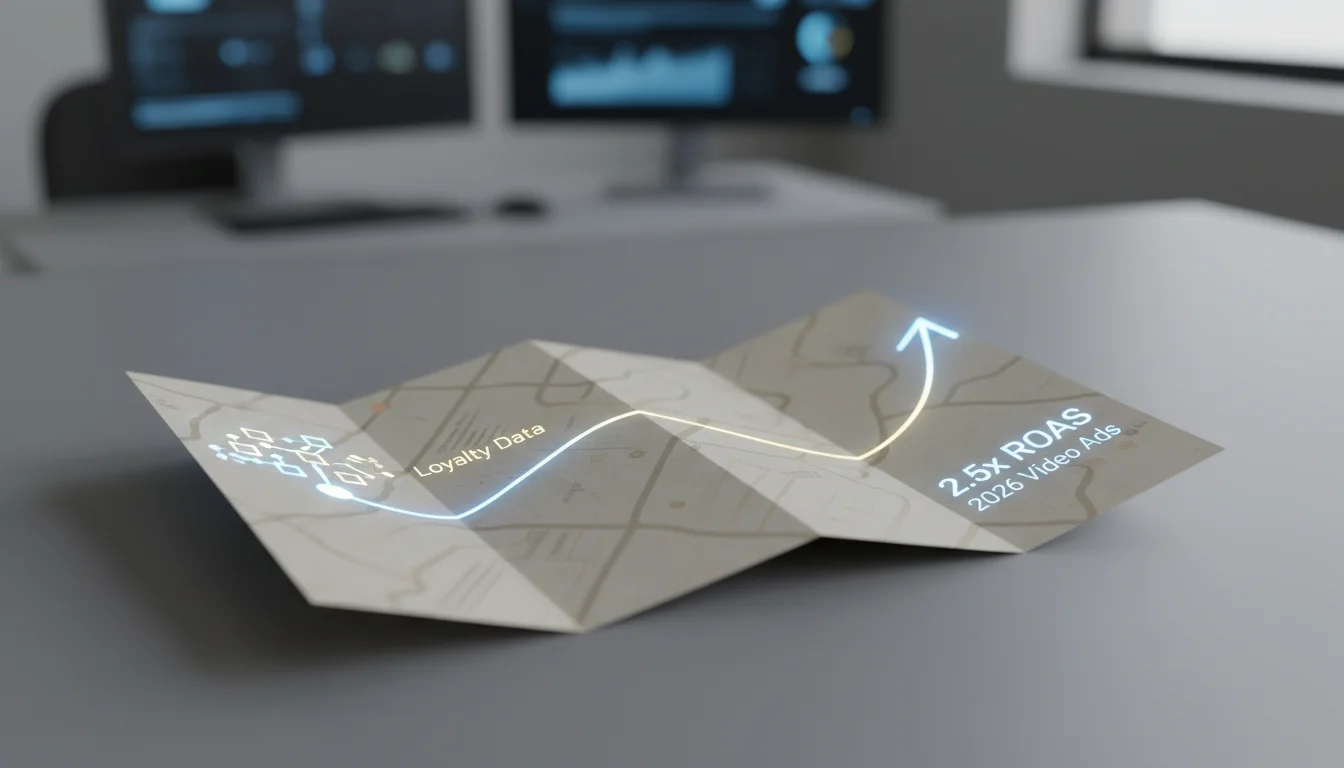
- You can get a 2.5x higher return on ad spend (ROAS) from personalized video ads that use loyalty data, compared to just targeting a general audience.
- To make loyalty data really work, you need dynamic video creative where elements like product recommendations and offers swap out based on individual CRM segments.
- A/B testing specific ad elements driven by loyalty data, like your calls-to-action and price points, can bump up click-through rates (CTR) by 15% or more.
- Go beyond basic demographics and segment your loyalty data by purchase history, browsing behavior, and engagement. This is how you get hyper-targeted video delivery.
- To avoid ad fatigue and keep conversions efficient, you have to constantly optimize by re-evaluating CRM segments and refreshing creative based on performance.
The idea of using granular loyalty data to personalize video ads is that you move past broad demographics and speak to individual customer preferences. This should lead to deeper engagement and more efficient ad spend, but we wanted to see if the numbers actually backed that up.
Case Study: Enhancing Customer Lifetime Value with Personalized Video
We just wrapped a video advertising campaign for a major direct-to-consumer (DTC) apparel brand. Their goal was to reactivate dormant customers and get their active loyalty program members to increase their average order value (AOV). Our hypothesis was that personalized video creative, built from their rich customer relationship management (CRM) data, would easily outperform standard video campaigns aimed at similar demographic groups.
Campaign Strategy and Objectives
Our plan was direct: use the company’s existing loyalty program data to create highly relevant video ads that would hit home with individual customers, in the end driving repeat buys and making them feel better about the brand. We defined our targets very specifically: a 2x increase in ROAS for the loyalty segments, a 15% uplift in CTR compared to our non-personalized control ads, and a 10% reduction in cost per conversion. We ran the campaign for three months (September to November 2026) to line up with important shopping seasons. The total budget for the project was $250,000, split between Google Ads (we used YouTube TrueView for Action) and Meta Ads across Instagram and Facebook.
Data Integration and Segmentation
The entire campaign was built on the brand’s loyalty program data, which lived in their CRM and was much more than just a list of emails. We had purchase history (product categories, average spend, frequency), browsing behavior from their site (viewed products, abandoned carts), engagement with past marketing (email opens and clicks), and even preferences they shared when they signed up. We used this to slice the loyalty database into a few key groups:
- High-Value, At-Risk: Customers with 3+ purchases in the last 12 months but zero activity in the last 60 days.
- Mid-Tier, Dormant: Customers with 1-2 purchases in the last 18 months and no activity for 90 days.
- New Loyalty Members: People who joined in the last 30 days but hadn’t bought anything yet.
- Category Enthusiasts: Customers who consistently bought from specific product lines (like activewear or casual wear).
Having these granular segments meant we could create extremely specific messaging and product suggestions. For example, a “High-Value, At-Risk” customer who always bought activewear would see a completely different video than a “New Loyalty Member” who’d only browsed the casual wear section.
Creative Strategy and Dynamic Personalization
Our creative was designed from the start to take advantage of the loyalty data. Instead of producing hundreds of unique videos (which would be a nightmare), we created modular video templates with dynamic elements that we could swap out based on the target segment. These included:
- Product Overlays: Showing specific items or collections based on a customer’s past purchases or what they’d looked at on the site.
- Call-to-Action (CTA) Language: Tailoring the offers, like “15% off your next activewear purchase” for the enthusiasts or “Free shipping on orders over $50” for new members.
- Background Music and Voiceover Tone: Making small adjustments to match the feel of the different demographic profiles in our segments.
- Urgency Messaging: Hitting dormant segments with a “Limited-time offer” while showing active customers a more relaxed “Explore our new arrivals” message.
We used a creative automation platform, Adobe Creative Cloud, connected to a dynamic ad platform to manage all these combinations. This approach let us produce personalized videos at scale without the creative costs spiraling out of control. Every segment received at least three different video versions so we’d have plenty to A/B test. If we hadn’t done it this way, the cost of making individualized videos would have killed the strategy before it even started, especially with this budget.
Targeting and Campaign Execution
The execution was straightforward. We uploaded our segmented CRM lists into Google Ads and Meta Ads as custom audiences, which let us target these exact groups with our personalized video creative. On the Google side, we focused on YouTube placements, using “TrueView for Action” to drive direct sales. For Meta, we ran a mix of in-stream video and story placements across Instagram and Facebook. To have a solid baseline for comparison, we also ran a control group. This group was a lookalike audience built from the brand’s active customer base, and they saw only generic video ads. This was the only way to know for sure if our personalization efforts were actually paying off.
What Worked: Unpacking the Performance Data
The numbers we got back from the loyalty-driven segments blew our initial projections away.
| Metric | Loyalty Segments (Personalized Video) | Control Group (Generic Video) | Improvement (%) |
|---|---|---|---|
| Impressions | 12,500,000 | 18,000,000 | N/A (Targeted smaller audience) |
| CTR | 2.85% | 1.62% | +75.9% |
| Conversions | 7,200 | 4,500 | +60% |
| Cost Per Conversion (CPL) | $17.36 | $30.00 | -42.1% |
| ROAS | 3.8x | 1.5x | +153.3% |
| Average Order Value (AOV) | $95.50 | $78.20 | +22.1% |
The personalized video ads generated a 3.8x ROAS from the loyalty segments, which absolutely crushed the 1.5x from the control group. That 153% improvement shows exactly what happens when you deliver a relevant message. The CTR hit 2.85%, confirming that the tailored creative was getting people to actually click. Our cost per conversion for the loyalty segments was $17.36 compared to $30.00 for the control group, and this efficiency is where we saw the real budget savings. The dynamic product recommendations were a huge win. For example, the “High-Value, At-Risk” segment, which saw ads showing new arrivals in their preferred categories along with a limited-time discount, gave us a 4.1% CTR and an AOV of $110. By showing them exactly what they were interested in, we kept them from tuning out and nudged them to buy something immediately.
What Didn’t Work and Optimization Steps
Of course, not everything worked perfectly on the first try. Our “Mid-Tier, Dormant” segment was a problem at the start, with a low CTR of about 1.1% and a CPL hitting $45. We quickly realized our first creative for this group was too soft, focusing on brand messaging instead of giving them a clear reason to come back. Optimization Steps:
- Refined Creative for Dormant Segment: We A/B tested new videos for this group that dropped the brand fluff and went straight for a strong, time-sensitive offer (like, “Welcome back! Enjoy 20% off your entire order for the next 48 hours”). We also mixed in some social proof by showing user-generated content from other loyal customers.
- Adjusted Bid Strategy: The “Maximize Conversions” bid strategy we started with was too aggressive for the low-engagement “Mid-Tier, Dormant” segment. We switched to “Target CPA” and set a slightly higher target, giving the algorithm more room to find conversions that were there.
- Cross-Channel Frequency Capping: We saw that some users were getting hit with ads on both Google and Meta. We put a combined frequency cap in place (no more than 7 impressions per user per week across both platforms) to stop annoying people, a lesson backed up by Nielsen’s 2023 report on ad frequency.
- Refreshed Creative: After about six weeks, we rolled out new creative for our best-performing segments (“High-Value, At-Risk” and “Category Enthusiasts”). Even winning ads get old. Swapping in new visuals and copy kept engagement up and prevented ad blindness.
These adjustments, especially the creative fix for the dormant segment, boosted their CTR by 35% and cut their CPL by 28% within two weeks. I’ve learned that assuming your initial creative will be a hit across all segments is a rookie mistake. You have to be watching the data and be ready to adapt all the time.
Editorial Insight: The Overlooked Power of Negative Data
You learn as much from what bombs as what succeeds. For our “New Loyalty Members” segment, we tested a video with a celebrity endorsement, thinking it would build instant trust. It tanked. The CTR was a pathetic 0.9% and the CPL was sky-high. This showed us that for this group, practical value (a direct discount on their first purchase) was far more important than an aspirational message. Don’t just chase every marketing trend without checking if it actually fits your audience. The data, especially the bad data, will tell you what they really want.
Budget Breakdown and Final Metrics
Here’s how the $250,000 total budget was spent:
- Google Ads (YouTube): $110,000
- Meta Ads (Facebook/Instagram): $90,000
- Creative Production & Dynamic Personalization Tools: $35,000
- Analytics & Reporting Tools: $15,000
After the three-month campaign and all our optimizations, here are the final aggregate metrics for the loyalty-driven segments:
- Total Impressions: 15,800,000
- Overall CTR: 2.68%
- Total Conversions: 9,150
- Average CPL: $20.50
- Overall ROAS: 3.2x
The final ROAS of 3.2x dipped a bit from the 3.8x peak of our best segments, but it still blew past our 2x target and showed a fantastic return on the investment in these loyalty program members. The budget for creative and tools was clearly money well spent.
Conclusion
The lesson here is clear: plugging loyalty program data directly into a video ad strategy works. It makes your campaigns more efficient and gets customers to actually engage. Once you understand what your customers have bought and browsed, you can stop shouting generic brand messages and instead deliver relevant video content that leads to better conversion rates and a much healthier return on ad spend.
What kind of loyalty data is most useful for video ad personalization?
Focus on purchase history (product categories, frequency, AOV), browsing behavior (viewed products, abandoned carts), engagement with past marketing, and any stated preferences from surveys or profile updates. That’s the data that lets you create sharp segments and content that really connects.
How can small businesses implement dynamic video ad personalization without a large budget?
You can start small. Use your existing CRM data to create just a few core customer segments. You don’t need fully dynamic video at first. Just produce 3-5 distinct video ads, each tailored to a specific segment’s main interest, and then use custom audiences on platforms like Google Ads and Meta Ads for targeting. Template-based video editing tools can also help keep production costs down.
What are the common pitfalls when using loyalty data for video ads?
The biggest mistakes are over-segmenting into tiny, inefficient audiences, failing to refresh your creative regularly (which causes ad fatigue), not having a clear control group to measure your performance against, and forgetting to test different calls-to-action or offers within the personalized videos.
How often should loyalty segments and video creative be updated?
You should re-evaluate your loyalty segments quarterly to make sure they’re still relevant, since customer behavior is always changing. For the video creative itself, plan on refreshing it every 4 to 6 weeks for a high-performing campaign to prevent it from going stale. If you see performance metrics start to decline, you need to refresh it even sooner.
What is the difference between personalized video ads and dynamic creative optimization (DCO)?
Personalized video ads that use loyalty data are a specific tactic where you target known customer segments with content made just for them. DCO is the broader technology that allows this to happen. It’s a system that dynamically assembles ad variations (text, images, video elements) in real-time based on all kinds of signals. Audience data is one of those signals, but DCO can also use things like location, time of day, or even the weather.


