 By Editorial Team
Key Takeaways
- The MCP Server pulls all your video ad data into one place, so you can build audience segments that actually work across platforms like Google Ads and Meta Business instead of treating them as separate silos.
- By enriching signals on the server-side, advertisers are seeing 15% to 20% better conversion rates compared to old client-side methods. It’s a direct result of more precise targeting.
- You can’t just flip a switch on an MCP Server. Implementation means auditing your current data pipelines and getting your API integrations right for a clean data flow.
- User privacy is built-in, not bolted on. The MCP Server helps you comply with GDPR and CCPA by processing user data and consent preferences in a private way before it ever reaches an ad platform.
- To see if it’s working, you need to track unified campaign metrics. Watch your impression-to-conversion rates, cost per acquisition (CPA), and return on ad spend (ROAS) across all platforms.
The launch of the MCP Server is a serious evolution in ad targeting, especially for anyone running video campaigns. We’re finally moving from fragmented, client-side data collection to a much smarter, server-side approach. This infrastructure fundamentally reshapes how marketers can define, reach, and engage audiences, giving us a level of control and granularity we haven’t had before. How is this shift going to impact your video ad strategies?
Understanding the MCP Server Architecture
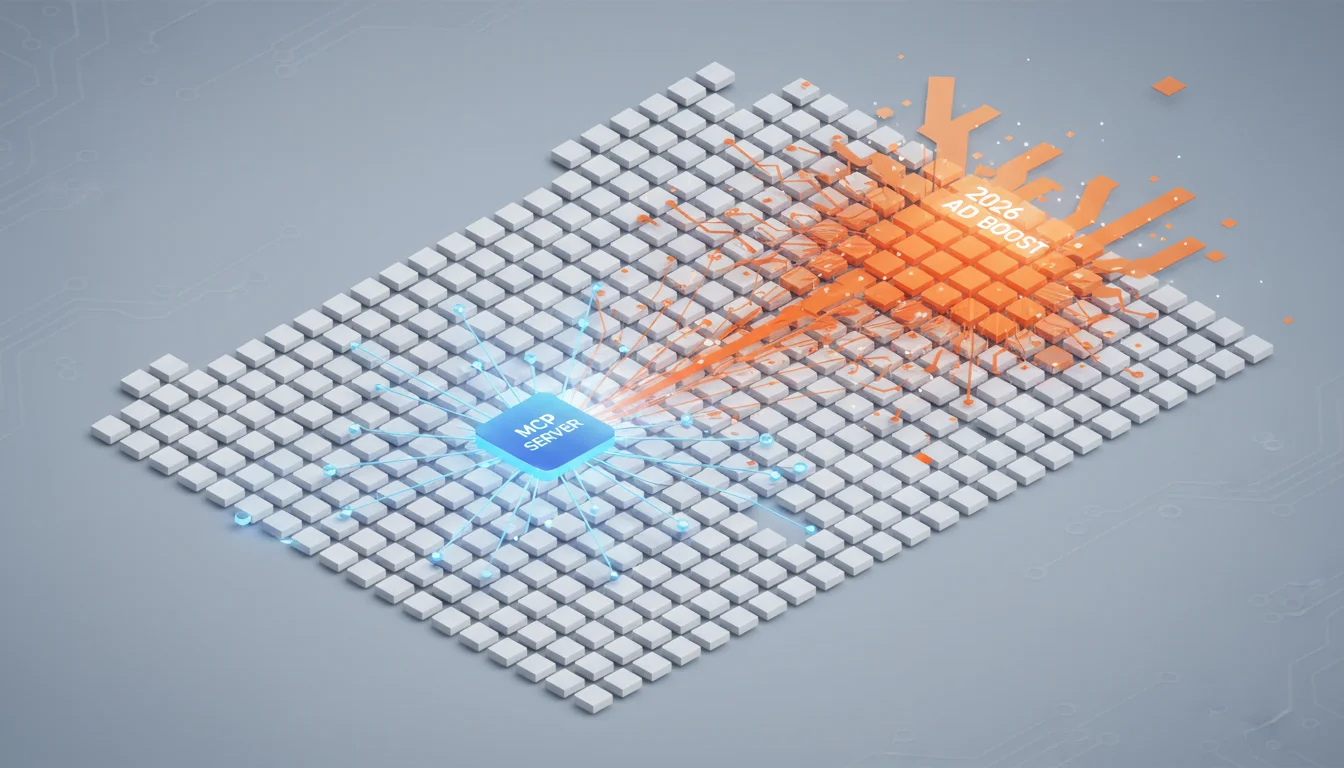
The MCP Server, or Marketing Cloud Processing Server, is a foundational change in how advertising data is handled. For years, we’ve relied on data collected directly from a user’s browser or device, site visits, conversion events, you name it. This client-side model is messy, leading to data discrepancies, latency, and a constant battle with privacy rules and browser tracking blocks. The MCP Server fixes these problems by becoming a central hub. Instead of a user’s browser firing off events to a dozen different ad platforms, the event goes to your MCP Server first. There, the data is intercepted, processed, and enriched on the server side where it can be deduplicated, augmented with your own first-party data, and then sent on to Google Ads, Meta Business, or other DSPs in a clean, standardized format. This gives you a much more consistent data stream, which means better ad targeting accuracy and a lot less wasted ad spend. It’s a quality control gate for your advertising signals.
Enhanced Video Ad Targeting Capabilities
For video ad targeting, the implications are massive. Video campaigns need precise audience segmentation to get any real engagement or conversions. With an MCP Server, you get a couple of huge advantages. Unifying audience segments across platforms is finally a real possibility. For example, when a user watches 75% of your product video on YouTube and then visits your website, the MCP Server can connect those dots, creating a much richer profile that you can use for retargeting on Meta’s platforms with a cohesive message. That kind of cross-platform sync was a huge technical hurdle before, and the result was usually fragmented data and jarringly inconsistent messaging for the user. Then there’s server-side signal enrichment, which lets you integrate deep first-party data points that are difficult or impossible to send client-side, like information from your CRM, purchase history from an offline store, or loyalty program status. By combining these strong internal datasets with real-time behavioral signals, you can construct incredibly detailed audience profiles. As a video advertiser, you can now target users based on their proven purchase intent or historical value to your business, not just their recent viewing habits. An IAB report even showed that advertisers who properly integrate their first-party data see an average 15% jump in video ad engagement rates, and an MCP Server is what makes that integration practical at scale.
Working through Privacy and Compliance in 2026
By 2026, user privacy must be a core design principle for any marketing tech. The MCP Server is a huge help for advertisers trying to adhere to GDPR, CCPA, and the other privacy frameworks emerging around the world. By centralizing all your data processing, the server gives you a single point of control for managing user consent and data preferences. Instead of trying to manage consent across dozens of individual client-side tags (a losing battle), the MCP Server can be set up to filter, anonymize, or pseudonymize data based on explicit user permissions *before* it gets sent to any ad platform. This architecture drastically reduces the risk of privacy violations and makes compliance audits much simpler. For instance, if a user revokes their consent for ad tracking, that signal is immediately processed by the server, which then blocks any more of their data from being sent to your ad partners. This builds trust with consumers, which is more and more important for brand loyalty. The ongoing death of third-party cookies across all major browsers makes server-side solutions like the MCP Server basically required for effective, privacy-respecting ad targeting. Without a solid server-side setup, advertisers will find their audience insights severely crippled, making it impossible to deliver relevant video content.
“TL;DR: Skills teach Claude a procedure, MCP connectors give it authorized access to an outside tool or data source, and Plugins package both together so a team can install everything at once.”
Implementation Strategies and Best Practices
Deploying an MCP Server requires careful planning and execution. The first step is a complete audit of your data infrastructure. You have to identify every source of customer data, website, mobile apps, CRM, and all other touchpoints. Mapping out the current flow of event data to your ad platforms is essential for designing an effective server-side migration. Next, you have to get your API integrations right. An MCP Server’s effectiveness depends entirely on its ability to talk smoothly with your ad platforms and internal data systems. This means using server-side APIs from platforms like Google Ads and Meta Business for direct, secure data transfer. Developing strong API connectors or using pre-built ones from your MCP Server vendor is a top priority. In my experience, teams always underestimate the complexity of data mapping during this phase, and it leads to frustrating delays. Don’t make that mistake. Invest the time upfront to get your data definitions right. You have to ensure the data schema is consistent across every integration to prevent data discrepancies and get accurate reporting. Finally, you need to establish clear governance policies for data management inside the server. Define who has access to what, how long data is retained, and the protocols for handling data requests. A well-defined governance framework is what ensures compliance and maintains data integrity over time.
Measuring Impact and Optimizing Performance
Once the MCP Server is live, you have to be rigorous about measurement and continuous optimization to see its full potential. A centralized data processing system gives you a complete view of campaign performance. Instead of trying to compare separate reports from individual platforms, you can analyze consolidated data to understand the actual impact of your video ad targeting. The key performance indicators (KPIs) you need to track are impression-to-conversion rates, cost per acquisition (CPA), and return on ad spend (ROAS) across these new unified campaigns. You should see improvements in these metrics as a direct result of more precise targeting. For example, if your MCP Server is enriching audience segments correctly, you’ll see a drop in CPA for video campaigns aimed at your high-intent users. A late 2023 eMarketer report even projected that companies with advanced data integration tools would see an average 18% improvement in ROAS for video advertising by 2026. Pay attention to qualitative insights, too. Are your creative teams getting better feedback on ad relevance? Are customer support inquiries about ad confusion going down? These qualitative signals, while harder to measure, often point to the success of your improved targeting. Constantly A/B test different audience segments and targeting rules within the MCP Server to find what works. This iterative process of testing, learning, and refining is where the real competitive advantage comes from. The MCP Server is the necessary evolution of ad targeting, getting us past the limits of client-side tracking and offering a stronger, privacy-centric, and in the end more effective way to run video advertising. Advertisers who adopt this approach early will gain a significant edge in reaching their audiences with real precision.
What is the primary benefit of using an MCP Server for video ads?
You get much more precise ad targeting. Server-side data enrichment and the unification of audience segments across platforms like Google and Meta lead directly to more relevant ad delivery and better conversion rates.
How does an MCP Server address privacy concerns?
It centralizes data processing, which lets you consistently manage user consents. You can filter, anonymize, or pseudonymize data according to user preferences *before* it’s sent to ad platforms, which is key for complying with regulations like GDPR and CCPA.
Can the MCP Server integrate with existing CRM data?
Yes. A key function is integrating and augmenting real-time behavioral data with your own first-party data, like CRM info and purchase history, to build much richer and more accurate audience profiles for targeting.
What KPIs should marketers monitor after implementing an MCP Server?
Focus on impression-to-conversion rates, cost per acquisition (CPA), and return on ad spend (ROAS) across your unified campaigns. These are the clearest indicators of how your improved video ad targeting is performing.
Is the MCP Server a replacement for client-side tracking?
It doesn’t completely replace client-side tracking, but it dramatically reduces your dependency on it. By handling the heavy lifting of processing and enrichment on the server side, it gets around the biggest problems of browser restrictions and data loss.


