 By Editorial Team
There’s a remarkable amount of misinformation circulating regarding the efficacy and implementation of micro-video content, particularly when the goal is to maximize brand recall. Many marketers operate under outdated assumptions that actively hinder their campaigns, missing key opportunities in a rapidly shifting digital environment. How can brands cut through the noise and genuinely embed themselves in consumer memory using short-form video?
Key Takeaways
- Successful micro-video for brand recall focuses on consistent visual and auditory cues, not just viral trends, as demonstrated by campaigns achieving 30% higher brand recognition through signature audio.
- The optimal length for micro-video content in 2026 is often between 7 to 15 seconds, a sweet spot that balances engagement with message delivery before audience drop-off, according to recent Nielsen data on attention spans.
- Authenticity in micro-video production, favoring user-generated style content over high-gloss productions, can increase viewer trust and recall by up to 25% because it feels less like an advertisement.
- Strategic distribution across diverse platforms, including platform-specific adaptations, is essential. A Meta Business Help Center report indicated that cross-platform campaigns using tailored content saw a 15% uplift in overall reach and recall compared to single-platform efforts.
- Measuring brand recall requires specific metrics beyond basic views, such as aided and unaided recall surveys or brand lift studies, which provide direct insight into memory retention rather than just passive consumption.
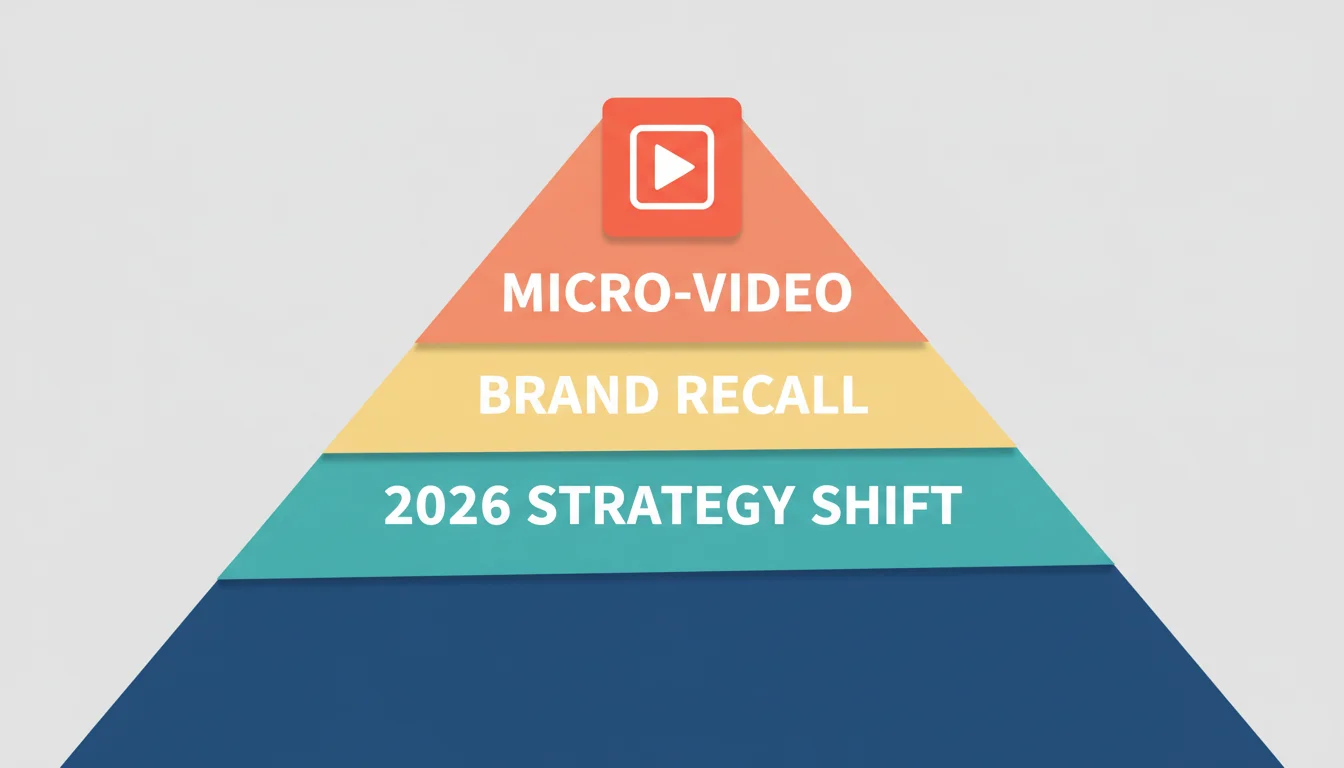
| Factor | Outdated Approach | 2026 Strategy Shift |
|---|---|---|
| Optimal Length | Under 5 seconds (arbitrary) | 7 to 15 seconds |
| Content Focus | Chasing viral trends | Consistent brand cues (visual/auditory) |
| Production Style | High-gloss, commercial-like | Authentic, user-generated style |
| Distribution | Single-platform efforts | Strategic, cross-platform adaptations |
| Recall Impact (Authenticity) | Lower viewer trust | Up to 25% increase in recall |
| Recall Impact (Brand Identity) | Negligible impact on awareness | 20% higher correlation with recall |
Myth 1: Shorter is Always Better for Brand Recall
The idea that a video must be under five seconds to capture attention and drive recall is a pervasive misconception. While brevity is valuable, an arbitrary time limit often sacrifices clarity and emotional connection. The real goal isn’t just to be short. It’s to be effective within that brevity. I’ve seen countless brands compress their message into an unwatchable blur, hoping for recall through sheer speed. This approach backfires. A 2025 eMarketer report on digital video consumption indicated that while initial engagement favors shorter formats, brand recall peaks when content provides just enough context to be memorable, typically between 7 to 15 seconds for micro-video. This isn’t about fitting a full narrative arc into a blink. It’s about delivering a single, impactful message or emotion. Think about the distinctive audio cues some brands use. A recognizable sound or a unique visual signature, consistently applied, can embed a brand far more effectively than a rushed montage. For instance, a particular sound effect or a recurring visual motif, even in a 12-second clip, can create a powerful mnemonic. It’s the consistency of these unique brand assets that drives recall, not merely the video’s truncated length.
Myth 2: Going Viral Guarantees Brand Recall
Many marketers chase viral trends like a gold rush, believing that a high view count automatically translates to strong brand recall. This is a dangerous trap. Virality often hinges on novelty, humor, or shock value, which can be entirely divorced from your brand’s core message or identity. A video might achieve millions of views, but if viewers remember the meme, the dance, or the funny animal more than the brand that sponsored it, what’s the real win? The problem lies in dissociating the content from the brand. I’ve analyzed campaigns where a video went massively viral, yet subsequent brand lift studies showed negligible impact on brand awareness or purchase intent. The content became a standalone sensation, a fleeting moment of entertainment. True brand recall comes from content that is intrinsically linked to the brand. This means your micro-video should reflect your brand’s values, aesthetic, or unique selling proposition in a way that is impossible to separate. For example, a brand known for sustainability might create micro-videos showing eco-friendly practices in a visually distinct, authentic style. The content itself, not just an overlaid logo, becomes the brand’s voice. According to a HubSpot research study from early 2026, campaigns that integrated brand identity into the core creative concept of viral-style videos saw a 20% higher correlation between views and brand recall compared to those that simply piggybacked on trends. Focus on memorable brand association, not just ephemeral virality.
Myth 3: High Production Value Always Leads to Better Recall
There’s an ingrained belief that the slicker the production, the more professional and memorable the micro-video will be. While high-quality visuals are generally good, for micro-video content, an overly polished, commercial-like aesthetic can sometimes work against brand recall, especially if it feels inauthentic or out of place on platforms known for raw, user-generated content. Consider the platforms where micro-video thrives today. Users often scroll through feeds filled with authentic, unscripted moments. A perfectly lit, highly stylized ad can sometimes be skipped because it screams “advertisement” too loudly. In my experience, content that feels native to the platform often performs better for recall. This means embracing a more casual, even slightly unpolished look. Think about the rise of influencer marketing, where individual creators film on their phones. Their content resonates because it feels real. A 2025 IAB report on digital ad effectiveness emphasized that authenticity and relatability in short-form video significantly boost viewer trust and memory. This doesn’t mean sacrificing quality entirely. It means focusing on clear audio, good lighting, and compelling storytelling, but doing so within a framework that feels genuine. A brand showing a product benefit through a quick, relatable “day in the life” scenario filmed with a smartphone can often be more memorable than an expensive studio production. The key is to connect with the audience on their terms, not to overwhelm them with production gloss that feels alien to their feed.
Myth 4: Micro-Video is Only for Direct Response
Many marketers pigeonhole micro-video content purely into the area of direct calls to action (CTAs), believing its primary function is to drive immediate clicks or purchases. While micro-video can certainly serve direct response goals, limiting its application overlooks its immense power for building brand recall and long-term brand equity. This is a strategic misstep. The fastest way to erode brand memorability is to treat every piece of content as a transactional pitch. A brand that constantly pushes “buy now” in every 10-second clip will quickly be ignored. Micro-video excels at subtle, consistent brand building. It can introduce brand personality, highlight unique product features without a hard sell, or simply establish an emotional connection. Think of it as building small, frequent positive associations over time. A series of short videos showing a brand’s commitment to community initiatives, or quick tips related to their product category, can slowly but surely embed the brand positively in a consumer’s mind. A 2024 study published on Statista regarding consumer perception of brands found that brands consistently delivering value-added micro-content (educational, entertaining, or inspiring) experienced a 10% higher unaided brand recall over a six-month period compared to those focused solely on promotional micro-videos. The cumulative effect of these smaller, non-salesy interactions is often far more powerful for recall than any single direct-response ad. It’s about being present and adding value, not just demanding attention.
Myth 5: One Micro-Video Format Fits All Platforms
The assumption that a single micro-video asset can be simply uploaded across all social media platforms and perform equally well for brand recall is fundamentally flawed. Each platform has its own unique audience demographics, content consumption habits, and technical specifications. What resonates on one platform might fall flat on another. Forgetting platform specificity is a common pitfall. A video optimized for vertical viewing on a short-form video app, complete with trending audio and fast cuts, will likely look out of place and perform poorly on a professional networking site that favors more informative, horizontally oriented content. The visual cues, audio trends, and even the pace of editing need to be tailored. For instance, Meta Business Help Center guidelines consistently emphasize the importance of adapting creative for Facebook and Instagram Reels versus in-feed video ads. This isn’t just about aspect ratio. It’s about understanding the cultural nuances of each platform. A brand aiming for recall should invest in creating variations of its core micro-video message, adapting the visual style, music, and even the narrative slightly for each key distribution channel. This isn’t about creating entirely new videos, but rather smart repurposing and adaptation. A single core message, delivered in five distinct ways across five distinct platforms, will achieve far greater and more targeted brand recall than a single generic video blasted everywhere. The goal is to make the content feel native, not just present, wherever it appears. Understanding these distinctions allows marketers to deploy micro-video content with precision, moving beyond common pitfalls to cultivate genuine brand recall that translates into sustained audience engagement and loyalty.
What is the ideal length for micro-video content targeting brand recall in 2026?
While context matters, recent data suggests that micro-video content between 7 to 15 seconds often hits a sweet spot for maximizing brand recall. This length allows for a concise message or impactful visual/auditory cue without exceeding typical audience attention spans.
How can brands measure the effectiveness of micro-video on recall, beyond basic view counts?
To measure true brand recall, look beyond vanity metrics. Conduct brand lift studies, which include surveys measuring aided and unaided recall before and after a campaign. Track direct searches for your brand name or specific product terms following micro-video exposure, and analyze sentiment around brand-specific hashtags.
Should micro-video content always feature a clear call to action (CTA)?
No, not always. While micro-video can drive direct response, its power for brand recall often comes from building consistent, positive brand associations over time. Many effective micro-videos focus on brand personality, unique features, or emotional connection without a hard sell, contributing to long-term memorability.
Is high production value necessary for micro-video to be effective for brand recall?
Not necessarily. While clarity and good execution are important, an overly polished, commercial-like aesthetic can sometimes feel inauthentic on platforms known for user-generated content. Authenticity and relatability, often achieved with a more native, less “produced” feel, can significantly boost trust and recall.
How important is platform-specific adaptation for micro-video content?
Platform-specific adaptation is important. Each social media channel has distinct audience demographics, consumption habits, and technical requirements. A micro-video optimized for one platform might perform poorly on another. Tailoring visual styles, audio, and narrative to each platform’s unique environment maximizes engagement and, consequently, brand recall.


