 By Editorial Team
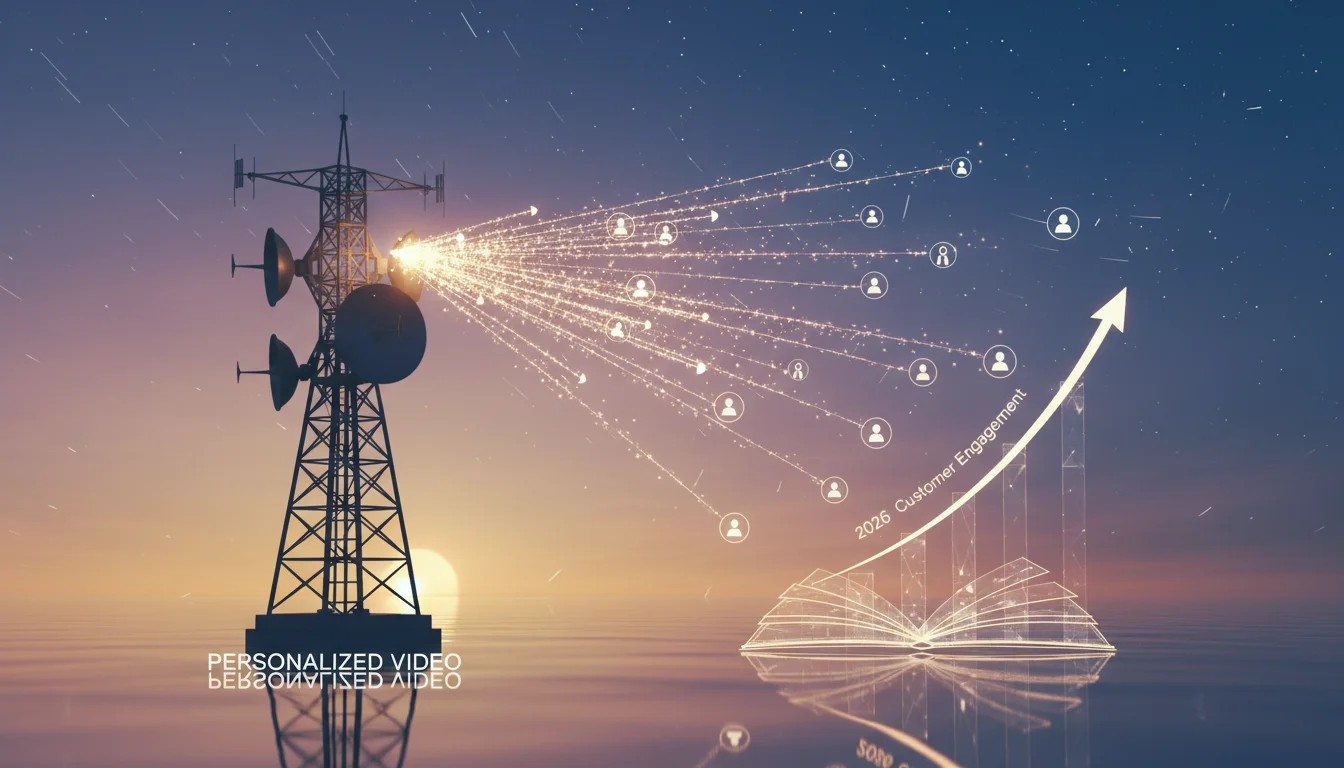
Many businesses struggle to break through the digital noise, finding their marketing messages lost in a sea of generic content. The problem isn’t a lack of effort, but often a lack of genuine connection, leaving potential customers feeling like just another number. How can brands forge deeper relationships and truly capture individual attention in 2026? The answer lies in the strategic deployment of a personalized video experience, a powerful tool for driving unprecedented customer engagement.
Key Takeaways
- Implement data-driven segmentation using CRM and behavioral analytics to tailor video content to specific audience groups.
- Focus on high-impact use cases like onboarding, post-purchase follow-ups, and abandoned cart recovery for maximum ROI.
- Utilize AI-powered video generation platforms to scale personalization without sacrificing authenticity.
- Measure engagement through metrics like completion rates, click-through rates, and conversion rates to continuously refine your video strategy.
- Prioritize mobile optimization and accessibility features to ensure a broad reach and inclusive experience for all viewers.
The Generic Content Black Hole: Why Traditional Marketing Fails to Connect
For years, marketers relied on broad-stroke campaigns, hoping to cast a wide net and catch as many fish as possible. We’d craft a single, beautifully produced video, then blast it out to our entire email list or social media following. The results, frankly, were often lackluster. I remember one client, a regional financial institution in Atlanta, who invested heavily in a glossy corporate video. They proudly launched it, expecting a flood of new account openings. Instead, their engagement metrics barely budged. Their open rates were decent, sure, but click-throughs to product pages were abysmal, and conversions were non-existent. It was a classic case of speaking to everyone, and therefore, speaking to no one.
The core issue is simple: people crave relevance. In an age where every interaction is curated, from our streaming recommendations to our social media feeds, generic marketing feels jarringly out of place. It signals a lack of understanding, a failure to acknowledge the individual’s unique needs and journey. This isn’t just about politeness; it’s about efficacy. According to a 2026 eMarketer report, 72% of consumers expect personalized interactions from brands, and 61% are more likely to make a purchase from companies that deliver them. Ignoring this expectation is not just a missed opportunity; it’s a competitive disadvantage.
What Went Wrong First: The Misguided Quest for “One-Size-Fits-All” Video
Our initial attempts at video marketing often stumbled because we tried to force a single narrative onto a diverse audience. We’d create a general explainer video for a complex software product, assuming everyone needed the same introduction. Or we’d send a generic “thank you” video after a purchase, failing to acknowledge what the customer actually bought or their specific journey. The problem wasn’t the video itself; it was the context. A new customer needs onboarding guidance, not a sales pitch. A loyal customer wants exclusive offers, not an introduction to your brand. We were missing the forest for the trees, focusing on production value over personalized relevance. We thought a high-quality video would automatically engage, but without a tailored message, it was just expensive wallpaper.
Another common misstep was relying solely on basic segmentation, like age or location. While a good starting point, it’s rarely enough. Just because someone lives in the same zip code doesn’t mean they have the same needs or preferences as their neighbor. We learned the hard way that true personalization requires a deeper dive into behavioral data, purchase history, and stated preferences. Anything less felt, and was, superficial.
| Feature | Basic Video Editor | Dedicated Personalized Video Platform | Advanced CRM with Video Integration |
|---|---|---|---|
| Dynamic Text & Graphics | ✗ No | ✓ Yes | ✓ Yes |
| Data-Driven Personalization Rules | ✗ No | ✓ Yes | ✓ Yes |
| Scalable Video Generation | ✗ No | ✓ Yes | Partial (limited templates) |
| Real-time Analytics & A/B Testing | ✗ No | ✓ Yes | Partial (basic metrics) |
| Integration with Marketing Automation | ✗ No | ✓ Yes | ✓ Yes |
| Interactive Video Elements | ✗ No | ✓ Yes | ✗ No |
| Multi-channel Distribution | Partial (manual export) | ✓ Yes | ✓ Yes |
The Solution: Crafting a Tailored Narrative with Personalized Video
The path to genuine customer engagement, in my experience, is paved with personalized video. This isn’t just about slapping a customer’s name on a pre-recorded message; it’s about dynamically generating unique video content that speaks directly to an individual’s data points, preferences, and journey. It’s an approach that transforms passive viewing into active interaction.
Step 1: Deep Dive into Data and Segmentation
Before you even think about video content, you need to understand your audience at a granular level. This means harnessing your CRM data, website analytics, and behavioral insights. Who are your customers? What have they purchased? What pages have they viewed? What emails have they opened? What stage are they at in their customer lifecycle?
For our Atlanta financial institution client, we moved beyond basic demographics. We segmented their customer base not just by age and income, but by specific product holdings (checking, savings, mortgage), recent interactions (loan application status, branch visits), and online behavior (pages viewed on their mortgage calculator, specific investment articles read). This allowed us to create hyper-targeted segments, such as “new mortgage applicants in Fulton County” or “existing savings account holders interested in wealth management.” This deep segmentation is the bedrock of effective personalization; without it, you’re just guessing.
Step 2: Identifying High-Impact Use Cases for Personalization
You don’t need to personalize every single video. The key is to identify moments in the customer journey where a personalized touch will have the greatest impact. Here are a few high-value scenarios where I’ve seen personalized video shine:
- Onboarding New Customers: A welcome video that addresses them by name, references their specific purchase, and guides them through the next steps. For a SaaS company, this could be a personalized walkthrough of features they’re most likely to use based on their subscription tier.
- Post-Purchase Follow-up: A thank you video that confirms their order, provides tracking information, and suggests complementary products based on their purchase history. Imagine receiving a video from a local boutique in the Virginia-Highland neighborhood, thanking you for buying a specific dress and showing you accessories that pair perfectly with it.
- Abandoned Cart Recovery: A video reminding them of the exact items left in their cart, perhaps even offering a small, personalized incentive. This is incredibly effective, significantly boosting recovery rates.
- Subscription Renewals/Upgrades: A video highlighting the value they’ve received, showcasing new features relevant to their usage, and presenting upgrade options tailored to their current plan.
- Event Invitations/Recaps: A personalized invite to a webinar, referencing their past attendance, or a recap video highlighting moments they might have missed.
I distinctly recall a challenge with a B2B software company trying to reduce churn. Their generic quarterly updates were ignored. We implemented personalized video summaries for each client, detailing their specific usage statistics, new features most relevant to their activity, and a direct call to action for a review call. The result? A 15% reduction in churn within six months and a noticeable uptick in positive feedback. That’s the power of making it about them.
Step 3: Choosing the Right Tools and Platforms
The technology for creating personalized video has advanced dramatically. Gone are the days of manual editing for every single customer. Today, AI-powered platforms automate the process. When selecting a platform, consider these capabilities:
- Data Integration: Can it seamlessly connect with your CRM, marketing automation platforms, and e-commerce systems? Integration with tools like HubSpot Marketing Hub or Salesforce Marketing Cloud is non-negotiable.
- Dynamic Content Generation: Does it allow for dynamic insertion of text, images, product recommendations, and even specific video clips based on individual data?
- Scalability: Can it generate thousands, or even millions, of unique videos without breaking your budget or your team’s bandwidth?
- Analytics and Reporting: Does it provide detailed insights into video performance, including individual viewing behavior?
- Ease of Use: Is the interface intuitive enough for your marketing team to create and deploy campaigns efficiently?
I’ve personally found platforms that offer template libraries and drag-and-drop interfaces to be the most efficient. They allow for rapid iteration and testing, which is crucial in any marketing endeavor. For example, a platform that allows you to easily swap out product images and pricing based on a customer’s browsing history is far more effective than one requiring a full re-edit.
Step 4: Crafting the Narrative and Visuals
Even with personalization, the core video content needs to be compelling. The script should be concise, clear, and directly address the customer’s needs or situation. The visuals should be high quality and on-brand. Remember, personalization enhances the message; it doesn’t replace the need for a good message. I always advise clients to record a base video with a friendly, authentic presenter. Then, the personalization platform overlays dynamic elements. This ensures a human touch while maintaining scalability.
A critical, yet often overlooked, aspect is mobile optimization. Most people consume video on their smartphones. Your personalized videos must be designed for vertical viewing, with clear, large text and easily digestible information. Furthermore, don’t forget accessibility. Include closed captions and consider audio descriptions for viewers with visual impairments. This isn’t just good practice; it expands your reach significantly.
The Result: Measurable Engagement and Enhanced Customer Loyalty
The impact of a well-executed personalized video strategy is not merely anecdotal; it’s quantifiable. When done right, you’ll see dramatic improvements across key marketing metrics. We’re talking about more than just vanity metrics; we’re talking about bottom-line growth.
Consider the case of a mid-sized e-commerce retailer specializing in custom furniture, based out of a workshop near the Chattahoochee River in Sandy Springs. They were struggling with a high rate of abandoned carts, hovering around 75%. Their generic email reminders offered a small discount but saw minimal engagement. I convinced them to try a personalized video approach. We integrated their e-commerce platform with a video personalization tool. When a customer abandoned a cart, a video was automatically generated within 30 minutes. This video addressed the customer by name, displayed the exact furniture items they had left in their cart (with images and prices), and featured a friendly voice-over reminding them of the unique benefits of their custom pieces. We also included a clear call to action to complete the purchase, with a subtly integrated, limited-time offer.
The results were astounding. Within three months, their abandoned cart recovery rate increased by 28%. Their click-through rates on these personalized video emails jumped from 5% to 18%. More importantly, their overall conversion rate for customers who received these videos saw a 12% improvement. This wasn’t a small tweak; it was a fundamental shift in how they communicated value. The ROI was clear, demonstrating that the investment in personalization technology paid for itself many times over. According to IAB’s 2026 Video Marketing Trends report, brands utilizing personalized video campaigns report an average 25% higher customer retention rate compared to those using generic video.
Beyond the numbers, personalized video fosters a deeper sense of connection and loyalty. When a brand takes the time to address an individual directly, it builds trust and makes the customer feel valued. This isn’t just about making a sale today; it’s about building a relationship that lasts for years. It’s about moving from transactional interactions to meaningful engagements. This is where true brand advocacy is born.
My advice? Don’t be afraid to experiment. Start with one high-impact use case, like abandoned cart recovery or new customer onboarding. Measure everything, learn from your data, and iterate. The future of marketing isn’t about shouting louder; it’s about whispering directly to the individual, and personalized video is the most powerful whisper you have in your arsenal.
Implementing personalized video is no longer an optional luxury; it’s a strategic imperative for any brand serious about fostering deep customer connections and driving measurable growth in a crowded digital landscape. By focusing on data-driven segmentation, selecting impactful use cases, and leveraging advanced video generation tools, businesses can transform generic interactions into memorable, individual experiences that truly resonate and convert. For more insights on maximizing your budget, consider reviewing strategies for fixing budget allocation in your video ad campaigns.
What is personalized video marketing?
Personalized video marketing involves creating and delivering unique video content to individual customers by dynamically inserting their specific data points, such as their name, purchase history, or behavioral preferences, into the video itself. It aims to make the content highly relevant to the viewer.
How does personalized video differ from general video marketing?
General video marketing produces a single video for a broad audience, hoping it resonates with many. Personalized video marketing, conversely, uses technology to generate a distinct version of a video for each individual, tailoring the message and visuals based on their unique data, leading to a much more relevant and engaging experience.
What data is typically used to personalize videos?
Common data points include customer names, purchase history, browsing behavior, demographic information, geographic location, loyalty program status, recent interactions with the brand, and specific products or services they’ve shown interest in.
What are the key benefits of using personalized video for customer engagement?
Key benefits include significantly higher open rates, click-through rates, and conversion rates compared to generic content. It also fosters stronger customer loyalty, builds trust, reduces churn, and provides a more memorable and positive brand experience.
Is personalized video expensive to implement?
While there’s an initial investment in technology and strategy, the cost-effectiveness has improved dramatically with advanced AI platforms. The higher engagement and conversion rates often lead to a significant return on investment, making it a highly profitable strategy in the long run.


