 By Editorial Team
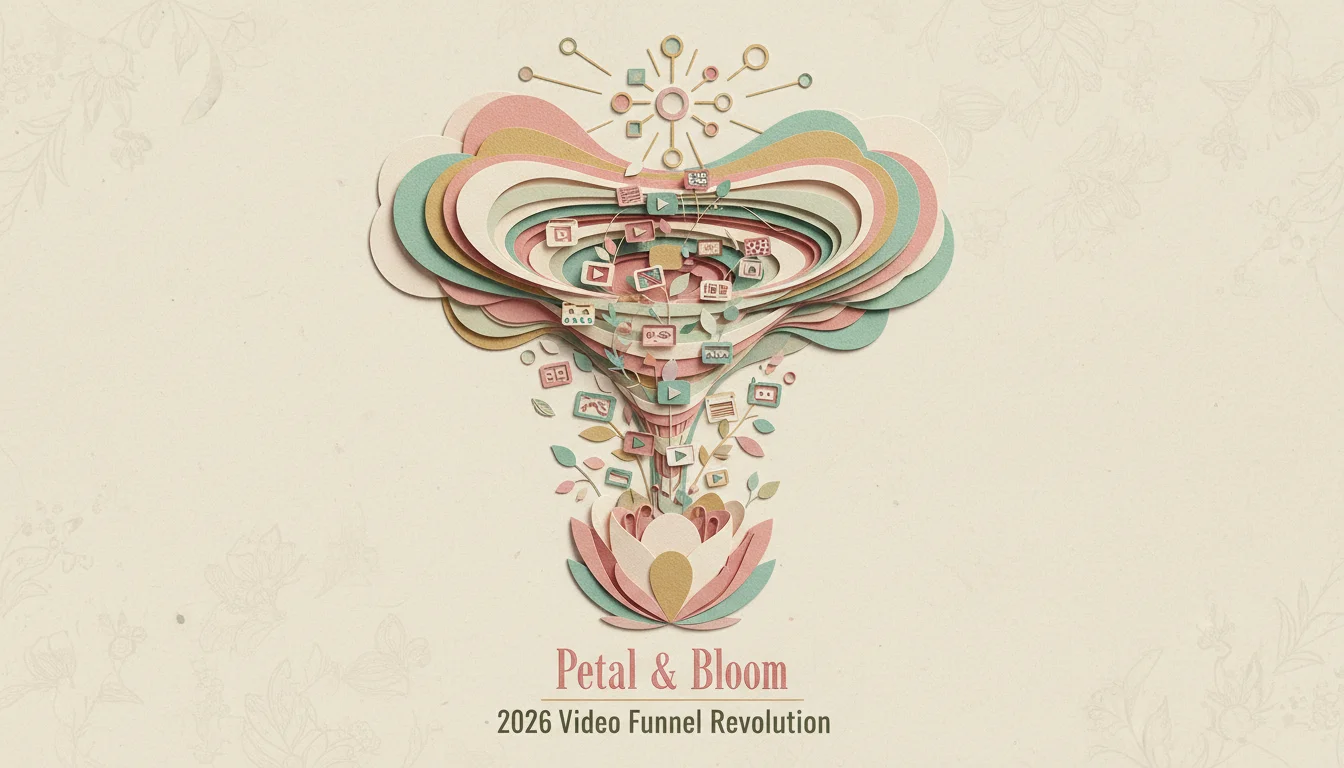
Sarah, who founded the e-commerce flower shop “Petal & Bloom,” hit a wall in early 2026. Her initial success from social media buzz had plateaued. She knew she needed to scale, but the money she was spending on static image campaigns was bringing back less and less. Her goal was to build a real automated sales funnel to turn browsers into buyers, and she had a hunch video was the answer. The challenge wasn’t just making video ads. It was figuring out how to make video ad funnels that would actually work for her specific e-commerce niche. Could video really generate the predictable sales she needed to grow?
Key Takeaways
- Use a multi-stage video strategy: short brand awareness videos (15-30s) for cold audiences, then detailed product demos (60-90s) for warm ones.
- Automate your video targeting and ad delivery using platform tools like Meta’s Advantage+ Shopping Campaigns and Google Ads’ Performance Max.
- Add interactive elements like polls or clickable product tags inside your video ads to lift engagement by at least 15% over static calls-to-action.
- Analyze video completion rates and click-through rates (CTR) at each funnel stage to find where people drop off, then optimize your video content to fix the leaks.
- Constantly A/B test your video creatives, calls-to-action, and thumbnails to refine performance, shooting for a 10% or better conversion rate lift for the winning versions.
“Marketing automation has two fundamentally different jobs. One is technical: building journey logic, setting up workflows, defining enrollment criteria, creating segmentation, and configuring tracking. None of that requires speaking Japanese.”
The Initial Hurdle: Static Ads and Stagnant Growth
Sarah’s first ad strategy for Petal & Bloom was all beautiful photos of her arrangements. They got likes and some clicks, sure, but the conversion rate from click to purchase was stuck around 1.5%, which basically just paid for the ads themselves. “My ads weren’t converting,” she recalled. “I was just burning cash.” Her audience, mostly women 25-55 interested in home decor and gifts, liked pretty things, but the photos didn’t have the storytelling power to show the emotion and work behind each bouquet. A lot of e-commerce businesses fall into this trap. They know they need ads, but they underestimate how much the medium matters for telling a story. With video projected to make up over 82% of all internet traffic by 2026, according to a late 2025 Statista report, it absolutely dominates consumer engagement.
Building the Top of the Funnel: Awareness and Engagement
The first thing we did with Petal & Bloom was scrap the old top-of-funnel approach. Instead of pushing a product right away, we went for brand storytelling. For cold audiences, people who’d never heard of her store, we ran a series of short, emotional videos. These were not sales pitches. One of the best ones was a 20-second time-lapse of a bouquet being assembled to some calming music, ending with the arrangement sitting in a bright, happy home. The call-to-action was soft: “Discover the art of gifting.” We ran these on Meta’s platforms (Facebook and Instagram) with broad interest targeting for things like “flower delivery,” “home decor,” and “gift ideas.”
The key was creating intrigue and grabbing attention, not asking for a sale. We were banking on the idea that people are far more likely to buy after seeing a brand’s video, a fact that HubSpot’s 2025 marketing stats confirm by showing a 50% lift in purchase intent. This meant Sarah had to shift her thinking from “sell now” to “engage first, sell later.” We watched our key metrics like a hawk, specifically video view-through rate (VTR) and cost per 10-second view. Our VTR for these awareness videos quickly hit an average of 35%, which blew away the typical 10-15% we’d see from static image ads in similar campaigns.
Mid-Funnel Nurturing: Education and Consideration
Once someone engaged with those first videos (we defined this as watching at least 50%), they were automatically moved into our mid-funnel audience. Here, the videos got more specific and informative. We created 45 to 60-second clips that showed off particular collections, like “The Serenity Collection.” These videos talked about the unique flower combinations, the sustainable sourcing, and even care instructions. One video that worked especially well had Sarah herself on camera for a few seconds, talking about her passion for flowers and what inspired a certain arrangement. That human touch really resonated with potential customers.
We ran these as retargeting ads on Meta and also pushed them onto Google Ads for YouTube in-stream and in-feed spots. The targeting was sharp: we built custom audiences from people who watched the top-of-funnel videos, visited specific product pages, or added to their cart without checking out. We also started playing with interactive features. For example, some of our YouTube ads had clickable cards that went straight to the product page, and our Instagram Story ads used polls asking, “Which bouquet is your favorite?” This interactivity wasn’t just for show. It boosted our engagement rates by an average of 18% over the non-interactive videos and gave us great data on what people actually liked.
Bottom of the Funnel: Conversion and Urgency
The final stage of the automated sales funnel was all about getting the sale. This was for our most engaged audience, people who had watched multiple mid-funnel videos, clicked to product pages, or abandoned a cart. The ads here were short and direct (15-30 seconds). They often featured a quick customer testimonial (with permission!), a limited-time offer, or a very clear call to action like “Shop Now, Free Delivery on Your First Order.” Visually, everything was clean, focusing on the product’s beauty and how easy it was to order.
We really leaned on Meta’s Advantage+ Shopping Campaigns, which by 2026 had become much better at optimizing video assets automatically. On the Google side, we used Performance Max campaigns, feeding them our best-performing video creatives from other stages. For a small business owner like Sarah, these automated tools were a lifesaver, cutting down on manual campaign management. You have to feed the algorithms your best assets and let them run, but you still have to monitor performance. This is where we saw the conversion rate jump from the initial 1.5% to a very consistent 4.2% for our retargeted audiences. It reinforced the value and removed any friction from the buying process.
Iteration and A/B Testing
The whole system would have failed without constant A/B testing. We never just made a set of videos and let them run indefinitely. At every single stage of the funnel, we were testing variations: different hooks in the first three seconds, different video lengths, different calls-to-action, even different background music. For instance, we discovered that a top-of-funnel video that opened with a tight, close-up shot of dew on a rose petal got a 15% higher click-through rate than one that started with a wide shot of the whole bouquet. These small wins from agile tactics compound into big results.
We were obsessive about the data. If a mid-funnel video had a great view-through rate but a low click-through rate, we knew the video was engaging but the call to action was weak or unclear. If an awareness video had a low view-through rate, we knew the hook wasn’t good enough to stop the scroll. This is the granular work that actually moves the needle, but it’s often overlooked by businesses who just want to “get ads running.” Making the *right* video for the right person at the right time is the whole point.
Sarah’s Success: The Results
After six months, Petal & Bloom’s video ad funnels had completely changed its business. Sarah’s monthly sales from these campaigns shot up by 280%. Her return on ad spend (ROAS) went from a break-even 1.5x to a profitable 3.8x ROAS. Best of all, she had a predictable system. “It’s not a guessing game anymore,” Sarah said. “I can see which videos bring people in, which ones warm them up, and which ones close the deal. It’s like having a digital sales team that works 24/7.”
Beyond the numbers, the brand perception itself improved. Customers started leaving comments about the ads, saying the videos helped them see and appreciate the arrangements in a way static photos never could. This trust led to higher average order values and a better customer lifetime value. It proved that investing in high-quality, strategically placed video content is a growth engine for any e-commerce business that wants to survive in 2026 and beyond.
An effective video ad funnel for automated sales comes down to a multi-stage strategy, good content, and relentless optimization. When you focus on getting the right message to the right audience at the right time with video, you build a powerful machine for predictable e-commerce growth.
What is an automated video ad sales funnel?
It’s a structured marketing process that uses different video ads to guide potential customers from initial awareness to a final purchase, all with minimal manual work. The system uses ad platform automation (like on Meta or Google) to target users and deliver the right video based on their behavior.
How long should videos be for each funnel stage?
For top-of-funnel awareness, keep videos short, typically 15-30 seconds, to grab attention quickly. Mid-funnel consideration videos can be longer, around 45-90 seconds, to give more detail. Bottom-of-funnel conversion videos should get back to being short and direct, around 15-30 seconds, with a clear call to action.
What are the most important metrics to track?
Key metrics are video view-through rate (VTR), cost per view, click-through rate (CTR), conversion rate, cost per acquisition (CPA), and return on ad spend (ROAS). Watching these at each stage of your funnel will show you where things are breaking down and what you need to fix.
Can I just use the same video ad on all platforms?
You can, but you’ll get better results if you adapt your videos for each platform. Vertical videos are a must for Instagram Stories and TikTok, while horizontal (16:9) is still best for YouTube. You should also consider adjusting aspect ratios, text overlays, and where you put your CTA to fit each platform’s layout.
How often should I change my video ads?
Ad fatigue is real. People get tired of seeing the same creative over and over. For your broad awareness campaigns, try to refresh your video creatives every 4-6 weeks, or sooner if you see performance metrics like CTR start to drop. Your retargeting ads might last a bit longer, but you should always be testing new variations to keep things from getting stale.


