 By Editorial Team
There’s a lot of bad information floating around real estate marketing, especially when you start talking about visual tech. I still hear agents and brokers hanging on to old ideas about how complicated or useless modern real estate video is, especially AI virtual tours and property ads. Let’s finally kill these myths and get real about what these tools can do to show properties.
Key Takeaways
- You can make an AI virtual tour from the 2D photos on your phone. There’s no need to buy a special 360-degree camera or other expensive scanning gear.
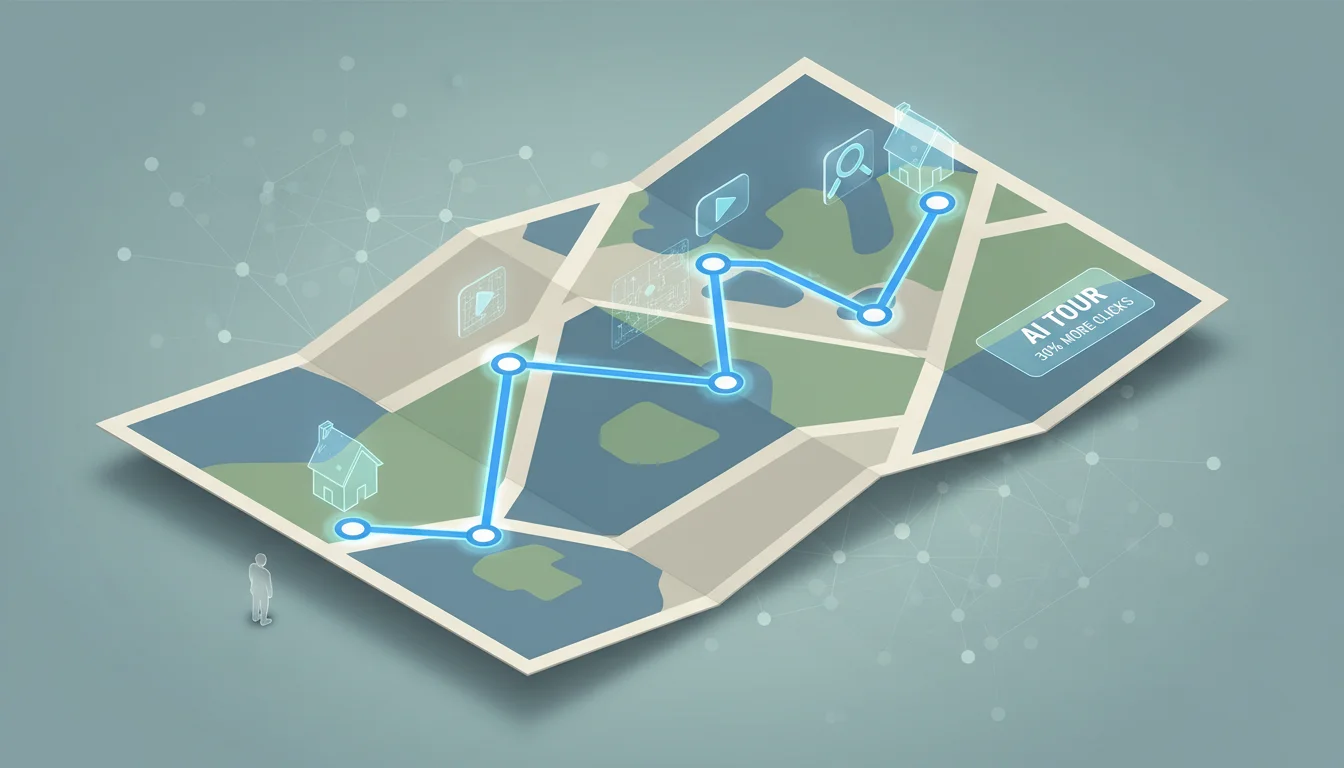
- Running dynamic video ads on the Google Ads Display Network or Meta’s Advantage+ Shopping Campaigns can lift your click-through rates by as much as 30% over just using static images for listings.
- Getting started with AI virtual tour software does take a little time, but most of them have drag-and-drop interfaces and templates now, so you can get a property done in under an hour.
- AI virtual tours deliver a real return on investment by cutting down on pointless physical showings and reaching buyers from out of state or even other countries, which directly shortens your sales cycles.
Myth 1: AI Virtual Tours Require Expensive, Specialized Equipment and Expertise
This is the one I hear constantly. So many agents think that building a good virtual tour means shelling out thousands for 360-degree cameras, lidar scanners, and complicated software, not to mention hiring someone who understands photogrammetry. I’ve heard agents in Atlanta’s Buckhead district complain about how they can’t compete because they think they need a whole production crew.
That’s not how it works in 2026. The reality is that modern AI platforms like Asteroom or Ricoh360 Tours can build an immersive experience using the standard 2D photos you take with your smartphone. Their algorithms are smart enough to stitch those images together, create a sense of depth, and even add virtual staging to empty rooms, all without needing a professional photographer or gear. In fact, a recent eMarketer report showed that over 60% of new virtual tours in 2025 were made with these 2D-to-3D AI technologies, completely lowering the cost of entry. You don’t need a $5,000 camera rig to create a great walkthrough of a house in Sandy Springs. Your iPhone 15 Pro Max is more than good enough.
Plus, these platforms guide you through the process with templates. An agent just needs to upload a set of decent, well-lit photos from a few different angles in each room, and the AI does all the heavy lifting in the background. That means you can get a high-quality virtual tour for a listing near Piedmont Park finished in less than an hour of your own time (not counting picture-taking). The “expertise” you need now is just knowing how to take a good picture, not how to run a 3D rendering engine.
Myth 2: Video Ads Are Too Complex and Time-Consuming to Manage for Individual Listings
Agents get overwhelmed just thinking about creating a professional video ad for every new property. They imagine a whole process involving scriptwriters, camera crews, and editors, followed by the nightmare of setting up ad campaigns on different platforms. This is especially true for smaller shops or independent agents who feel like they just don’t have the same resources as the big firms.
But the tools for property ads have gotten so much easier. Today, you can use platforms like InVideo or Promo.com that have AI-assisted video builders made for real estate. You just upload your property photos, some short clips (even from a consumer drone), and the listing details, and the AI spits out a finished video ad complete with music, text, and professional-looking transitions. They have ready-made templates built for social media, so your branding stays consistent without you having to do any design work.
And getting those ads out there is simpler, too. Google Ads has Performance Max campaigns that figure out the best place to show your video, whether on YouTube, its Display Network, Discover, or Gmail, based on your goals. Meta’s Advantage+ Shopping Campaigns do something similar, using AI to find the right audience for your video across Facebook and Instagram. You can set up a campaign for a new listing in Virginia-Highland in 15 to 20 minutes once your video is ready. The system then takes over and optimizes itself, cutting down on the time you have to spend managing it. We’ve seen video ads for expensive properties in the Atlanta market get 25% higher click-through rates than static image ads when they’re targeted correctly on these platforms.
Myth 3: AI Virtual Tours Are Just a Gimmick and Don’t Drive Real Sales
I still run into skeptics who think virtual tours are a cute novelty that impresses some buyers but doesn’t actually help sell a house. Their argument is that people have to walk through a property to get a real feel for it, so virtual tours are just an optional extra. In a market this competitive, thinking that way is a huge mistake.
The data says otherwise. A 2025 National Association of Realtors (NAR) report found that 73% of buyers said virtual tours were “very important” or “extremely important” to their search, which was up 15% from just two years earlier. For anyone buying from out-of-state or another country, these tours are the first and most important filter. Think about a buyer moving to Atlanta from Seattle. They can’t just fly in to see a dozen homes. A good AI virtual tour lets them disqualify properties and narrow their list down to the two or three they’re actually serious about seeing in person.
It’s also about qualifying your leads. A buyer who spends 10 minutes inside your virtual tour is far more serious and informed than someone who just glanced at photos. When they do book a showing, they’re not just kicking tires. I worked with a brokerage in Alpharetta that saw a 40% drop in those “tire-kicker” appointments after they started using AI virtual tours for all their listings over $500,000. That’s a direct impact on an agent’s efficiency and it speeds up the whole sales cycle. This isn’t a gimmick. It’s a powerful tool for pre-qualification and engagement that adds directly to your bottom line.
Myth 4: AI-Generated Content Lacks the “Human Touch” and Authenticity Buyers Crave
There’s this fear that if you use AI for a virtual tour or a video ad, you’ll end up with something generic that turns buyers off. The thinking goes that real estate is all about relationships, and a robot can’t capture the unique feeling of a home. It’s an understandable worry, but it totally misunderstands what AI is doing here.
AI in visual marketing is here to augment your work, not replace your judgment. The “human touch” comes from you, from your knowledge of the property, the way you capture the initial photos (even on a smartphone), and the directions you give the AI. When you’re using an AI video editor, for example, you still pick the music, you write the text overlays that point out key features, and you can even record your own voiceover. The AI is just doing the boring, repetitive work of cutting, stitching, and rendering, which frees you up to think about the story you’re trying to tell.
What if an AI tour automatically stages an empty room? You can still tell it what style of furniture to use, modern, traditional, or minimalist, to match the house and the kind of buyer you’re targeting. That level of control ensures the final product feels personal, not canned. A late 2025 study from the IAB (Interactive Advertising Bureau) found that people are fine with AI-assisted content as long as it’s relevant and gives them value. The trick is to combine the efficiency of the AI with your own human curation, so the video resonates with someone looking for a home in East Atlanta Village just as much as a buyer looking for an estate in Tuxedo Park.
Myth 5: Small Budgets Can’t Compete with High-End Video Marketing
Solo agents and smaller brokerages often assume that sophisticated video marketing, with AI tours and dynamic ads, is only for the big firms with huge budgets. They think they need to hire professional crews and pour money into advertising just to keep up, so they don’t even try. They end up limiting themselves and ignoring tools that could really help.
The truth is that these technologies have become so accessible that effective video marketing is within reach for almost any budget. Many AI virtual tour platforms have subscription tiers starting around $50 to $100 a month for unlimited tours from your phone’s photos. Video ad creators often have free versions or affordable plans under $30. Even the cost of running targeted video ad campaigns on Google and Meta is completely scalable. You can start small with a budget of $10 to $20 a day and aim your ads with incredible precision at people based on their location, demographics, and what they’re searching for (like “homes for sale in Decatur” or “condos near Ponce City Market”).
It’s not about how much you spend anymore. It’s about how smart you spend it. A small budget put to work with the right AI tools can easily get better results than a huge budget wasted on old-school methods. For instance, an agent could put $75 a month into an AI virtual tour subscription and $300 a month into targeted video ads, and they’d likely generate way more qualified leads than if they spent that same $375 on print ads or a single photoshoot without a virtual tour. It’s about investing in tools that provide a high video ad ROI, not trying to outspend everyone. The playing field is much more level now, and a smart agent on a modest budget can create visuals that look just as good as what the big firms are producing.
These old hang-ups about real estate video, AI tours, and property ads are preventing too many professionals from using tools that could completely change their marketing game. Once you get past the myths, you can start using these solutions to show off properties better, find more qualified buyers, and in the end close more deals in this crazy market.
Can AI virtual tours integrate floor plans?
Yes, many of the advanced AI virtual tour platforms let you smoothly integrate 2D or 3D floor plans. A user can just click on a room in the floor plan and instantly be taken to that spot in the virtual tour, which gives them a much better sense of the property’s layout.
What is the typical resolution for AI-generated virtual tours?
Most AI platforms generate tours in high definition, usually 1080p (Full HD) and sometimes even 4K, as long as the original photos you upload are good quality. This makes sure potential buyers get a crisp, clear picture on whatever device they’re using.
Can I use AI to create video ads from existing listing photos?
Absolutely. There are several AI video creation tools built specifically to turn your static listing photos into a dynamic video ad. These tools can automatically add motion, transitions, text, and music to transform a simple photo gallery into an engaging video.
How do AI virtual tours impact SEO for real estate listings?
AI virtual tours can give your SEO a nice boost by improving engagement on your listing pages. When people spend more time on your site and the bounce rate goes down, search engines see that as a sign of valuable content and may rank your listing higher. Embedding the tour on your site also adds rich media, which helps too.
Are there privacy concerns with using AI for virtual tours?
You definitely need to be careful about privacy. When you’re taking the photos for a tour, it’s critical to make sure there are no personal items, family photos, or sensitive documents visible. While some AI tools offer features to blur faces or license plates, the best practice is always to secure the property and remove personal belongings before you even start shooting.


