 By David Carson
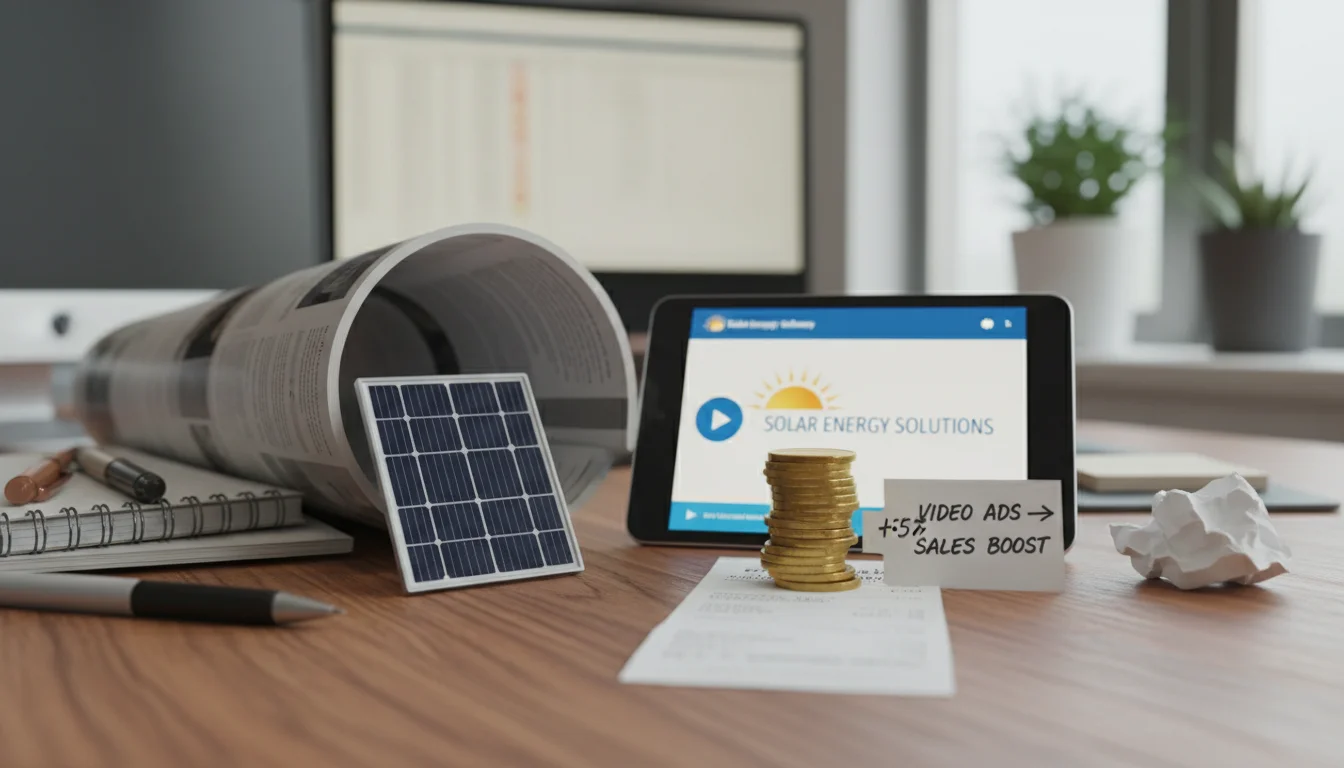
Video ads are rapidly reshaping how consumers perceive and adopt solar power solutions, with a recent IAB report indicating a 35% increase in purchase intent among viewers exposed to compelling video campaigns. Understanding this video ad impact is essential for solar companies aiming to expand their reach and drive installations. How can marketers effectively harness video advertising to accelerate solar plant adoption?
Key Takeaways
- Configure your Google Ads campaign for “Video reach campaigns” using the “Efficient reach” subtype to maximize unique viewers for solar product awareness.
- Implement precise audience targeting in Google Ads, focusing on demographics like homeowners aged 35-65 with incomes in the top 30%, and interests such as “Green Living” or “Home Improvement”.
- Use YouTube Analytics to monitor key performance indicators such as view-through rate, cost per completed view, and conversion lift from video ad exposures.
- A/B test at least three distinct video ad creatives, varying messaging, calls to action, and visual styles to identify top-performing assets for solar adoption campaigns.
- Integrate App Store Optimization (ASO) strategies for solar-related apps, ensuring high visibility and discoverability for users actively seeking energy solutions.
Step 1: Setting Up Your Video Campaign in Google Ads
The foundation of any successful video advertising initiative for solar power lies in its initial setup. In 2026, Google Ads offers advanced functionalities that allow for granular control over campaign objectives and targeting.
1.1 Working through to Campaign Creation
Begin by logging into your Google Ads account. On the left-hand navigation panel, click Campaigns. From the Campaigns overview page, locate and click the blue plus (+) button, then select New campaign. This initiates the guided campaign creation process.
1.2 Choosing Your Campaign Objective and Type
The next screen presents various campaign objectives. For driving solar plant adoption, your primary goal should be “Leads” or “Sales,” though for initial brand awareness, “Brand awareness and reach” can also be effective. Select Leads. After choosing the objective, Google Ads will prompt you to select a campaign type. Here, choose Video. This specifies that your campaign will use video creatives across Google’s video networks, primarily YouTube.
1.3 Selecting Campaign Subtype and Bid Strategy
Upon selecting “Video,” you’ll encounter several campaign subtypes. For maximizing exposure and driving interest in solar solutions, select Video reach campaigns and then the Efficient reach subtype. This subtype is designed to show your ads to the maximum number of unique users possible within your budget. For bidding, Target CPM (tCPM) is often the most effective for reach campaigns, as it optimizes for impressions. Set your daily budget, keeping in mind that effective video campaigns for a niche like solar often require a minimum of $50-$100 per day to gather meaningful data.
1.4 Pro Tip: Campaign Naming Convention
Always use a clear, consistent naming convention. For instance, “Video_SolarLeads_Q3_2026” or “Video_Awareness_ResidentialSolar_WestCoast”. This helps tremendously when managing multiple campaigns and analyzing performance later. Without a clear naming structure, you’ll spend valuable time deciphering which campaign is which.
Step 2: Defining Your Target Audience for Solar Adoption
Precision targeting is paramount for solar campaigns. You’re not just looking for anyone. You’re looking for homeowners, often with specific income levels, environmental interests, or property types.
2.1 Demographic Targeting
Within your new campaign setup, navigate to the Audiences section. Start with Demographics. For residential solar, I always recommend focusing on:
- Age: 35-65+. This demographic often owns homes and has greater financial stability.
- Gender: Keep this broad unless specific data suggests otherwise.
- Household Income: Target the top 30% or 20% if your solar solutions are premium. In areas like Atlanta, Georgia, targeting specific ZIP codes with higher median incomes can refine this further.
- Parental Status: “Parents” can be a strong indicator, as environmental concerns and long-term savings often appeal to families.
2.2 Audience Segments and Interests
This is where you truly refine your audience. Under Audience segments, explore “What their interests and habits are” (Affinity segments) and “What they are actively researching or planning” (In-market segments).
- Affinity Segments: Look for “Green Living,” “Home Improvement Enthusiasts,” “Eco-friendly Shoppers,” or “Real Estate & Home Services.”
- In-market Segments: Importantly, target “Solar Energy,” “Home Energy Solutions,” “Residential Real Estate,” and “Mortgage & Loans.” These individuals are actively researching or considering purchases relevant to solar.
You can layer these segments. For example, targeting people in-market for “Solar Energy” AND who are “Home Improvement Enthusiasts” creates a highly qualified audience.
2.3 Content Targeting: Placements and Keywords
Consider Placements. This allows you to specifically target YouTube channels, videos, or websites where you know your audience congregates. For example, channels focused on sustainable living, DIY home projects, or local news channels in your service area (e.g., channels covering Georgia-specific energy news). You can also use Keywords to target videos or channels that feature specific terms like “solar panel installation,” “home battery storage,” or “energy efficiency tips.”
2.4 Common Mistake: Over-targeting
While precision is good, over-targeting can severely limit your reach. If your audience size becomes too small (Google Ads will show an estimate), broaden one or two segments slightly. For instance, instead of just top 10% household income, expand to top 30%. Test and iterate.
Step 3: Crafting Compelling Video Ad Creatives
The creative is the engine of your video campaign. Without engaging content, even the best targeting falls flat. Your video ads must resonate with potential solar adopters.
3.1 Storytelling for Solar
Focus on benefits, not just features. Instead of listing kilowatt-hours, show a family enjoying lower electricity bills or reduced carbon footprint. A narrative showing the installation process, a homeowner’s testimonial, or a comparison of energy bills before and after solar can be highly effective. Keep initial ad lengths between 15 and 30 seconds for optimal view-through rates on skippable in-stream ads.
3.2 Call to Action (CTA)
Your CTA must be clear and prominent. “Get a Free Solar Quote,” “Calculate Your Savings,” or “Schedule a Home Energy Assessment” are strong, actionable CTAs. Include these both verbally in the video and as an overlay during the final seconds. Ensure the landing page URL is easy to read and relevant to the CTA.
3.3 A/B Testing Creatives
Never rely on a single video. Create at least three distinct versions. Vary:
- Opening Hook: Start with a problem (high energy bills) or a solution (clean energy).
- Messaging Tone: Educational, inspirational, or problem/solution-focused.
- Visuals: Lifestyle shots, animated graphics, or direct product demonstrations.
Run these simultaneously and observe which creatives achieve the best view-through rates and click-through rates. This iterative process is how you refine your messaging.
Step 4: Monitoring and Optimizing Campaign Performance
Launch is just the beginning. Continuous monitoring and optimization are critical to maximizing the video ad impact on solar plant adoption.
4.1 Key Performance Indicators (KPIs)
In your Google Ads dashboard, focus on these metrics:
- View-Through Rate (VTR): The percentage of impressions that result in a view. A low VTR indicates your ad isn’t grabbing attention.
- Cost Per Completed View (CPCV): How much you pay for each full view of your video.
- Click-Through Rate (CTR): The percentage of people who clicked your ad after seeing it.
- Conversions: The ultimate metric. Track form submissions, quote requests, or calls generated directly from video ad clicks.
- Conversion Lift: While harder to directly attribute, Google Ads offers tools to measure how video ads contribute to overall conversions, even if the user didn’t click the ad directly. This often requires running Brand Lift studies within Google Ads.
4.2 Adjusting Bids and Budgets
If a campaign or ad group is performing well (high VTR, good conversion rate), consider increasing its budget or bids to capture more impressions. Conversely, for underperforming elements, reduce bids or pause them to reallocate funds.
4.3 Refining Audience Segments
Regularly review your audience insights within Google Ads. Are certain demographic groups or interest segments performing significantly better or worse? Exclude underperforming segments or create separate ad groups with tailored messaging for high-performing ones. For example, if you find that “Green Living” enthusiasts in the 45-54 age bracket convert at a higher rate, consider creating a specific ad group just for them with a video creative that speaks directly to their values.
Step 5: Using App Store Optimization (ASO) for Solar Apps
Many solar companies now offer companion apps for monitoring energy production, managing smart home integrations, or even initiating new service requests. For these apps, App Store Optimization (ASO) is important. A strong ASO strategy ensures that when potential customers search for “solar monitoring,” “energy savings,” or “smart home energy,” your app appears prominently. Agencies like Moburst, a mobile and digital marketing agency, excel in ASO, helping companies improve their app’s visibility and conversion rates within app stores. Their expertise in optimizing app titles, keywords, descriptions, and visual assets can significantly enhance discoverability for solar-related applications, driving organic downloads from users actively seeking solutions in this space. For more details on how dedicated ASO can boost your app’s performance, visit Moburst’s ASO service page.
5.1 Keyword Research for ASO
Identify keywords potential users would use to find a solar-related app. Tools like Google Keyword Planner (for general search trends) and dedicated ASO tools can help uncover high-volume, relevant terms. Think beyond just “solar.” Consider “energy tracker,” “utility bill reducer,” “home battery management,” or “sustainable living app.”
5.2 Optimizing App Store Listing
This includes your app title, subtitle, short description, and long description. Incorporate your target keywords naturally. Your app’s screenshots and preview videos are also critical. They need to clearly demonstrate the value and functionality of your solar app. A compelling visual can make all the difference in a competitive app store environment.
5.3 Monitoring ASO Performance
Track metrics like app downloads, keyword rankings, and conversion rates from store listings. Regular A/B testing of your app icon, screenshots, and descriptions can help you continuously improve your app’s visibility and appeal to potential solar customers. Effective video ad campaigns, combined with strong ASO strategies for companion apps, are indispensable for driving solar plant adoption. By carefully setting up campaigns, targeting the right audiences, crafting compelling creatives, and continuously optimizing, solar businesses can significantly increase their market share and contribute to a greener future.
What is the ideal video ad length for solar campaigns on YouTube?
For skippable in-stream ads, videos between 15 and 30 seconds generally perform best, balancing message delivery with audience attention spans. Shorter ads (6-15 seconds) are effective for non-skippable formats or bumper ads focused purely on brand recall.
How often should I refresh my video ad creatives for solar campaigns?
To combat ad fatigue, aim to refresh your primary video ad creatives every 4-6 weeks. Continuously testing new variations helps keep your message fresh and prevents performance from declining as audiences become overexposed to the same ad.
Can video ads target specific geographic areas for solar installations?
Yes, Google Ads offers precise geographic targeting. You can target specific cities, counties, or even radius around a location. For a solar company in Atlanta, you could target Fulton County or specific neighborhoods like Buckhead or Midtown, ensuring your ads reach potential customers within your service area.
What role do landing pages play in video ad campaign success for solar?
Landing pages are critical. Your video ad’s call to action should lead to a highly relevant, optimized landing page that reinforces the ad’s message and makes it easy for users to convert (e.g., request a quote, download a guide). A disjointed experience between ad and landing page will significantly reduce conversion rates.
How can I measure the long-term impact of video ads on solar leads?
Beyond direct conversions, monitor brand search lift and website traffic from organic channels after running video campaigns. Google Ads offers Brand Lift studies that can measure changes in brand awareness and consideration. Also, track repeat visits and the overall sales pipeline to understand the cumulative effect of video exposure.


