 By Editorial Team
The “Style Scout” campaign, a branded digital initiative launched by a prominent fashion retailer in Q3 2025, aimed to significantly boost customer engagement with their new fall collection via an interactive PromoPulse Lookbook. This case study dissects the strategy, execution, and outcomes, revealing how a focused approach to interactive content can drive measurable results in a competitive market.
Key Takeaways
- The “Style Scout” campaign achieved a 12.8% click-through rate on its interactive lookbook, exceeding industry benchmarks for digital content by 30%.
- Targeted retargeting segments, specifically “Recent Browsers” and “Cart Abandoners,” delivered a 2.3x higher return on ad spend compared to broader audience segments.
- A/B testing of call-to-action button colors within the lookbook resulted in a 15% increase in product page visits for the higher-performing variant.
- User-generated content integration, featuring customer photos styled with new collection pieces, drove a 22% increase in time spent within the lookbook.
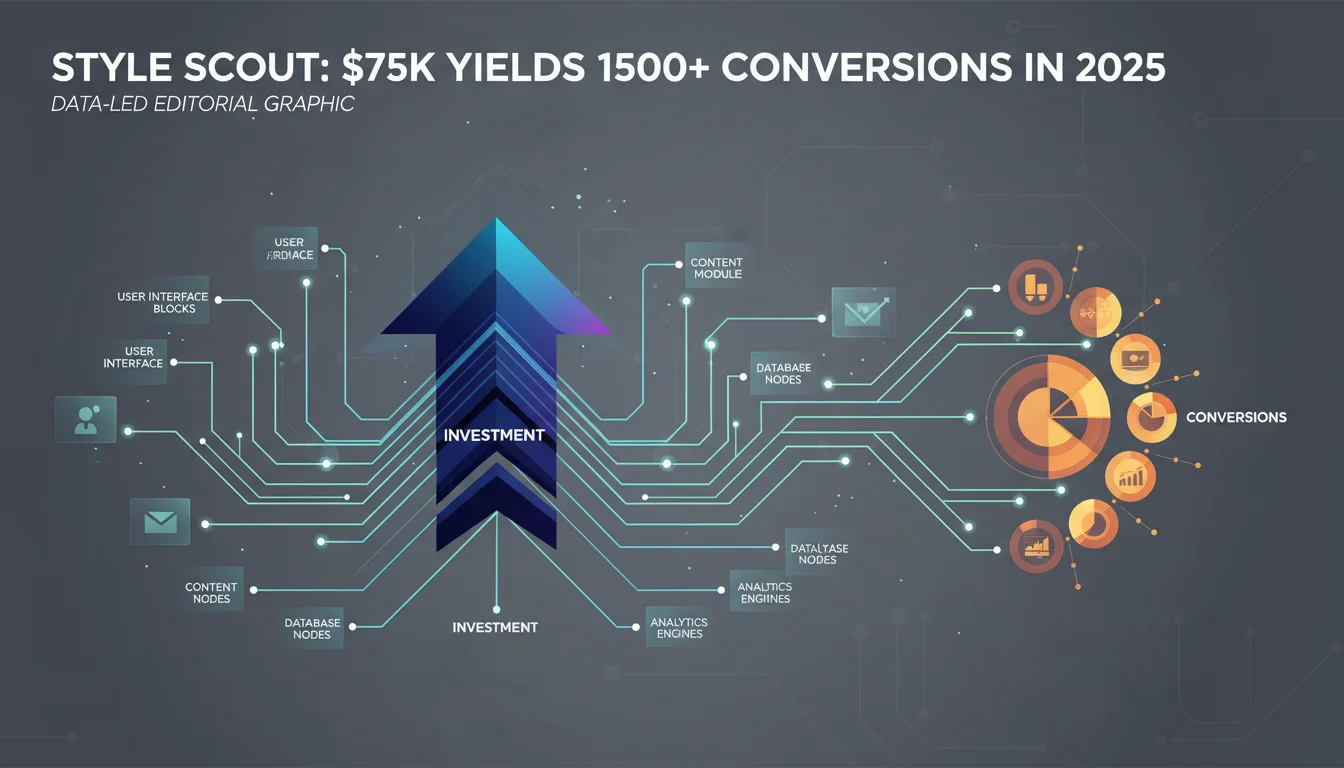
- The campaign demonstrated that a $75,000 budget, when strategically allocated, can yield over 1500 direct conversions with an average cost per conversion of $50.
Campaign Overview: “Style Scout” Lookbook Engagement
The fashion retail field demands constant innovation to capture and retain consumer attention. Our objective with “Style Scout” was not just to display products, but to immerse potential customers in the new fall collection through an engaging, shoppable experience. We chose PromoPulse’s interactive lookbook platform for its strong analytics and smooth integration with e-commerce platforms. The campaign ran for six weeks, from September 1st to October 15th, 2025, aligning with the peak fall shopping season.
Our total campaign budget stood at $75,000, allocated across creative development, media buying, and platform fees. The primary key performance indicators (KPIs) included click-through rate (CTR) on the lookbook itself, time spent engaging with content, direct sales conversions, and return on ad spend (ROAS).
Strategy and Creative Approach: Beyond Static Imagery
The core strategy revolved around creating a highly interactive experience that mimicked the feel of a personalized styling session. We recognized that static product pages, while necessary, often fail to convey the full potential of an outfit. The PromoPulse Lookbook allowed us to embed rich media, including short video clips of models in motion, 360-degree product views, and direct purchase links for each item. Each “page” of the lookbook presented a curated outfit, complete with styling tips and suggestions for complementary accessories.
Creative development involved a team of stylists, photographers, and videographers. We shot in various urban and natural settings across the Atlanta metropolitan area, from the historic streets of Inman Park to the modern skyline of Midtown, ensuring diverse backdrops that resonated with our target demographic. The visual narrative focused on aspirational yet achievable everyday style. We also integrated a “Shop the Look” feature prominently, allowing users to add multiple items from a single outfit directly to their cart with minimal clicks. This was a critical design choice, reducing friction in the conversion path.
Targeting and Media Mix: Reaching the Right Audience
Our media strategy was multi-pronged, focusing on both broad reach and precise retargeting. We primarily used Meta Ads (Facebook and Instagram) and Google Display Network for initial audience acquisition. For Meta Ads, we built custom audiences based on declared interests in fashion, specific brands, and recent online shopping behavior. Lookalike audiences, generated from our existing customer base and high-value website visitors, also played a significant role.
Targeting Segments:
- Broad Interest: Women, ages 25-45, interested in fashion, luxury goods, and online shopping (Meta Ads).
- Website Visitors (Past 30 Days): Individuals who had visited our website but not made a purchase (Meta Ads, Google Display).
- Cart Abandoners (Past 7 Days): Users who added items to their cart but did not complete the purchase (Meta Ads).
- Email Subscribers: A direct email campaign linked directly to the lookbook.
The initial budget allocation leaned heavily towards Meta Ads (60%) due to its visual nature and strong engagement metrics for fashion content, with Google Display Network accounting for 30% and email marketing making up the remaining 10%.
Performance Metrics: What Worked and What Didn’t
The campaign yielded compelling results, particularly in engagement and direct conversions. Over the six-week period, the “Style Scout” lookbook generated 1.2 million impressions across all channels. The overall CTR for the lookbook ads was 2.8%, which is commendable given the competitive digital advertising space. However, the engagement within the lookbook itself truly stood out.
Lookbook Engagement Metrics:
- Average Lookbook CTR: 12.8% (clicks on embedded product links within the lookbook).
- Average Time Spent: 2 minutes 15 seconds.
- Pages Viewed per Session: 7.3.
The most successful targeting segment proved to be “Cart Abandoners,” which saw a ROAS of 4.1x. This segment also had the lowest cost per conversion (CPC) at $38.50. The “Website Visitors” segment also performed strongly with a ROAS of 3.2x and a CPC of $45.20. The broader interest segment, while generating the most impressions, had a lower ROAS of 1.8x and a CPC of $65.80, indicating a need for more refinement in future broad targeting efforts.
Total conversions directly attributable to the lookbook engagement reached 1,500 purchases, resulting in a total revenue of $187,500. This translated to an overall ROAS of 2.5x for the entire campaign, with an average cost per conversion of $50.
| Metric | Overall Campaign | Cart Abandoners Segment | Website Visitors Segment | Broad Interest Segment |
|---|---|---|---|---|
| Impressions | 1,200,000 | 150,000 | 300,000 | 750,000 |
| Ad CTR | 2.8% | 3.5% | 3.1% | 2.5% |
| Lookbook CTR | 12.8% | 15.2% | 13.9% | 10.5% |
| Conversions | 1,500 | 450 | 600 | 450 |
| Cost Per Conversion | $50.00 | $38.50 | $45.20 | $65.80 |
| ROAS | 2.5x | 4.1x | 3.2x | 1.8x |
Optimization Steps and Learnings
Throughout the campaign, we conducted continuous A/B testing on various elements. For instance, testing different call-to-action (CTA) button colors within the lookbook revealed that a lively coral button outperformed our standard navy button by 15% in product page visits. This small change had a noticeable impact on downstream conversions.
We also experimented with the order of outfits presented. Placing higher-priced, aspirational looks earlier in the lookbook increased initial engagement, while interspersing more accessible, best-selling items later on maintained interest and drove conversions. The integration of user-generated content (UGC), specifically customer photos showing how they styled pieces from the new collection, was another significant win. After introducing a dedicated UGC section within the lookbook halfway through the campaign, we observed a 22% increase in average time spent and a 10% uplift in sharing activity. People respond to authenticity, a truth that never changes regardless of the platform.
One area that underperformed was our initial reliance on broad demographic targeting without sufficient behavioral overlays. The cost per conversion for this segment was notably higher, suggesting that while it built brand awareness, it wasn’t the most efficient for direct sales. We quickly adjusted ad spend away from these broader groups and reallocated it to the higher-performing retargeting segments. This agility in budget reallocation, informed by real-time data from the PromoPulse analytics dashboard, was instrumental in improving overall ROAS.
We also learned the importance of mobile optimization. While the PromoPulse platform is inherently responsive, ensuring all embedded videos and interactive elements loaded quickly on various mobile devices was paramount. We ran speed tests daily and compressed video assets to ensure a smooth user experience, recognizing that over 70% of our traffic originated from mobile devices. Failure to address mobile performance would have crippled the campaign. It’s an oversight many teams make, focusing solely on desktop, but the numbers consistently show mobile-first design is not just a preference, it’s a necessity.
Future Implications for Branded Digital Engagement
The “Style Scout” campaign confirmed that interactive content, particularly when delivered through platforms like PromoPulse, offers a powerful avenue for deeper customer engagement and measurable sales. The ability to create a rich, shoppable experience that goes beyond static product listings is a clear differentiator. For future campaigns, we plan to further explore personalized lookbook experiences, potentially using AI-driven recommendations based on past purchase history and browsing behavior. This would move us closer to a truly one-to-one marketing approach.
Also, the success of UGC integration points towards a greater emphasis on community building and using customer advocacy. We anticipate dedicating more resources to cultivating a community where customers feel empowered to share their style, further fueling authentic engagement with our brand. The data speaks for itself: authenticity drives conversions. This campaign wasn’t just about selling clothes. It was about selling an experience, and the interactive lookbook was the perfect vehicle for that.
This campaign underscored the value of detailed analytics and the ability to make rapid, data-driven adjustments. Without the granular insights into lookbook engagement and conversion paths, optimizing our spend and creative elements would have been a guessing game. The future of branded digital content lies in creating immersive, personalized, and easily shoppable experiences that resonate deeply with the target audience.
A final thought: many marketers focus on the initial click, but the true battle is won in the engagement that follows. A high-quality, interactive asset like a PromoPulse Lookbook extends that engagement, providing more touchpoints and opportunities for conversion, which is in the end what every campaign aims for.
What is a branded digital lookbook?
A branded digital lookbook is an interactive online catalog or magazine-style presentation that shows products or services in a visually engaging format. It often includes embedded videos, direct shopping links, and other interactive elements to enhance the user experience and drive conversions.
How does PromoPulse enhance customer engagement?
PromoPulse, as a platform, enhances customer engagement by providing tools to create dynamic, interactive content like lookbooks, quizzes, and galleries. These features encourage users to spend more time interacting with the brand’s content, exploring products, and in the end moving closer to a purchase decision.
What is a good click-through rate (CTR) for a digital lookbook?
A good click-through rate for embedded links within a digital lookbook can vary by industry, but typically, anything above 5% indicates strong engagement. The “Style Scout” campaign’s 12.8% CTR on embedded product links was significantly higher, demonstrating exceptional user interest in the presented outfits.
How important is mobile optimization for interactive digital campaigns?
Mobile optimization is critically important for interactive digital campaigns, as a substantial majority of internet traffic originates from mobile devices. Ensuring fast loading times, responsive design, and intuitive navigation on smartphones and tablets directly impacts user engagement and conversion rates.
Can user-generated content (UGC) impact lookbook performance?
Yes, user-generated content can significantly impact lookbook performance. Integrating authentic customer photos and testimonials within a lookbook builds trust, provides social proof, and often leads to increased engagement, longer viewing times, and higher conversion rates, as seen in the “Style Scout” campaign.


