 By Editorial Team
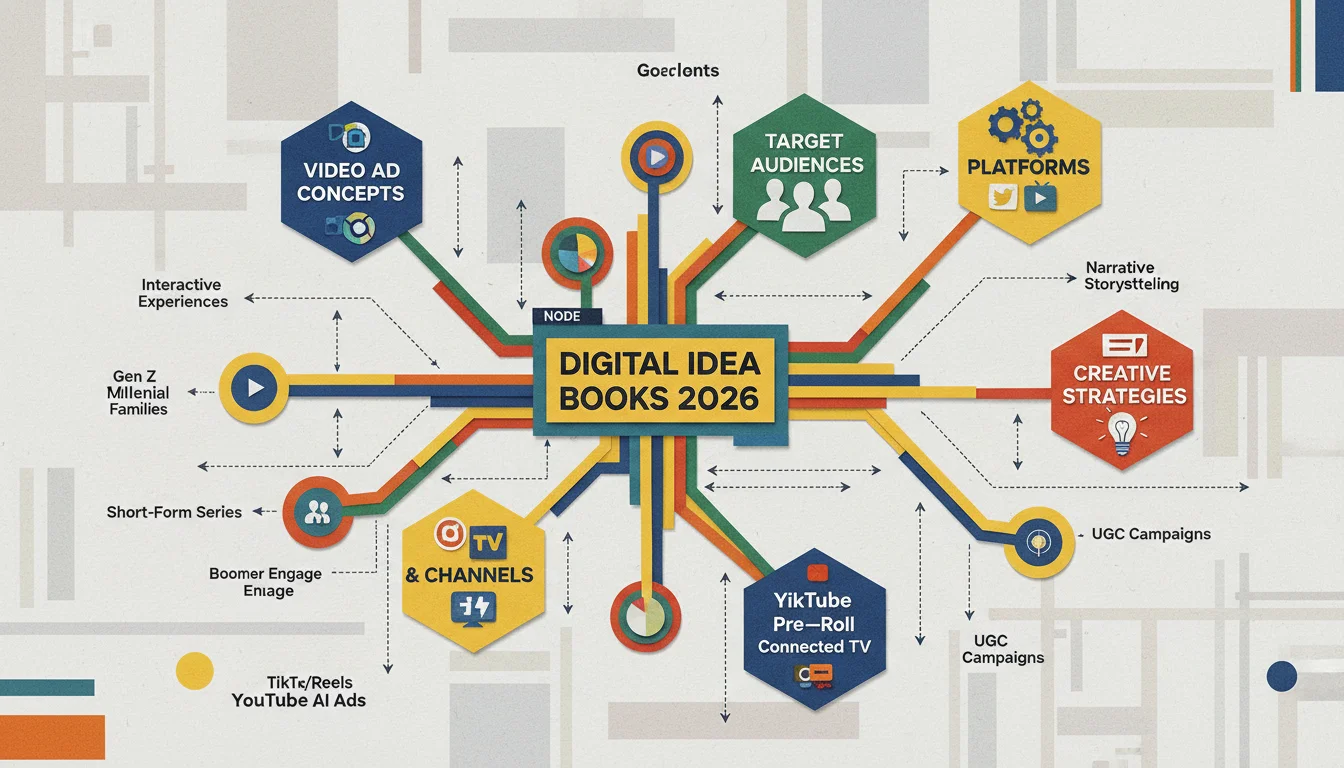
Developing compelling video ad concepts consistently presents a significant challenge for marketing teams striving for impactful campaigns. The sheer volume of content required across diverse platforms, coupled with the constant pressure to innovate, often leads to creative blocks and repetitive approaches. The solution lies in structured approaches to digital idea books, transforming the chaotic brainstorming process into a systematic engine for fresh, high-performing video ad concepts. How can teams effectively build and deploy these creative tools?
Key Takeaways
- Implement a centralized digital idea book platform to catalog and tag all video ad concepts, including those from competitors and industry leaders.
- Integrate AI-powered trend analysis tools to identify emerging visual styles, audio cues, and narrative structures before they saturate the market.
- Establish a weekly creative review process where new concepts are pitched, refined using a standardized scoring matrix, and archived with performance predictions.
- Develop a system for A/B testing initial concept variations, focusing on the first three seconds of engagement and a clear call-to-action.
- Regularly refresh the idea book with campaign results, categorizing successful elements by demographic, platform, and conversion metrics.
The problem, as I see it, is not a lack of ideas, but a lack of organized, accessible inspiration. Marketing teams frequently operate in silos, with brilliant campaign insights trapped in individual notebooks or scattered across disparate cloud drives. This fragmentation makes it nearly impossible to build on past successes, learn from failures, or adapt effective strategies to new products or audiences. Consider the common scenario: a new product launch demands a fresh video ad series. The creative director asks for “something disruptive,” and the team stares at a blank whiteboard, feeling the weight of expectation. They might recall a competitor’s successful ad from months ago, but finding its core concept, the visual style, or the specific emotional trigger becomes a frustrating scavenger hunt through old campaign reports and scattered screenshots. This inefficiency costs time, money, and in the end, market share.
I’ve seen this play out in countless agencies. A few years ago, we were tasked with launching a new B2B SaaS platform. Our initial approach involved traditional brainstorming sessions: whiteboards, sticky notes, and a lot of coffee. We generated dozens of ideas, many of them variations of existing concepts. We cycled through several rounds of storyboarding, only to find ourselves returning to similar themes that lacked genuine novelty. The ads we produced were competent, but they didn’t break through the noise. Engagement rates were average, and our cost-per-acquisition remained higher than projected. We were creating content, but not necessarily compelling content, because our creative process lacked a structured feedback loop and a central repository of truly innovative approaches. We were reinventing the wheel with every campaign, instead of building upon a strong foundation of tested concepts and emerging trends. This “what went wrong first” phase taught us a valuable lesson about the need for a more systematic approach to creative development.
The solution begins with establishing a dedicated digital idea book. Think of it as a living, evolving library of video ad concepts, categorized not just by product or campaign, but by underlying creative principles. This isn’t just a mood board. It’s a strategic asset. The first step involves selecting the right platform. While simple cloud storage can work, dedicated creative management tools like Adobe Creative Cloud Libraries or specialized marketing asset management systems offer better tagging, version control, and collaboration features. The key is to make it easy for every team member to contribute, search, and draw inspiration.
Once the platform is chosen, populate it with diverse content. This includes your own past successful ads, even those that performed moderately but contained an interesting element. Importantly, it must also include a strong collection of competitor ads and examples from other industries that demonstrate innovative storytelling, visual effects, or emotional resonance. Categorize these entries carefully. Tags should go beyond simple product categories. Consider tags like “short-form narrative,” “user-generated content style,” “problem-solution framing,” “aspirational lifestyle,” “humorous approach,” “animated explainer,” “testimonial-driven,” “ASMR audio focus,” or “interactive elements.” The more granular your tagging, the more powerful your search capabilities become when you’re looking for inspiration for a specific type of campaign.
Integration with creative tools is the next critical step. Many modern video editing and animation software now offer direct integration with cloud libraries, allowing creatives to save snippets, motion graphics templates, or even entire project files directly into the idea book. This capability reduces friction and encourages contributions. Plus, consider incorporating AI-powered trend analysis. Platforms like Nielsen’s AI-driven content insights or similar market intelligence services can scan vast amounts of online video content to identify emerging visual styles, popular music genres in ads, and even subtle shifts in narrative structures that resonate with specific demographics. This proactive trend identification ensures your idea book is always ahead of the curve, not merely reflecting what was popular last quarter. For example, if AI identifies a sudden surge in short, punchy ads using specific color palettes and fast cuts on platforms like Instagram Reels, that insight should immediately feed into your idea book with examples and analysis.
An important component of this system is a structured weekly or bi-weekly creative review. This isn’t just a feedback session. It’s a dedicated workshop for generating and refining new concepts specifically for the idea book. Each team member should be encouraged to present at least one new concept, drawing inspiration from the existing library or external trends. During these sessions, concepts are not just critiqued but actively developed. We use a simple scoring matrix that evaluates concepts based on originality, alignment with brand voice, potential for emotional connection, scalability across platforms, and estimated production complexity. A concept that scores high on originality and emotional connection, even if it’s complex, gets prioritized for further development. This ensures that the idea book isn’t just a collection of examples, but a repository of validated, high-potential concepts ready for deployment.
Consider a recent example from a client specializing in sustainable home goods. Their marketing team had been struggling to differentiate their products in a crowded market. By implementing a digital idea book, they began categorizing competitor ads not just by product, but by the underlying emotional appeal: “guilt-free indulgence,” “long-term savings,” “environmental stewardship,” or “modern aesthetic.” They noticed a gap: while many competitors focused on environmental benefits, few effectively blended that with a strong sense of personal style. Using their idea book, they developed a series of video ad concepts that combined sleek, minimalist visuals with narratives emphasizing how sustainable choices could enhance a modern home’s aesthetic and reflect a refined personal brand. One concept, tagged “eco-chic home tour,” involved a quick, visually appealing walkthrough of a stylish apartment, subtly highlighting the client’s products as integral design elements, rather than just functional items. This approach, directly inspired by combining elements from their idea book, led to a 25% increase in website engagement and a 15% uplift in conversion rates for that specific product line, according to their internal analytics.
The results of a well-maintained digital idea book are tangible and measurable. First, there’s a significant reduction in creative lead times. Instead of starting from scratch, teams can pull proven concept frameworks, visual styles, or narrative arcs directly from the idea book, adapting them to new campaign briefs. This can cut concept development time by as much as 30-40%. Second, campaign performance improves. By drawing from a curated collection of high-potential concepts and integrating trend analysis, the ads produced are more likely to resonate with target audiences. This translates to higher click-through rates, lower cost-per-acquisition, and increased brand recall. A 2025 IAB report on digital video ad spending highlighted that brands using data-driven creative insights saw an average of 18% higher return on ad spend compared to those relying solely on traditional creative processes. The idea book provides precisely that data-driven insight.
Plus, the digital idea book encourages a culture of continuous learning and innovation. Every campaign, whether successful or not, contributes to the collective intelligence. Post-campaign analysis, including A/B test results and audience feedback, must be fed back into the idea book. If a particular visual hook performed exceptionally well with Gen Z on Pinterest, that specific element, along with its performance data, should be tagged and archived. Conversely, if a concept failed to engage, the reasons for its underperformance should also be documented. This creates a self-optimizing system where the collective creative output of the team constantly improves.
Another benefit is the consistency in brand messaging and aesthetic. With a centralized repository of approved visual elements, tone-of-voice guidelines, and successful narrative structures, disparate creative teams can maintain a cohesive brand identity across all video content. This is particularly important for large organizations or those working with multiple agencies. It prevents the brand from appearing fragmented or inconsistent, which can erode trust and dilute brand equity. The idea book becomes the single source of truth for all creative inspiration, ensuring that every video marketing ad, regardless of its specific objective, aligns with the overarching brand strategy.
In practice, implementing this requires discipline. It’s not a “set it and forget it” solution. Regular maintenance, active contribution from all team members, and a commitment to integrating performance data are essential. We’ve found that assigning a “curator” role, even if it’s a rotating responsibility, helps ensure the idea book remains fresh, relevant, and well-organized. This individual is responsible for reviewing new submissions, ensuring proper tagging, and proactively seeking out new trends and examples to enrich the collection. Without this dedicated oversight, even the most strong system can quickly become a neglected digital graveyard of half-formed ideas.
Embracing a structured digital idea book approach for video ad concepts transforms creative development from an often-unpredictable endeavor into a strategic, data-informed process. This approach not only boosts campaign performance but also builds institutional creative knowledge, ensuring that every ad produced is built on a foundation of proven insights and forward-looking trends. By systematically collecting, categorizing, and analyzing creative elements, marketing teams gain a powerful competitive edge in the dynamic world of AI video ads.
What is a digital idea book for video ads?
A digital idea book is a centralized, organized repository of video ad concepts, visual styles, narrative structures, and successful campaign elements, often categorized with detailed tags and performance data, designed to inspire and guide future creative development.
How does a digital idea book improve video ad performance?
It improves performance by reducing creative lead times, ensuring concepts are data-informed through trend analysis and past campaign results, fostering consistent brand messaging, and providing a structured framework for developing high-potential video ad concepts.
What kind of content should be included in a video ad idea book?
It should include your own past successful ads, competitor ads, examples from other industries showing innovative techniques, visual snippets, motion graphic templates, and detailed performance data linked to specific creative elements, all categorized with granular tags.
What are common pitfalls to avoid when creating a digital idea book?
Avoid creating an unorganized collection without proper tagging, failing to integrate performance data, neglecting regular updates, and not fostering active contribution from all team members, which can lead to it becoming an unused archive instead of a dynamic resource.
Can AI assist in maintaining a digital idea book?
Yes, AI can significantly assist by analyzing market trends to identify emerging visual styles and narrative preferences, suggesting relevant tags for new concepts, and even predicting potential performance based on historical data, making the idea book more intelligent and proactive.


