 By David Cunningham
Key Takeaways
- Prioritize video ad creative that is designed for sound-off consumption, as 85% of video views on Meta platforms occur without sound, according to a 2025 Meta Business report.
- Implement A/B testing for at least three distinct video ad concepts during initial campaign launches to identify top-performing creative variations quickly.
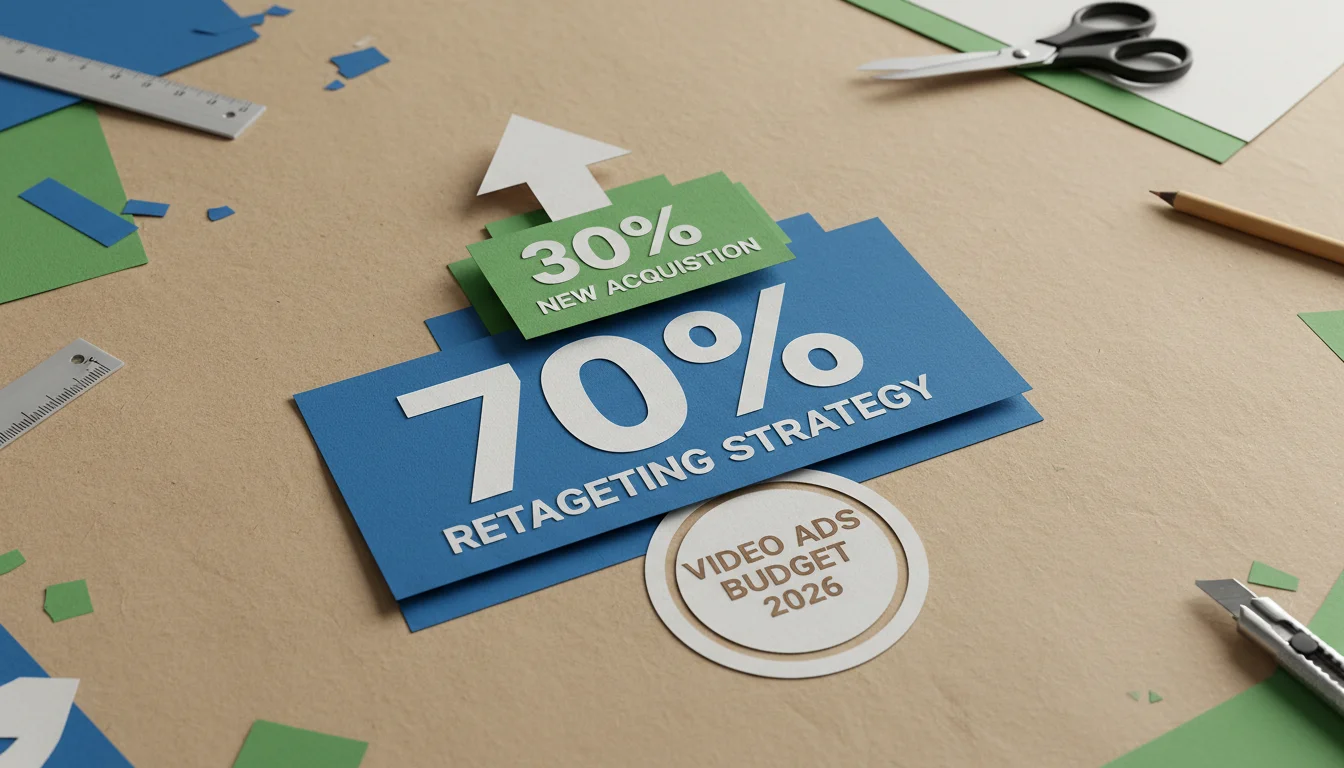
- Allocate 70% of your video ad budget to retargeting campaigns within the first month, focusing on users who have engaged with previous video content or visited your site.
- Use Google Ads’ Performance Max campaigns with video assets to expand reach across YouTube, Display, Search, and Discover feeds, driving a 13% average increase in conversions for advertisers in 2025.
- Analyze video ad metrics such as view-through rate (VTR), cost per completed view (CPCV), and click-through rate (CTR) to refine audience targeting and creative strategy.
Video ads have become a foundation of effective customer acquisition strategies, offering unparalleled engagement and storytelling capabilities. In 2026, companies that master the art and science of video advertising are consistently outperforming competitors in capturing new audiences and driving conversions. But how do you construct a video ad playbook that delivers a measurable return on investment (ROI)?
1. Define Your Audience Segments and Their Video Consumption Habits
Before producing a single frame, understand precisely who you are trying to reach. This goes beyond basic demographics. It involves digging into psychographics, pain points, and, critically, their video consumption patterns. For instance, a B2B audience on LinkedIn Marketing Solutions might respond well to explainer videos demonstrating complex solutions, while a Gen Z audience on TikTok would likely prefer short-form, authentic, and fast-paced content. Pro Tip: Don’t guess. Use platform-specific audience insights tools. Google Ads’ Insights Finder allows you to explore trending topics and audience behaviors relevant to your industry. Similarly, Meta Business Suite provides detailed audience demographics and interests, helping you tailor your narrative effectively. I always start by building at least three distinct audience personas, each with unique video preferences. Common Mistake: Creating a single “one-size-fits-all” video ad and pushing it across all platforms. Different platforms and audience segments demand tailored creative and messaging. A video that performs exceptionally on YouTube might fall flat on Instagram Stories due to format, length, and content expectations.
2. Develop a Complete Creative Strategy with A/B Testing Protocols
Your creative is the engine of your video ad campaign. This involves not just the video itself, but also the ad copy, calls to action (CTAs), and landing page experience. For effective customer acquisition, focus on compelling storytelling that addresses a specific problem your target audience faces and positions your product or service as the solution. When developing creative, consider these elements:
- Hook: The first 3-5 seconds are critical. Use dynamic visuals, intriguing questions, or a bold statement to capture attention immediately.
- Problem/Solution: Clearly articulate the problem and present your offering as the efficient, desirable solution.
- Value Proposition: What makes you different? Highlight unique benefits, not just features.
- Call to Action (CTA): Make it clear and singular. “Shop Now,” “Learn More,” or “Sign Up Today.”
A/B testing is non-negotiable. You should have at least three distinct video concepts ready for initial deployment. Test different hooks, video lengths (e.g., 15 seconds vs. 30 seconds), CTAs, and even different background music. For example, a recent campaign I managed for a SaaS client tested two different opening scenes: one featuring a user struggling with a common task, and another directly showing the software’s interface. The problem-focused opening consistently delivered a 15% higher click-through rate (CTR). Screenshot Description: A split screenshot from the Google Ads A/B testing interface. On the left, “Experiment A” shows a video thumbnail with a person looking frustrated at a computer, alongside metrics. On the right, “Experiment B” shows a clean software interface, with its corresponding performance data. The “Improvement” metric clearly indicates Experiment A outperforming B in CTR.
3. Implement Platform-Specific Video Ad Formats and Best Practices
Each major advertising platform has its nuances regarding video ads. Ignoring these can significantly hinder your customer acquisition efforts and waste ad spend.
Meta (Facebook/Instagram)
Meta platforms are highly visual. Focus on short, engaging videos that work well with sound off. According to a 2025 Meta Business report, 85% of video views on their platforms occur without sound. This means captions are not optional. They are essential.
- Format: Vertical videos (9:16 aspect ratio) for Stories and Reels, square (1:1) or horizontal (16:9) for feed placements.
- Length: Aim for 15-30 seconds for most placements, though Reels can extend longer.
- Text Overlays: Use clear, concise text overlays to convey key messages without sound.
YouTube (Google Ads)
YouTube is the second-largest search engine, and video is its native language. This platform offers a range of ad formats including skippable in-stream, non-skippable in-stream, in-feed video ads, and bumper ads.
- Format: Primarily horizontal (16:9).
- Length: Skippable in-stream ads can be longer (30 seconds to several minutes), but the first 5 seconds are important to prevent skips. Bumper ads are 6 seconds maximum and non-skippable.
- Targeting: Use YouTube’s strong audience targeting, including custom intent audiences, remarketing lists, and topic targeting.
TikTok
TikTok thrives on authenticity and short, highly engaging content. User-generated content (UGC) style ads often perform exceptionally well.
- Format: Vertical (9:16) is king.
- Length: 9-15 seconds is ideal for maximum engagement, though up to 60 seconds is possible.
- Sound: Sound is critical on TikTok. Use trending audio or create original, catchy jingles.
Pro Tip: For YouTube, don’t overlook the power of custom intent audiences. By targeting users who have searched for specific terms on Google that are highly relevant to your product, you can reach incredibly warm leads. I’ve seen these audiences drive conversion rates 2x higher than broad interest-based targeting. Common Mistake: Uploading the same video file to every platform without optimizing for aspect ratio, length, or sound requirements. This results in poor user experience and wasted ad impressions.
4. Master Your Bidding Strategies and Budget Allocation for ROI
Effective budget management and bidding strategies are paramount for maximizing ROI in video ad campaigns. Your choice of bidding strategy should align directly with your campaign objective, whether it’s brand awareness, lead generation, or direct sales. For customer acquisition, common bidding strategies include:
- Target CPA (Cost Per Acquisition): This strategy automatically optimizes bids to help you get as many conversions as possible at or below your target CPA. This is ideal when you have sufficient conversion data.
- Maximize Conversions: This strategy aims to get the most conversions for your budget. It’s a good starting point if you’re new to a campaign and don’t have a specific CPA target yet.
- Target ROAS (Return On Ad Spend): If your primary goal is revenue, Target ROAS helps you get more conversion value at your target return on ad spend.
Budget allocation is equally important. I often recommend a phased approach:
- Initial Testing (20% of budget): Allocate a smaller portion to test various creatives, audiences, and platforms.
- Scaling Top Performers (50% of budget): Once you identify winning combinations, scale up the budget on those specific campaigns.
- Retargeting (30% of budget): Dedicate a significant portion to retargeting users who have engaged with your videos, visited your website, or added items to their cart. These are often your warmest leads.
According to a 2025 IAB report, video ad spending continues its upward trajectory, emphasizing the need for strategic budget deployment. It is not about spending more, but spending smarter. Screenshot Description: A screenshot of the Google Ads campaign settings, highlighting the “Bidding” section where “Target CPA” is selected, with a specified target amount of “$15.00” and a note about conversion volume.
5. Implement Strong Tracking and Analytics for Continuous Improvement
Without precise tracking, you are flying blind. Set up complete conversion tracking from day one. This includes tracking website purchases, lead form submissions, app installs, and even micro-conversions like video views or time spent on a landing page. Key metrics to monitor for video ad performance:
- View-Through Rate (VTR): The percentage of impressions that result in a complete view of your video. A low VTR might indicate a poor hook or irrelevant audience.
- Cost Per Completed View (CPCV): The average cost you pay for a single completed view of your video.
- Click-Through Rate (CTR): The percentage of people who clicked on your ad after seeing it.
- Conversion Rate: The percentage of clicks that result in a desired action (e.g., purchase, lead).
- Cost Per Acquisition (CPA): The total cost associated with acquiring one customer. This is your ultimate ROI metric for customer acquisition.
Use tools like Google Analytics 4, Meta Pixel, and TikTok Pixel to track user journeys and attribute conversions accurately. Regularly review these metrics and iterate on your campaigns. If a particular video ad has a high VTR but low conversion rate, perhaps the creative is engaging but the offer or landing page is not compelling enough. That is a clear signal for adjustment. Common Mistake: Focusing solely on vanity metrics like impressions or views without connecting them to actual business outcomes. A million views means nothing if it doesn’t translate into new customers or revenue.
“With U.S. organic search traffic falling 2.5% year-over-year in January 2026 and AI referral traffic to retail sites surging 693% over the same period, a real shift in where buyers begin their research is clearly happening.”
6. Explore Advanced Strategies: Performance Max and Dynamic Creative Optimization
To truly accelerate customer acquisition, you need to go beyond the basics. Two powerful strategies for 2026 are Google Ads’ Performance Max campaigns and Dynamic Creative Optimization (DCO).
Performance Max Campaigns
Performance Max is an automated campaign type in Google Ads that uses AI to serve your ads across all of Google’s inventory (YouTube, Display, Search, Discover, Gmail, and Maps) to find converting customers. By providing high-quality video assets, headlines, descriptions, and images, you help Google’s AI to assemble and serve the most effective ad combinations. A 2025 Google Ads study indicated that advertisers using Performance Max saw an average increase of 13% in total conversions at a similar cost per conversion. Screenshot Description: The Google Ads interface for creating a new Performance Max campaign, showing the “Asset Group” section where various video assets, images, logos, headlines, and descriptions are uploaded.
Dynamic Creative Optimization (DCO)
DCO allows you to automatically generate multiple versions of your video ads by swapping out elements like product images, text overlays, prices, and calls to action based on user data. Platforms like Meta and Google Ads offer DCO capabilities. This means you can show a user who previously viewed a specific product page a video ad featuring that exact product, with a personalized discount. This level of personalization dramatically improves relevance and, consequently, conversion rates. Pro Tip: For Performance Max, don’t just upload a single video. Provide a variety of video assets (different lengths, aspect ratios, and messages) to give the AI more options to test and optimize. The more high-quality assets you provide, the better the campaign will perform. Common Mistake: Treating Performance Max as a “set it and forget it” solution. While automated, it still requires strategic input, regular monitoring of asset performance, and feeding it with fresh, high-quality creative to maintain efficacy.
7. Continuously Iterate and Adapt to Market Changes
The digital advertising field is constantly evolving. New platforms emerge, algorithms change, and audience preferences shift. Your video ad playbook should be a living document, not a static plan. Regularly review industry reports (e.g., from eMarketer or Nielsen), attend webinars, and experiment with new features as they roll out. The brands that maintain a competitive edge are those that embrace continuous learning and adaptation. I make it a point to dedicate at least an hour each week to reviewing industry news and testing a new ad format or targeting option. This proactive approach prevents stagnation and ensures your customer acquisition efforts remain potent. Conclusion: Building a successful video ad playbook for customer acquisition in 2026 demands a blend of strategic planning, creative excellence, and rigorous data analysis. Focus on understanding your audience, crafting compelling and platform-specific video content, and diligently tracking your ROI to drive consistent growth.
What is a good benchmark for video ad CTR?
A good click-through rate (CTR) for video ads varies significantly by industry, platform, and ad format. However, a general benchmark for video ads on social platforms like Meta is often between 0.5% to 2%, while YouTube in-stream ads can sometimes see higher rates, especially with strong targeting. Always compare your performance against your own historical data and industry averages for a more accurate assessment.
How often should I refresh my video ad creatives?
The frequency of refreshing video ad creatives depends on your budget, audience size, and ad fatigue. For larger campaigns targeting broad audiences, refreshing creatives every 4 to 6 weeks can help prevent ad fatigue and maintain performance. For smaller, niche audiences, you might extend this to 8 to 12 weeks, but constant monitoring of your frequency and CTR is essential to identify when performance starts to decline, signaling a need for fresh content.
What is the ideal length for a video ad?
There isn’t one single ideal length for a video ad. It depends on the platform and your objective. For TikTok and Meta Stories/Reels, 9 to 15 seconds is often optimal for engagement. For YouTube skippable in-stream ads, while they can be longer, the first 5 seconds are critical to hook viewers before they can skip. For educational content or complex product demonstrations, longer formats (30 seconds to 2 minutes) can work well on platforms like YouTube or LinkedIn, provided they maintain engagement throughout.
Should I use sound in my video ads?
Absolutely, but with caveats. For platforms like TikTok, sound is integral and often drives engagement, so using trending audio or original sound is highly recommended. On Meta platforms, however, a significant majority of users view videos with sound off, making clear text overlays and captions essential. Always design your video ads to be effective both with and without sound, ensuring your core message is conveyed visually.
How can I measure the ROI of my video ad campaigns?
To measure the ROI of your video ad campaigns, you need to track your total ad spend against the revenue or profit generated directly from those campaigns. This requires strong conversion tracking setup in your ad platforms (e.g., Meta Pixel, Google Ads conversion tracking) and Google Analytics. Calculate ROI using the formula: (Revenue from Ads – Cost of Ads) / Cost of Ads. For lead generation, you might measure Cost Per Lead and then calculate the lifetime value of those leads to determine profitability.


