 By David Carson
The global ad market continues its rapid expansion, projected to reach unprecedented valuations by 2026, with video advertising emerging as a dominant force driving this growth. This shift presents both immense opportunities and significant challenges for marketers aiming to capture audience attention in an increasingly saturated digital field.
Key Takeaways
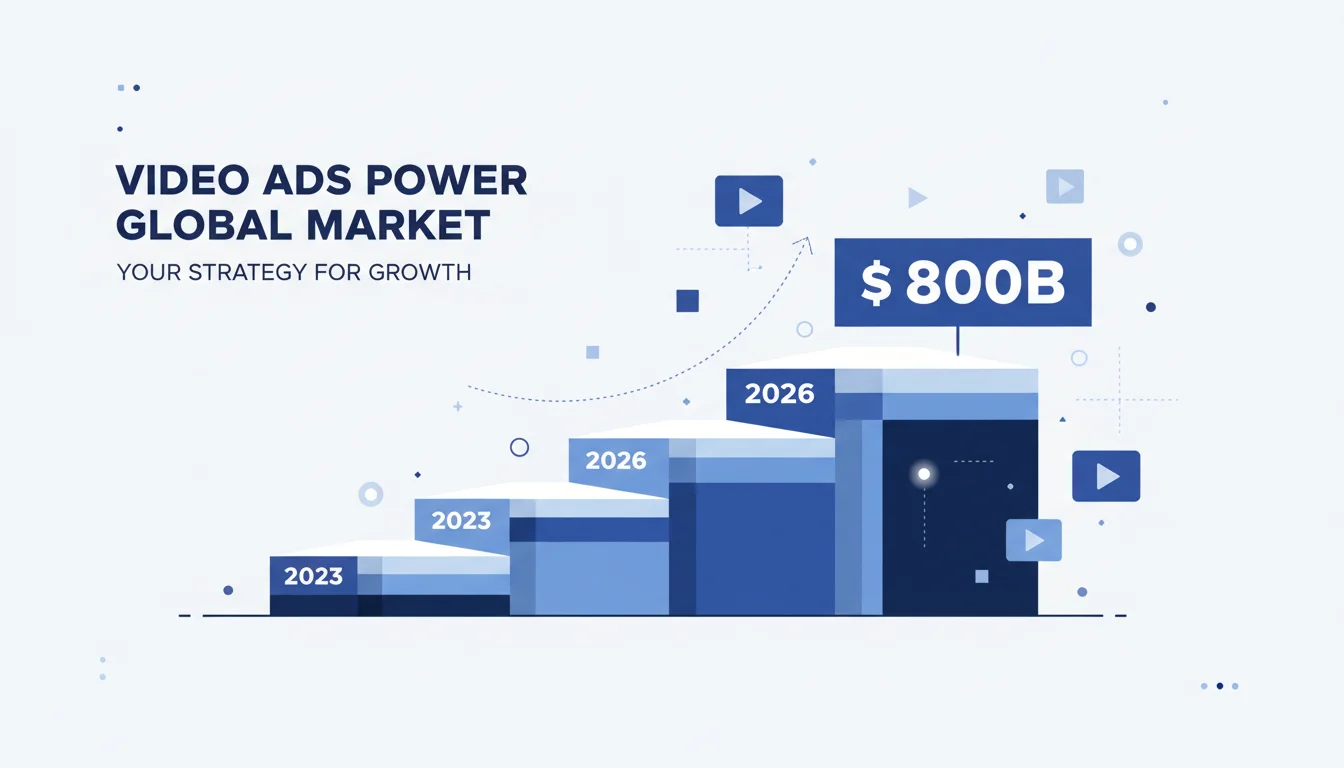
- Global digital ad spend is forecast to exceed $800 billion by 2026, with video accounting for over 50% of this growth.
- Short-form video platforms like TikTok and Instagram Reels are critical channels, requiring tailored content strategies for engagement.
- Programmatic advertising for video is gaining traction, with 75% of video ad inventory expected to be traded programmatically by 2027.
- Interactive video ads and shoppable formats are enhancing direct response capabilities, yielding higher conversion rates than traditional linear video.
- Measuring video ad effectiveness demands sophisticated attribution models beyond simple views, focusing on brand lift and customer journey integration.
The Ascendance of Video in Digital Advertising
Video content has transformed from a niche format to the foundation of digital advertising strategies. Audiences today consume video across a multitude of devices and platforms, from connected TVs (CTVs) to mobile phones, creating a fragmented yet fertile ground for advertisers. The sheer volume of video consumption shows its power. According to a recent report by Statista, global digital ad spend is on track to surpass $800 billion by 2026, with video advertising contributing more than half of that growth. This isn’t just a trend. It’s a fundamental recalibration of how brands connect with consumers. We’ve seen a dramatic acceleration in video’s role. Five years ago, many brands considered video an add-on, a nice-to-have. Now, it’s often the first consideration in campaign planning. The shift is driven by consumer preference for dynamic, engaging content over static images or text. People spend hours every day watching videos, whether it’s educational content, entertainment, or quick social media clips. This constant engagement means brands have a direct conduit to their target audience, if they can produce compelling content.
Working through the Short-Form Video Ecosystem
The rise of platforms centered around short-form video has fundamentally altered how advertisers approach content creation and distribution. TikTok, Instagram Reels, and YouTube Shorts dominate this space, cultivating user bases that expect quick, impactful, and often authentic content. This environment demands a different strategic playbook than traditional long-form video campaigns. A HubSpot report from 2025 indicated that short-form video generated the highest ROI for marketers compared to any other content format. Effective short-form video advertising isn’t about condensing a 30-second TV spot into 15 seconds. It requires native content that blends smoothly with user-generated feeds. Brands must embrace trends, participate in challenges, and use platform-specific features like trending audio or effects. Authenticity often trumps polished production value here. Consider the success of brands that partner with micro-influencers to create content that feels organic, not overtly promotional. This approach resonates deeply with audiences accustomed to peer-to-peer recommendations. It’s a delicate balance. Too salesy, and users scroll past. Too subtle, and the message gets lost. The key lies in understanding the unique cultural nuances of each platform and tailoring content accordingly. For example, a campaign optimized for TikTok’s rapid-fire engagement might fail on YouTube Shorts, where users often seek slightly more informative or narrative-driven clips, even if brief.
The Evolution of Programmatic Video Advertising
Programmatic video advertising has matured significantly, offering advertisers greater efficiency, targeting capabilities, and measurable outcomes. The days of manual insertion orders for video inventory are largely behind us. Instead, sophisticated algorithms now automate the buying and selling of video ad impressions in real-time, matching advertisers with relevant audiences across a vast digital ecosystem. An IAB report projected that by 2027, approximately 75% of all video ad inventory will be traded programmatically, highlighting its indispensable role in the modern ad tech stack. This shift to programmatic has deep implications. It allows for highly granular targeting based on demographics, interests, past behaviors, and even real-time contextual signals. For instance, a luxury travel brand can target users who have recently searched for “five-star resorts” or “international flights” with video ads showing their premium packages, served across various websites and apps. This precision minimizes wasted ad spend and maximizes the likelihood of reaching genuinely interested prospects. Plus, programmatic platforms offer strong analytics, providing insights into campaign performance that were previously unattainable. Advertisers can track viewability, completion rates, and even post-view conversions, allowing for continuous optimization and improved ROI. However, the complexity of programmatic platforms requires a deep understanding of data management, bid strategies, and fraud detection to truly capitalize on its potential. Simply turning on a programmatic campaign without careful oversight is akin to setting a boat adrift without a rudder.
Interactive and Shoppable Video Formats
Beyond passive viewing, the ad market is increasingly embracing interactive video ads and shoppable video formats. These innovations transform video from a one-way communication channel into an engaging, direct-response mechanism. Imagine a video ad for a new pair of sneakers where viewers can click on the shoes to see product details, explore color options, or even add them to a cart without leaving the video player. This immediate gratification shortens the customer journey and significantly boosts conversion rates. Platforms like YouTube and various ad tech providers now offer strong tools for creating these dynamic experiences. Interactive elements can include polls, quizzes, clickable hotspots, branching narratives, and calls to action that lead directly to product pages. Nielsen data from 2025 demonstrated that interactive video ads consistently achieve higher engagement rates and click-through rates compared to their non-interactive counterparts, sometimes by as much as 2x. For e-commerce brands, shoppable video is a big deal. It bridges the gap between inspiration and purchase, allowing consumers to act on impulse while they are most engaged. This isn’t just about selling. It’s about creating an immersive brand experience that feels less like an advertisement and more like a personalized shopping assistant. The challenge for marketers here lies in designing interactions that enhance the user experience rather than disrupt it. A poorly designed interactive element can be frustrating, leading to abandonment. The goal is smooth integration, making the purchase path feel natural and intuitive.
Measuring Success: Beyond the View Count
In the evolving field of global ad services, simply tracking video views is no longer sufficient to gauge campaign effectiveness. Marketers must adopt more sophisticated metrics and attribution models to understand the true impact of their video advertising efforts. We need to move past vanity metrics and focus on what truly drives business outcomes. Effective measurement strategies for video ads now encompass a broader range of indicators. Brand lift studies, for instance, measure changes in brand awareness, ad recall, and purchase intent among exposed audiences versus control groups. Tools like Google Ads offer integrated solutions for conducting these studies directly within their platforms. Plus, understanding the role of video ads within the broader customer journey requires strong multi-touch attribution models. A video ad might not lead to an immediate conversion but could be a critical touchpoint in an awareness or consideration phase. Attributing value to these earlier interactions is essential for optimizing budget allocation across channels. Advertisers also need to scrutinize metrics like viewability (the percentage of an ad that was visible on screen for a minimum duration) and completion rates, particularly for longer video formats. A high view count means little if the ad was never actually seen or only partially consumed. The future of video ad measurement lies in connecting every impression to a tangible business result, whether that’s an increase in organic searches, website visits, or direct sales. This requires integrating data from various sources and employing advanced analytics to paint a complete picture of performance.
The Future Field: AI and Personalization
Looking ahead, the global ad market, particularly within video, will be heavily influenced by advancements in artificial intelligence (AI) and hyper-personalization. AI-powered tools are already enhancing every stage of the video advertising process, from content creation to audience targeting and performance optimization. We are seeing AI used to generate dynamic video creatives, personalize ad content in real-time based on viewer profiles, and predict optimal ad placements for maximum impact. This level of personalization goes beyond simple demographic targeting. AI can analyze vast datasets of user behavior, preferences, and contextual cues to serve individual viewers with video ads that are precisely tailored to their current interests and needs. Imagine an AI-driven system that can dynamically alter elements within a video ad, such as the product shown, the background music, or even the voiceover, to resonate more strongly with each unique viewer. This capability promises unprecedented levels of engagement and relevance. On top of that, AI is proving invaluable in automating routine tasks, freeing up human marketers to focus on strategic thinking and creative execution. From automating bid management in programmatic platforms to generating performance reports and identifying trends, AI simplifies workflows and enhances decision-making. The challenge, as always, will be in ensuring ethical use of data and maintaining transparency with consumers. The power of AI in personalization is immense, but it must be wielded responsibly to build trust and avoid alienating audiences.
What is the projected growth of the global digital ad market by 2026?
The global digital ad market is projected to exceed $800 billion by 2026, with video advertising contributing significantly to this growth.
Why are short-form video platforms important for advertisers?
Short-form video platforms like TikTok and Instagram Reels are critical because they offer high engagement and ROI, demanding native, authentic content that aligns with platform-specific trends and user expectations.
How does programmatic video advertising benefit marketers?
Programmatic video advertising offers enhanced efficiency, precise targeting capabilities, and strong analytics through automated real-time buying and selling of ad impressions, allowing for optimized ad spend and measurable outcomes.
What are interactive and shoppable video ads?
Interactive video ads include clickable elements like polls, quizzes, or hotspots, while shoppable video ads allow viewers to purchase products directly within the video player, transforming passive viewing into direct response opportunities.
Beyond views, what metrics are important for video ad measurement?
Important metrics for video ad measurement extend beyond views to include brand lift studies, multi-touch attribution models, viewability rates, and completion rates, providing a complete understanding of campaign impact on business objectives.


