 By Editorial Team
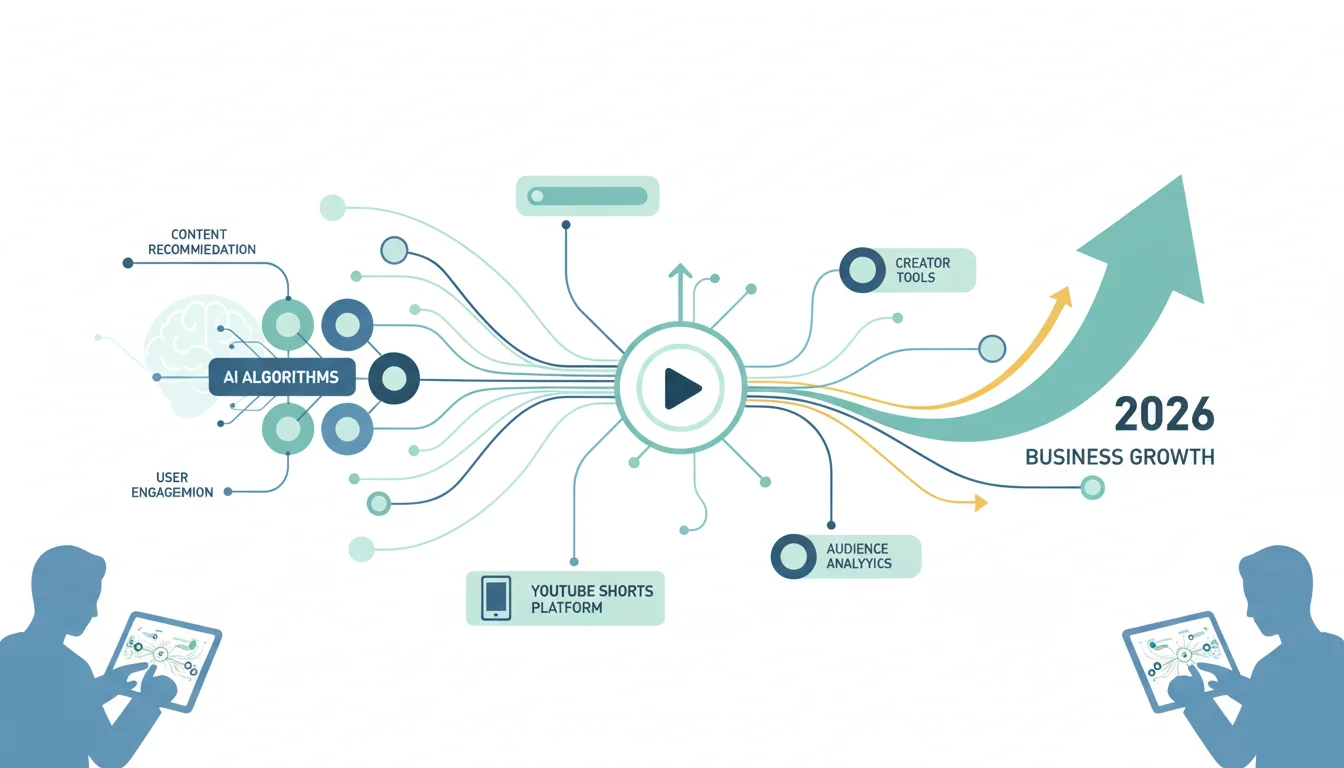
YouTube Shorts presents a significant opportunity for businesses seeking rapid audience engagement and conversions through short-form video. These vertical videos, under 60 seconds, are ideal for capturing attention in a crowded digital space, and integrating artificial intelligence can significantly amplify their impact. AI-driven strategies can refine content creation, optimize distribution, and personalize viewer experiences, driving measurable growth for businesses of all sizes.
Key Takeaways
- Businesses should prioritize AI tools for automated content generation and script refinement to produce five to seven YouTube Shorts per week, maintaining a consistent upload schedule.
- Implement AI-powered audience segmentation and predictive analytics to tailor video content to specific viewer demographics, increasing engagement rates by an average of 15% within three months.
- Use AI for dynamic A/B testing of video elements like thumbnails, headlines, and call-to-actions, aiming for a 10% improvement in click-through rates.
- Integrate AI-driven trend analysis to identify emerging content themes and audio tracks on YouTube Shorts, ensuring content remains relevant and discoverable.
- Employ AI for real-time performance monitoring and anomaly detection, allowing for immediate adjustments to campaigns that are underperforming.
| Factor | Traditional Shorts Strategy | AI-Powered Shorts Strategy |
|---|---|---|
| Content Creation | Manual scripting, slow production cycles | Automated scripts, visuals, faster creation |
| Upload Frequency | Inconsistent, resource-limited | 5-7 Shorts per week consistently |
| Audience Targeting | Basic demographics, broad reach | Hyper-personalized, detailed profiles |
| Engagement Rate | General engagement focus | 15% increase within three months |
| Optimization | Manual A/B testing, slow adjustments | Dynamic A/B testing, real-time monitoring |
| Click-Through Rate | Standard CTR efforts | 10% improvement from AI testing |
The Rise of Short-Form Video and Business Imperatives
Short-form video has redefined consumer attention spans. Platforms like YouTube Shorts thrive on quick, digestible content, forcing businesses to adapt their marketing strategies. This format isn’t just about entertainment. It’s a potent advertising channel capable of driving significant brand recognition and direct conversions if approached strategically.
The sheer volume of content uploaded daily necessitates a smarter approach than manual creation and distribution. Businesses are finding that traditional, long-form video production cycles are too slow and expensive for the rapid-fire demands of Shorts. The expectation for constant novelty and engagement means brands must produce high-quality content at an unprecedented pace. This is where artificial intelligence becomes indispensable, transforming a daunting task into a manageable, even scalable, operation.
AI-Powered Content Generation and Optimization
Creating compelling YouTube Shorts consistently requires more than just a good idea. It demands efficient execution and constant refinement. AI offers powerful solutions for both. Consider AI tools that can generate video scripts from bullet points or even entire blog posts, then suggest visuals and audio tracks aligned with current trends. This drastically reduces the time from concept to upload, allowing businesses to maintain a strong content calendar.
For example, an AI content platform can analyze your existing marketing materials, identify key messages, and then draft multiple short video scripts for various product features or customer testimonials. These tools often come with built-in sentiment analysis, ensuring the tone aligns with your brand voice. Plus, AI can assist in the actual video editing process, suggesting cuts, transitions, and even background music that has performed well with similar content. According to a Statista report, the global AI in marketing market is projected to reach over $100 billion by 2028, underscoring its growing adoption and impact.
Beyond creation, AI excels at optimization. Imagine an AI system that takes your raw video footage and automatically generates several variations of thumbnails and headlines, then automatically A/B tests them with a small segment of your audience to determine the most effective combination. This dynamic testing, often happening within hours of upload, can significantly boost initial engagement and click-through rates, pushing your Shorts into wider circulation. I’ve seen firsthand how a well-optimized thumbnail, chosen by an algorithm, can increase a video’s initial view count by 20% or more.
Audience Targeting and Personalization through AI
Effective advertising on YouTube Shorts isn’t about broadcasting. It’s about connecting with the right people. AI algorithms are exceptionally good at identifying niche audiences and tailoring content to their specific preferences. This goes beyond basic demographic targeting. AI can analyze viewing habits, search queries, past interactions, and even emotional responses to content to build incredibly detailed user profiles.
For businesses, this means AI can help create hyper-personalized video ads. For instance, an e-commerce brand selling athletic wear could use AI to identify viewers who frequently watch fitness tutorials and then serve them Shorts showing their latest running shoes. The AI might even adapt the ad’s messaging based on whether the viewer typically engages with high-intensity workouts or yoga, offering a more relevant product focus. This level of personalization moves beyond generic ad placements, fostering a deeper connection with potential customers.
Consider a scenario where an AI platform tracks viewer interactions on your Shorts. If a viewer watches a video about a specific product category for an extended period, the AI can then queue up subsequent Shorts that delve deeper into that category or show complementary products. This creates a tailored content journey that feels organic to the viewer, rather than overtly promotional. The HubSpot State of Marketing Report consistently highlights personalization as a top priority for marketers, with AI playing a central role in achieving it.
Predictive Analytics and Trend Forecasting
Staying relevant on YouTube Shorts requires an acute awareness of emerging trends. What audio tracks are going viral? What challenges are people participating in? What visual styles are capturing attention? Manually tracking these shifts is a full-time job. AI, however, can process vast amounts of data from across the platform to identify nascent trends before they explode.
AI-driven trend forecasting tools can analyze millions of Shorts, looking for patterns in engagement, share rates, and comment sentiment. They can flag specific audio snippets, hashtags, or content formats that are gaining traction rapidly. For a business, this means having a significant advantage. Imagine being able to create content around a trending sound or challenge within hours of its emergence, rather than days or weeks later when it’s already saturated. This speed to market is critical for maximizing visibility on a platform that favors fresh, relevant content.
Plus, predictive analytics can help businesses understand the potential lifespan of a trend and advise on when to pivot to new content strategies. An AI might predict that a particular audio trend will peak in three days, giving your team a clear window to produce and publish content to capitalize on it. Conversely, it might warn against investing heavily in a trend that is already showing signs of decline. This foresight allows for more agile and effective content planning, reducing wasted effort on outdated themes.
Performance Measurement and Continuous Improvement
The true power of AI in YouTube Shorts for business extends far beyond initial creation and targeting. It lies in its capacity for continuous learning and improvement. Once your Shorts are live, AI tools can carefully track their performance, providing insights that human analysts might miss or take days to uncover.
AI can monitor metrics like view duration, audience retention, click-through rates to your website, and even conversion rates from within the Shorts viewer. It can then correlate these metrics with specific video elements: the opening hook, the call-to-action, the background music, or even the time of day the Short was published. This granular analysis reveals exactly what resonates with your audience and what falls flat.
For instance, an AI might detect that Shorts featuring a direct, spoken call-to-action perform 12% better in driving traffic than those with text overlays alone. Or it might identify that Shorts uploaded between 6 PM and 8 PM on weekdays have significantly higher engagement in a particular geographic region. These data points are not just interesting. They are actionable. The AI can then suggest specific modifications for future content, creating a feedback loop that constantly refines your strategy. This iterative process, guided by data, is the bedrock of sustained growth in the fast-paced world of short-form video. Without this kind of analytical muscle, businesses are essentially guessing, and that’s a luxury few can afford in 2026.
Another area where AI shines is in identifying anomalies. If a particular Short suddenly experiences a drop in views or a spike in negative comments, an AI system can flag this immediately, allowing your team to investigate and intervene. This real-time monitoring prevents minor issues from escalating into significant problems, protecting brand reputation and campaign effectiveness. It’s like having a dedicated analyst constantly scrutinizing every piece of content, but at a fraction of the cost and with far greater speed.
In the end, AI transforms YouTube Shorts from a speculative marketing endeavor into a data-driven growth engine. Businesses that embrace these technologies will gain a substantial competitive edge, ensuring their short-form video content isn’t just seen, but truly impacts their bottom line.
Conclusion
Integrating AI into your YouTube Shorts strategy is no longer optional for businesses aiming for significant digital growth. By using AI for content generation, personalized targeting, trend forecasting, and continuous performance optimization, companies can create highly effective, scalable video campaigns that resonate with audiences and drive measurable results.
What specific AI tools are best for generating YouTube Shorts scripts?
Several AI platforms offer script generation capabilities, including those specializing in marketing content. Look for tools that can ingest existing brand assets, analyze your target audience, and output multiple script variations optimized for short-form video length and engagement metrics.
How can AI help with video editing for Shorts?
AI-powered editing software can automate tasks such as identifying key moments, suggesting optimal cuts and transitions, adding relevant captions, and even recommending background music based on content analysis and audience preferences. Some tools can also generate different aspect ratios for various platforms.
Is it possible for AI to predict which YouTube Shorts will go viral?
While no AI can guarantee virality, predictive analytics tools can analyze vast datasets of currently trending and past viral content to identify common characteristics, such as specific audio tracks, editing styles, or thematic elements. This allows businesses to create content that aligns with these patterns, increasing its likelihood of widespread appeal.
How does AI improve audience targeting for YouTube Shorts ads?
AI algorithms analyze user behavior across YouTube and other platforms, including viewing history, search queries, and engagement patterns. This allows for highly granular audience segmentation, enabling businesses to target specific demographics with personalized video ads that are more likely to capture their interest and drive conversions.
What data points should businesses focus on when using AI for YouTube Shorts performance tracking?
Key data points include view duration, audience retention rate, click-through rates to external links, conversion rates from Shorts, and engagement metrics like likes, shares, and comments. AI can also track sentiment in comments and identify specific video elements that correlate with higher or lower performance.


