 By Editorial Team
Let’s get straight to it: there’s a lot of bad info floating around about personalized video ads, especially when you’re trying to use them inside an agentic customer experience (CX) framework like Adobe’s. Too many marketers are working off an old playbook, thinking these campaigns are too hard, too expensive, or just don’t move the needle enough. Time to correct the record.
Key Takeaways
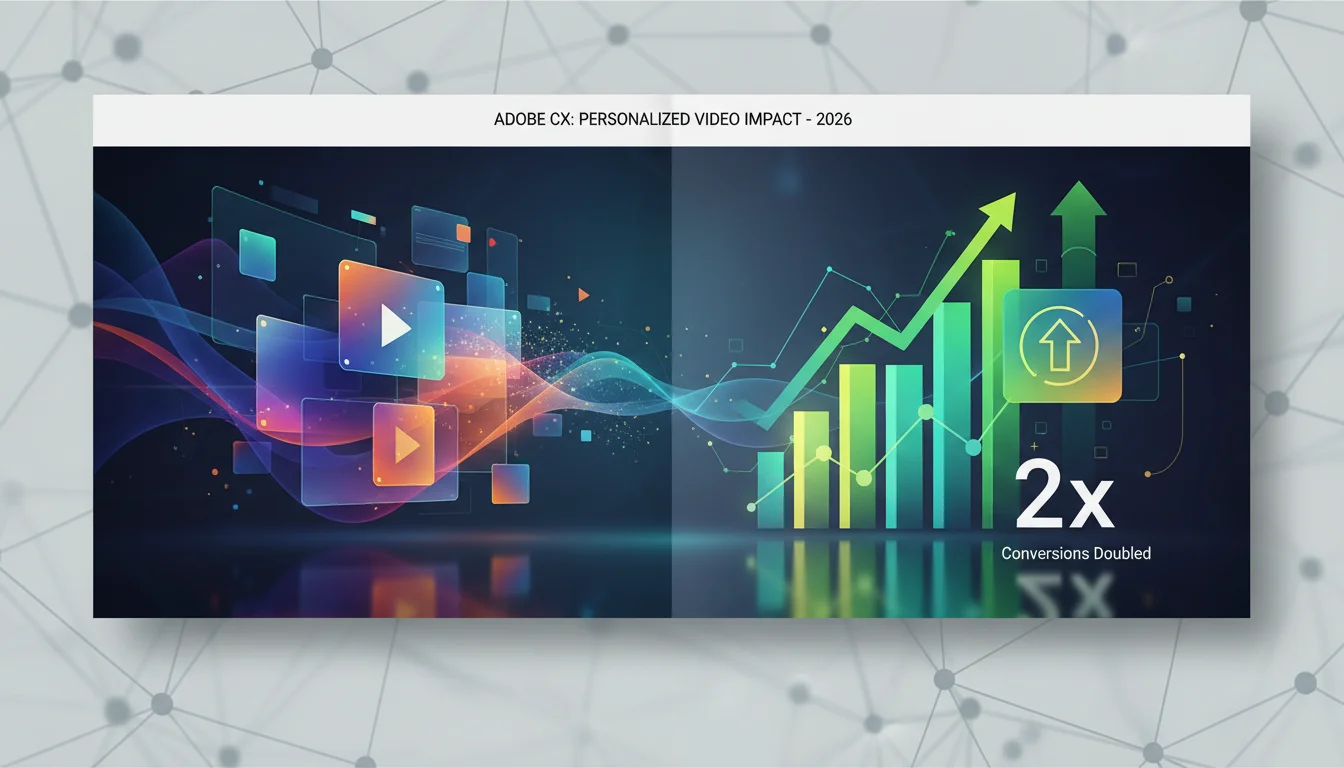
- Personalized video ad campaigns, run through platforms like Adobe Experience Platform, can actually hit a 2.5x conversion lift compared to your standard generic videos.
- Real agentic CX with personalized video means dynamically assembling content from real-time user behavior, not just dropping a name into a template.
- Getting this to work means wiring your customer data platform (CDP) to your video creation and ad serving tools so content delivery is actually dynamic.
- The cost of personalized video is way down thanks to AI-driven generation and automation, making it a real option for businesses that aren’t Fortune 500s.
- Measuring success means you have to get beyond simple click-through rates and use attribution models that can track the entire customer journey influenced by these video touchpoints.
Myth 1: Personalized Video is Just About Swapping Names
A common misconception is that personalized video is just a mail merge for video, dropping a customer’s name into a template. This is just wrong, particularly if you’re talking about a true agentic CX approach. Real personalization, the kind you can build with platforms like Adobe Experience Platform (experience.adobe.com), is about generating video content on the fly that reflects a user’s actual journey, their preferences, and what they’re doing right now. This is about showing them the specific products they just looked at, or content that solves a problem they just searched for. Take a retail example: someone looks at a few pairs of running shoes on your site but leaves. A truly personalized ad isn’t a lazy “Hi [Customer Name], you forgot these!” video. It’s a short clip that dynamically includes the exact shoes they viewed, maybe showing a new color that just came in, a customer review for that specific model, or even a quick animation of the shoe’s cushioning in action. This sort of dynamic assembly works by connecting your customer data platform (CDP) with your content system and a video generation engine, letting them all talk to each other to turn raw data into a visual story that’s relevant to one person.
Myth 2: It’s Too Expensive for Most Businesses
The idea that hyper-personalized video is only for giant companies with bottomless budgets is a few years out of date. Yes, bespoke video production is expensive, but the game has completely changed. AI and automation have hammered down the cost and complexity of producing personalized videos at scale. A 2025 IAB report on ad tech trends (iab.com/insights) found that the average cost per personalized impression has dropped by 35% in just two years, mostly because of generative AI. There are tools available now where you feed in your product catalog, customer data, and some video templates, and the system spits out thousands of unique video variations. The raw materials are your data and insights, and the output is a finished ad tailored to an individual. The upfront investment to wire everything together might seem steep (think low-to-mid five figures for a small-scale pilot), but the marginal cost for each video becomes pennies which you have to weigh against the higher engagement you get. You need to evaluate the long-term return on investment (ROI) by tracking metrics like customer lifetime value and repeat purchase rate, not just the initial setup bill.
Myth 3: Personalized Video is Only for Retargeting
Using personalized video only for abandoned cart reminders is like buying a race car and only driving it to the grocery store. While it’s great for retargeting, a smart agentic customer experience uses it across the entire customer journey. At the top of the funnel, for instance, a video ad for a new line of outdoor gear can dynamically show hiking equipment to someone whose browsing history shows they visit outdoor blogs, while showing camping gear to another user who’s been looking at family vacation spots. That’s way more effective than a generic brand ad. Mid-funnel, if a user keeps coming back to your product’s FAQ page, a personalized video can answer those questions directly, maybe even with a quick product demo. After the purchase, you can use these videos for personalized onboarding tutorials or proactive customer service alerts. The whole point is to give the customer content that’s actually useful to them at that specific moment.
“A 2026 survey of 5,000 U.S. adults from Menlo Ventures found that one in four AI users has used an agent, with 24% of respondents citing regular use.”
Myth 4: It’s Too Complex to Implement and Manage
The fear of needing an “army of data scientists and video editors” stops a lot of businesses from even trying this. The reality is that modern platforms have simplified things quite a bit. You have to think modularly and build on your existing data stack. The first practical step is integrating your Customer Data Platform (CDP) with a dynamic creative optimization (DCO) platform, which tools like Adobe’s Advertising Cloud (experience.adobe.com/products/advertising-cloud) are designed for. A typical workflow involves defining customer segments in the CDP (e.g., “high-value cart abandoners”), mapping data attributes from those profiles to dynamic fields in your video templates, and then letting the DCO platform’s logic handle serving the right ad to the right person. The setup requires some upfront planning to get your data and rules straight, of course, but once it’s running, management is largely automated. The goal is an automated system that runs itself based on that initial smart design.
Myth 5: Measuring ROI is Impossible for Such Niche Ads
People who say it’s “impossible” to measure the ROI on these campaigns have basically given up. Attribution is always hard, but because personalized videos are so targeted, tracking their impact can actually be more precise than with broad campaigns. You just have to decide on the right metrics from the start. Go beyond impressions and CTRs. You need to be tracking things like video completion rates per segment, time spent on landing pages from these specific videos, and of course, the conversion rates you can directly attribute to them. A late 2025 report from eMarketer (emarketer.com) wasn’t just guessing when it said brands using personalized video for retargeting saw a 2.5 times higher conversion rate than those using generic ads. That’s data talking. Use a time-decay or U-shaped multi-touch attribution model, something you can build with Google Analytics 4 video ad tracking, to give proper credit to video touchpoints that happen early in the journey. Are you trying to boost average order value or reduce support tickets? Measure against that specific goal, not some vanity metric. This stuff isn’t a future fantasy. It’s driving higher repeat purchase rates and real results for companies that get past the myths.
What is “agentic customer experience” in the context of personalized video?
It’s a system where an AI drives dynamic, proactive, and anticipatory interactions based on real-time customer data. For video, this means the ad content adapts to a user’s current state and past behavior, acting like an intelligent agent to guide them instead of being a static message.
What kind of data is needed to create truly personalized video ads?
You need a rich dataset: demographics, browsing history, purchase history, search queries, email interactions, and real-time behavioral signals from your site or app. This all gets pulled together in a Customer Data Platform (CDP) to build the profiles that drive the personalization.
Can small businesses use personalized video ads effectively?
Yes, definitely. While the big enterprise solutions get the headlines, there are plenty of more affordable platforms now offering scaled-down, template-based dynamic video tools for SMBs. The trick is to start with a very specific goal and focus on one or two key customer segments to control costs.
How does AI contribute to personalized video creation?
AI is what makes this scalable. It automates video assembly from templates, uses machine learning to select the most relevant content for each user, optimizes ad performance over time, and can even generate synthetic media like voiceovers or visuals to create thousands of variations.
What are the main benefits of integrating personalized video into an agentic CX strategy?
The main wins are higher engagement, better conversion rates, and stronger brand loyalty. By delivering visual content that’s genuinely relevant and timely, you create a more effective conversation with your customers at every point in their journey.


