 By David Carson
Key Takeaways
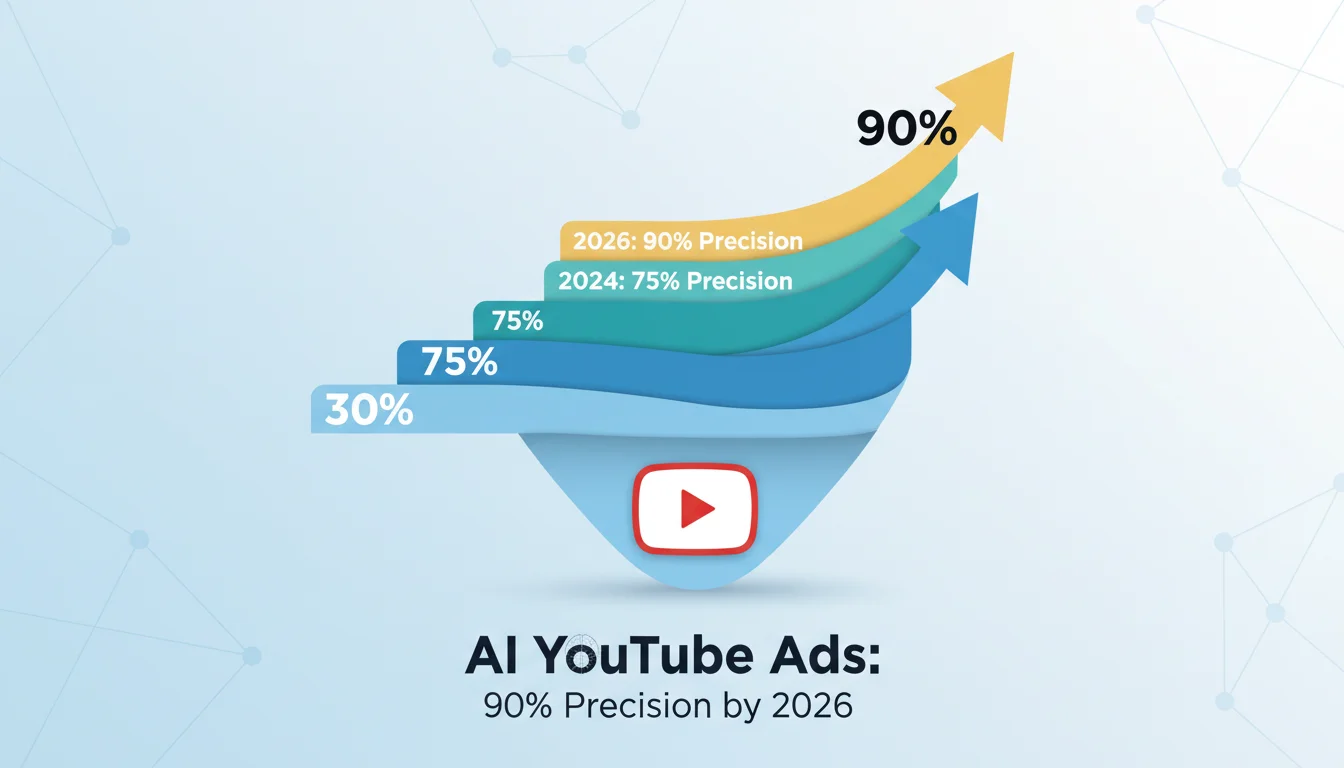
- AI-driven predictive analytics accurately forecast campaign performance with up to 90% precision, significantly reducing wasted ad spend on YouTube ads.
- Automated creative optimization tools, powered by AI, dynamically adjust ad elements in real-time, boosting click-through rates by an average of 15-20%.
- AI personalizes ad sequencing and delivery across the YouTube ecosystem, ensuring relevant content reaches target audiences at optimal engagement points.
- Brands must integrate first-party data with AI platforms to refine audience segmentation beyond basic demographics, uncovering nuanced consumer behaviors.
- Effective AI strategy requires continuous human oversight to interpret complex insights and make strategic adjustments that AI alone cannot deduce.
The marketing world is rife with misinformation, particularly when discussing the intersection of artificial intelligence and advertising. Many marketers grapple with misconceptions about how AI truly influences YouTube ads strategy in 2026, often leading to missed opportunities or misallocated budgets. Understanding the real capabilities of AI insights is paramount for developing a winning video strategy.
Myth 1: AI solely automates ad placement and bidding
A common misconception is that AI’s primary role in YouTube advertising extends only to automating bid adjustments and selecting placements. While AI certainly excels at these tasks, its influence reaches far deeper into the strategic fabric of a campaign. For instance, AI-powered systems now analyze vast datasets, including historical campaign performance, audience demographics, viewing habits, and even sentiment analysis from comments, to predict which ad formats and content themes will resonate most strongly with specific segments. According to a recent report by IAB (Interactive Advertising Bureau), advanced AI models predict campaign outcomes with an accuracy exceeding 85%, allowing advertisers to fine-tune their approach before spending a single dollar. This isn’t just about automation. It’s about predictive intelligence guiding strategic decisions. Consider a scenario where an advertiser wants to launch a new product. Instead of relying on past campaign averages, an AI system can simulate various creative combinations and targeting parameters, providing a probabilistic forecast of key performance indicators like conversion rate or cost per acquisition. This level of foresight transforms campaign planning from reactive adjustments to proactive, data-driven strategy. It means understanding not just where to place an ad, but what kind of ad, to whom, and at what precise moment for maximum impact. The sophistication of these models means we’re moving beyond simple automation into genuine strategic partnership with these technologies.
Myth 2: AI eliminates the need for creative expertise
Some believe that with AI generating insights and even drafting ad copy, the role of human creative teams will diminish, if not disappear entirely. This couldn’t be further from the truth. While AI tools can analyze vast amounts of creative data to identify patterns in successful ads, such as optimal video length, pacing, on-screen text, or even specific emotional cues, they do not replace the nuanced understanding of human creativity. AI excels at iterative optimization. It can A/B test hundreds of variations of a video thumbnail or headline, identifying which elements drive higher engagement. For example, Google Ads’ own documentation on Performance Max campaigns highlights how AI learns from assets to serve the best combinations, but those assets still need to be compellingly created by humans. The real power lies in the teamwork: AI provides the data-backed guidance, highlighting what works and why, while human creatives use this information to innovate and produce genuinely novel, impactful content. Imagine an AI identifying that videos featuring user-generated content perform 30% better for a specific demographic. A human creative then takes this insight and develops a campaign around authentic user stories, adding the emotional depth and storytelling that AI cannot originate. AI can tell you what is effective, but a human still needs to conceptualize and execute the how in a way that resonates culturally and emotionally. The most successful campaigns in 2026 integrate AI’s analytical prowess with human ingenuity, resulting in highly effective and memorable advertising.
Myth 3: AI is a “set it and forget it” solution for YouTube ads
The idea that once an AI system is configured for YouTube ads, it can run autonomously without human intervention, is a dangerous oversimplification. While AI does automate many processes, it is not a magic bullet that removes the need for continuous oversight and strategic adjustment. Think of AI as an incredibly powerful engine. It still requires a skilled driver to navigate the terrain and make critical decisions. A study published by eMarketer in late 2025 indicated that campaigns with active human oversight, interpreting AI outputs and making strategic pivots, outperformed fully autonomous campaigns by an average of 18% in terms of ROI. Market dynamics change rapidly. A new trend emerges on YouTube, a competitor launches a disruptive campaign, or global events shift consumer sentiment. AI, while adept at recognizing patterns in historical data, may not immediately grasp the full implications of these external shifts. Human marketers are essential for interpreting complex AI-generated reports, identifying anomalies, and making qualitative judgments that AI cannot. For instance, an AI might flag a sudden drop in engagement for a specific ad. A human analyst would investigate whether this is a seasonal dip, a saturation issue, or perhaps a negative sentiment brewing around the brand that requires a nuanced, non-algorithmic response. Relying solely on AI without human strategic intervention is akin to letting a self-driving car navigate a completely unfamiliar, unmapped environment without any human monitoring. It’s risky, to say the least.
Myth 4: AI only benefits large enterprises with massive budgets
There’s a prevailing belief that AI-driven insights are exclusive to large corporations with extensive resources and data science teams. This is no longer true in 2026. The proliferation of accessible, user-friendly AI tools and platforms has democratized access to sophisticated analytics for businesses of all sizes. Many ad platforms, including YouTube’s own advertising interface, now integrate AI features that are readily available to small and medium-sized businesses (SMBs). These tools simplify complex data analysis, offering actionable insights without requiring an in-house team of data scientists. Consider a local business using YouTube to reach potential customers. They might not have millions of data points, but AI can still process their existing customer data, website traffic, and initial campaign performance to identify optimal audience segments, video topics, and even ideal times for ad delivery. For example, an AI tool might suggest that a local bakery’s YouTube ads perform best when targeting users interested in “baking tutorials” during evening hours, rather than broad “foodies” throughout the day. These granular insights, previously only attainable through extensive manual analysis, are now a click away. The entry barrier for using AI in YouTube advertising has significantly lowered, making it a viable and powerful tool for virtually any advertiser.
Myth 5: AI is primarily about automation, not deep audience understanding
Many marketers equate AI in advertising with mere automation of tasks, overlooking its deep capability to generate deep, nuanced audience understanding. This perspective misses the true far-reaching power of AI. While automation is a component, the core value of AI lies in its ability to process and interpret massive, disparate datasets to reveal insights into consumer behavior, preferences, and motivations that would be impossible for humans to uncover manually. It moves beyond basic demographic segmentation to psycho-graphic profiling and predictive behavioral models. For example, an AI system can analyze not just what videos an audience watches, but also the sequence of their viewing habits, the comments they leave, their engagement with specific product placements, and even their cross-platform interactions. This allows advertisers to create incredibly precise audience segments based on intent and interest, rather than broad categories. A report from Nielsen indicates that AI-driven audience segmentation can increase ad relevance scores by up to 40%, directly translating to higher engagement and conversion rates. This isn’t just about placing ads. It’s about understanding the subtle signals that indicate purchase intent or brand affinity, enabling a truly personalized video strategy. The ability to predict future actions based on past digital footprints is a deep shift from traditional, reactive advertising. Working through the complexities of YouTube advertising in 2026 demands an informed perspective on AI’s role, moving beyond common myths to embrace its true potential for strategic insights and enhanced campaign performance.
How does AI improve YouTube ad targeting beyond traditional methods?
AI enhances YouTube ad targeting by analyzing vast datasets, including user viewing history, search queries, engagement patterns, and cross-platform behavior, to create highly granular audience segments based on inferred intent and psychographics, rather than just demographics. This allows for predictive targeting, anticipating user interests and needs before they explicitly search for them.
Can AI help optimize video ad creative for YouTube campaigns?
Yes, AI significantly optimizes video ad creative. It can analyze elements like video length, pacing, color schemes, on-screen text, and audio cues from past successful campaigns to identify patterns. AI tools then suggest improvements or even generate variations of creative assets, such as headlines or thumbnails, to maximize engagement and conversion rates, often through automated A/B testing.
What role does human oversight play in AI-driven YouTube ad strategies?
Human oversight remains critical. While AI automates many tasks and provides deep insights, human marketers are essential for interpreting complex AI reports, making qualitative judgments about market shifts, adapting to unforeseen external events, and infusing campaigns with creative, nuanced storytelling that AI cannot originate. It’s a collaborative approach where AI informs human strategy.
Is AI technology accessible for small businesses running YouTube ads?
Absolutely. AI technology for YouTube ads is increasingly accessible to small businesses. Many advertising platforms, including YouTube’s own tools, integrate user-friendly AI features that automate complex analysis and offer actionable recommendations without requiring specialized data science expertise or large budgets. This democratizes sophisticated marketing capabilities.
How does AI contribute to measuring ROI for YouTube advertising campaigns?
AI contributes to measuring ROI by providing more precise attribution models and predictive analytics. It tracks complex user journeys across various touchpoints, attributing conversions more accurately than traditional last-click models. Plus, AI can forecast campaign performance and identify areas of inefficiency, allowing marketers to optimize spend and improve overall return on investment.


