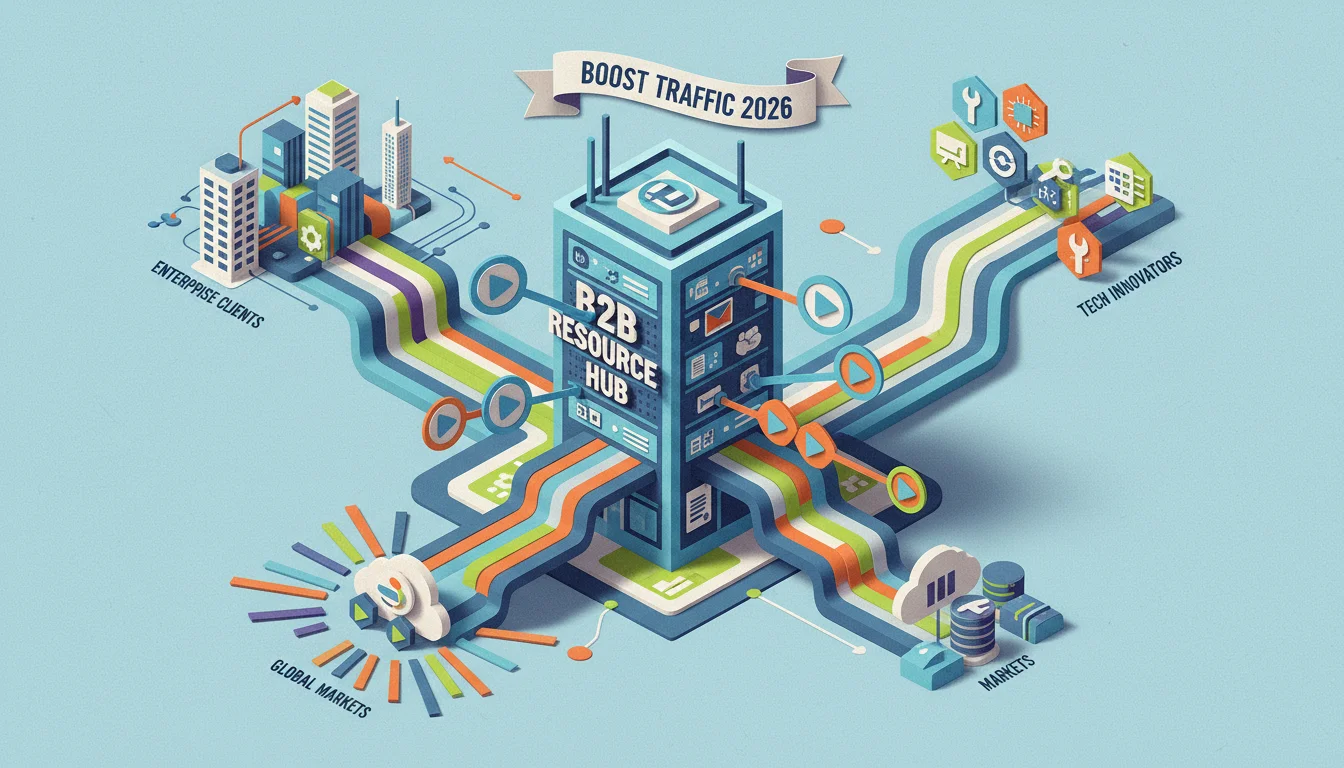
 By Editorial Team
Key Takeaways
- Pinpoint the specific headaches your B2B audience has, then create video content that talks directly about those problems and shows how your resources solve them.
- Build a resource hub that’s actually usable, with categories, a search bar, and clear CTAs, so people can find your videos and you can pull them deeper into your content.
- Use the hyper-specific targeting on platforms like LinkedIn Campaign Manager and Google Ads to get your videos in front of the actual decision-makers who need to see them.
- Obsessively track metrics like engagement rates and click-throughs to your resource hub, and map out the entire conversion path to see what’s working so you can refine your ad strategy and content.
- Put at least 20% of your video ad budget toward remarketing, specifically targeting people who’ve already watched your videos or clicked through to your resource hub.
So many B2B companies have these amazing resource hubs, full of whitepapers, case studies, and guides that took ages to create, but they can’t get qualified traffic to them. The problem is almost always the same: they’re promoting them with boring, static methods like a link in a newsletter or a random social post that busy people just scroll past. B2B video ads can fix this by connecting that initial flicker of interest with the deeper content you’ve built, but you have to be precise. Done right, video will completely change how B2B audiences find and use your educational assets.
The Initial Misstep: Relying on Passive Promotion
For way too long, our B2B content promotion strategy was basically just distributing links. We’d spend weeks building a definitive guide on something like cloud infrastructure security for mid-market companies, only to post a link with a short description in our newsletter and on social media. We just assumed the quality of the content alone would be enough to get people to click and download. What we saw in the data, though, told a completely different story.
Click-through rates (CTRs) from these passive tactics were awful, usually stuck below 1% for email and even worse for organic social posts. And when someone did click through, the bounce rates on our resource hub pages were sky-high. It was obvious that just dropping a link wasn’t cutting it. Our audience is made up of busy professionals who need a real reason to stop what they’re doing, engage with something, and then commit to reading a long-form piece. They were flying right past our text posts without giving them a thought, which meant they were missing out on information that could actually solve their business problems. The content wasn’t the problem. The way we were getting it in front of people was.
Strategic Video Ads: A Direct Path to Resource Hubs
Using B2B video ads to drive traffic to a resource hub means you have to completely rethink how you present your expertise. This isn’t about making a slick commercial. It’s about delivering a quick hit of value that gives them a clear reason to click for more. Here’s the four-step approach we’ve dialed in over the last couple of years.
Step 1: Deep Audience Understanding and Content Alignment
Before we even think about a script, we do the research to figure out the exact pain points and challenges our target audience is dealing with. This is more than just demographics. We dig into their day-to-day job, what metrics their boss holds them to, and what questions they’re typing into Google. For instance, if our resource hub has a guide on “Optimizing Supply Chain Logistics with AI,” we don’t make a video about “AI.” We make a video about the specific operational bottlenecks and cost pressures a logistics manager is trying to solve right now. That kind of deep understanding lets us write video scripts that sound like we’re talking directly to them.
The video itself needs to be a tight problem-solution story. For a 60-second video promoting a cybersecurity whitepaper for banks, you could open with a shocking statistic about data breaches in their industry and immediately follow up by saying there’s a way to prevent it. The video’s only job is to get their attention and position your resource hub as the place with the real answers. According to a 2024 Statista report, B2B marketers still see video as a major growth area and plan to spend more on it, which shows they believe it works.
Step 2: Crafting Engaging Video Content with a Clear CTA
An effective B2B video ad is all about strategic storytelling, not just production value. You have to hook them in the first five seconds or they’re gone. This can be a sharp question, a surprising number, or just calling out a common industry frustration. The middle of the video should briefly frame the problem and tease the solution, setting up your resource hub as the place to get the full story.
And every single video must have a crystal-clear call to action (CTA) at the end. Not some vague “learn more.” It needs to be specific: “Download our full guide on Q3 2026 market trends now,” or “Access the complete case study on reducing operational overhead by 15%.” The CTA needs to be big and bold on the screen and said out loud. On platforms like LinkedIn Ads or Google Ads, we always include a URL overlay and a clickable button to get people there instantly. The whole point is to remove any friction between them seeing the ad and getting to the resource.
Step 3: Precision Targeting and Platform Selection
The real power of B2B video ads comes from the insane targeting you can do on LinkedIn Campaign Manager and Google Ads. For LinkedIn, we build audiences based on job title, industry, company size, and even specific skills listed on their profile. If we’re pushing a guide for IT directors in healthcare, our ad only goes to IT directors in healthcare. On Google Ads, we use custom intent audiences to target people who recently searched for keywords related to our guide or have been visiting competitor websites. This gets our video in front of the right person at the exact moment they’re looking for a solution.
We also rely heavily on retargeting. If someone watches at least 50% of one of our video ads or hits a landing page but doesn’t download anything, they get added to a retargeting audience. That group then starts seeing follow-up ads, maybe with a different message or a more direct offer. This approach works. In my experience, a properly segmented retargeting campaign can easily pull in CTRs 3x higher than our first-touch ads.
Step 4: Optimized Landing Pages and Resource Hub Experience
A click is worthless if the landing page is slow, ugly, and confusing. The page has to be optimized for conversion, meaning it loads fast and clearly presents the resource you just advertised. Your video ad made a promise. The landing page has to deliver on it immediately. We make sure the resource hub itself is easy to navigate, with clear categories, a good search function, and obvious download buttons. Think about the user experience (can they find what they want in two clicks?). A well-designed resource hub starts answering questions and building trust for you, almost like a 24/7 extension of your sales team.
Step 5: Rigorous A/B Testing and Performance Measurement
Video ad campaigns require constant attention. We are always A/B testing everything: different video intros, different CTAs, ad copy, even the thumbnail images. We watch metrics like video completion rates, click-through rates to the resource hub, and especially the cost per download/lead like a hawk. We use UTM parameters on every link so we can trace traffic and conversions back to the exact video campaign that drove them. This data-first approach lets us iterate and optimize quickly, so we know our budget is always behind the ads that are actually performing. A recent IAB report on 2025 internet advertising revenue shows that digital video ad spend continues to climb, which reinforces why you have to make every dollar count.
Measurable Results and Continuous Improvement
By using this structured system, we’ve seen huge jumps in both traffic quality and how people engage with our resource hubs. For one SaaS client, we rolled out targeted B2B video ads that led to a 250% increase in qualified traffic to their “Digital Transformation Playbook” in just four months. Even better, the conversion rate from a resource hub visitor to a marketing-qualified lead jumped by over 40%. This showed us we weren’t just getting more traffic. We were getting the *right* traffic, people who were genuinely interested in the solutions.
B2B video ads aren’t a magic bullet. They’re a powerful tool, but only when they’re part of a bigger content and promotion strategy. The upfront work to create high-quality, targeted video content and set up strong analytics pays for itself by turning a static content library into a predictable lead-gen machine. The real key to making this work long-term is the constant cycle of testing, learning, and refining. You can’t just assume one successful video is the permanent answer. Your competition will adapt, platform algorithms will change, and your strategy has to change with them.
When you deploy them strategically, B2B video ads connect your audience’s urgent problems directly to your detailed solutions. They drive not just clicks, but genuinely engaged prospects to the best content you have. To make sure your videos hit the mark, really think about using B2B video personas to guide your creative from the start.
What types of video content are most effective for B2B resource hub promotion?
Explainer videos, animated infographics, short interviews with your experts, and customer testimonial clips work very well. The best ones all focus on a single problem and offer a clear path to a solution, which leads the viewer to your resource hub for the full details.
How long should a B2B video ad be to drive traffic to a resource hub?
The sweet spot is usually between 30 and 90 seconds. You need to grab their attention fast and get your point across without dragging on. We find that shorter videos (30-60 seconds) are great for initial awareness, while slightly longer ones (60-90 seconds) can give more context for a complex topic.
Which metrics are most important for measuring the success of B2B video ads for resource hubs?
You need to track video completion rate (how much of the video people actually watch), click-through rate (CTR) to your resource hub, and cost per click (CPC). But in the end, it all comes down to the conversion rate from those visitors into actual leads or downloads. Tracking these together shows you engagement and ROI.
Can B2B video ads be effective without a large production budget?
Yes, absolutely. Authenticity and a clear message matter more than Hollywood production value. A well-scripted animated video, a screen recording with a good voiceover, or even a simple webcam video from a subject matter expert can be very effective if your targeting is on point.
How does remarketing fit into a B2B video ad strategy for resource hubs?
Remarketing is essential. You target users who already showed interest, like watching over half of your video or visiting your resource hub without downloading. Serving them follow-up ads with a different angle or a stronger CTA dramatically increases the chances they’ll come back and convert.


