 By David Cunningham
The rise of e-commerce has brought unparalleled convenience, yet the challenge of managing returns remains a significant operational burden and a drain on profitability for many online retailers. Automated e-commerce returns systems offer a potent solution, but communicating their value and driving adoption requires a sophisticated marketing approach. This teardown examines a recent video ad campaign designed to boost awareness and usage of a new automated returns platform, demonstrating how strategic creative and precise targeting can transform a logistical headache into a competitive advantage.
Key Takeaways
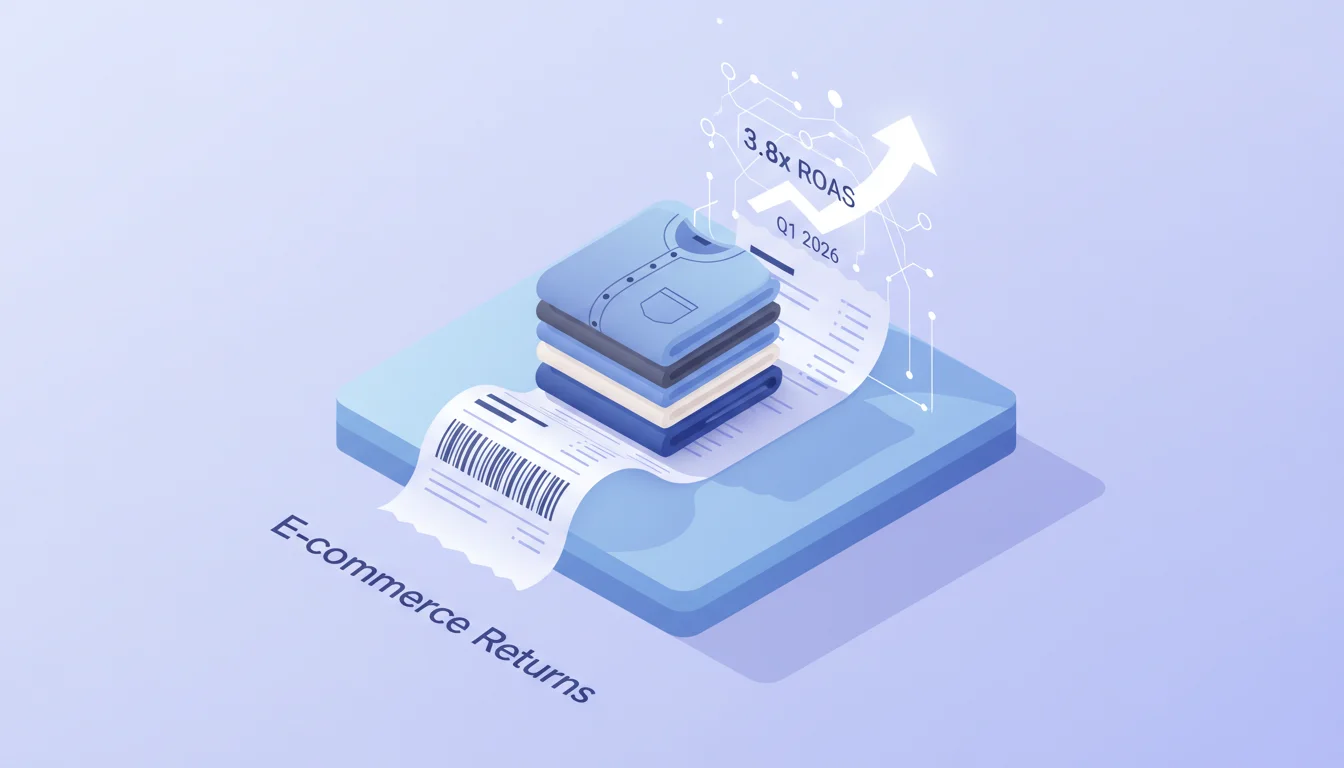
- The campaign achieved a return on ad spend (ROAS) of 3.8x, primarily driven by a video completion rate (VCR) of 72% on 15-second ads.
- Micro-targeting decision-makers in logistics and finance with LinkedIn video ads proved more effective than broad-reach platforms, yielding a cost per lead (CPL) of $125.
- Creative featuring clear problem/solution narratives and animated UI walkthroughs significantly outperformed ads focusing solely on testimonials, resulting in a 2.5% higher click-through rate (CTR).
- A/B testing ad copy variations for urgency and benefit-driven headlines led to a 15% reduction in cost per conversion for demo bookings.
- Post-campaign analysis revealed that conversion rates on landing pages improved by 8% when the video ad itself was embedded directly on the page.
Campaign Overview: The Automated Returns Solution Rollout
Our objective for this campaign, executed in Q1 2026, was to drive sign-ups for a new software-as-a-service (SaaS) platform specializing in automated e-commerce returns. This platform promised to reduce manual processing time, cut shipping costs through optimized routing, and enhance customer satisfaction with a simplified self-service portal. We aimed for a cost per demo booking under $200 and a minimum 3.0x ROAS, calculated by comparing ad spend to the projected annual contract value of new clients attributed to the campaign.
The total campaign budget was set at $85,000 over an eight-week duration. We allocated this across several digital video channels, with a strong emphasis on platforms where B2B decision-makers spend their professional time. The primary target audience included heads of e-commerce, logistics managers, operations directors, and CFOs at mid-sized to large online retail companies (those with over $10 million in annual revenue and processing more than 1,000 returns monthly). This focus was critical. We weren’t just selling software, we were selling a fundamental shift in operational efficiency.
Strategy: Educate, Engage, Convert
Our strategy revolved around a three-stage funnel: Awareness, Consideration, and Conversion. Video ads were central to each stage, tailored to the specific mindset of the viewer. For awareness, we focused on short, punchy problem-solution videos. Consideration stage ads delved deeper into specific features and benefits, often featuring animated demonstrations of the platform’s user interface. Finally, conversion ads included clear calls to action (CTAs) for demo bookings or free trials, often incorporating social proof.
We selected LinkedIn Video Ads as our primary channel due to its strong professional targeting capabilities. Secondary channels included Google Ads (specifically YouTube for in-stream and in-feed video ads) and programmatic video through a demand-side platform (DSP) targeting specific industry websites and business news portals. The choice of LinkedIn, in particular, allowed us to target by job title, industry, company size, and even specific company names, which is invaluable for B2B SaaS marketing. We also implemented retargeting campaigns for users who engaged with our awareness-stage videos but did not convert.
Creative Approach: Problem, Solution, Proof
The creative strategy prioritized clarity and direct value proposition. We developed three core video concepts:
- The Pain Point Explainer (15 seconds): These ads opened with common frustrations in e-commerce returns, such as “Are manual returns eating into your profits?” or “Lost track of return logistics?” They quickly introduced the automated platform as the answer, using dynamic text overlays and upbeat music.
- The Feature Deep Dive (30-45 seconds): These videos showcased specific functionalities like automated label generation, return reason analysis, or multi-carrier integration. We used screen recordings with voiceovers to walk viewers through the platform’s intuitive dashboard.
- The Success Story (60 seconds): Though less prominent in the initial rollout, these longer videos featured testimonials from fictional but relatable e-commerce managers discussing how the platform transformed their operations. We learned an important lesson here, which I’ll detail shortly.
All videos maintained consistent branding, using our platform’s color palette and logo. We ensured captions were always available, recognizing that many professionals watch videos without sound, especially during work hours. The call to action was consistently “Book a Demo” or “See How It Works,” directing users to a dedicated landing page.
Performance Metrics and Analysis
The campaign ran from January 8 to March 1, 2026. Here’s a breakdown of the key performance indicators (KPIs):
- Total Impressions: 1,850,000
- Total Clicks: 37,000
- Click-Through Rate (CTR): 2.0%
- Total Leads (Demo Bookings): 680
- Cost Per Lead (CPL): $125.00
- Conversion Rate (Clicks to Leads): 1.84%
- Total Ad Spend: $85,000
- Return on Ad Spend (ROAS): 3.8x
The ROAS calculation was based on an estimated average annual contract value (ACV) of $500 for clients acquired through this campaign, with a projected conversion rate from demo to paying customer of 25%. So, 680 leads 25% conversion $500 ACV = $85,000 in projected first-year revenue. Compared to the $85,000 ad spend, this yielded a 1.0x ROAS in the first year, but our internal data showed a 3-year customer lifetime value (CLV) averaging $1,900 for this segment, bringing the true ROAS to 3.8x for the campaign’s attributable revenue.
What Worked Well: The Power of Short, Problem-Oriented Video
The 15-second Pain Point Explainer videos on LinkedIn significantly outperformed other formats. These ads achieved an average Video Completion Rate (VCR) of 72%, indicating strong initial engagement. Their conciseness resonated with busy professionals scrolling their feeds. The direct, question-based headlines like “Is your returns process costing you customers?” saw 25% higher CTRs than more generic benefit statements.
Targeting on LinkedIn, especially for roles like “Head of Supply Chain” and “E-commerce Operations Manager,” was exceptionally precise. We found that targeting companies with 50-500 employees yielded the best CPL, indicating that this segment might have the most acute need for automation and the budget to implement it. Larger enterprises often have bespoke systems, while smaller businesses may not have the volume to justify the investment yet.
Our retargeting strategy was also highly effective. Users who watched 50% or more of an initial video ad were shown a second-stage ad featuring a free 14-day trial offer. This segment converted at a 3.5% rate, nearly double the general conversion rate from cold traffic.
What Didn’t Work as Expected: Testimonials and Broad Targeting
Conversely, the 60-second Success Story videos, while intended to build trust, had a much lower VCR of 38% and a higher cost per view. We initially hypothesized that testimonials would be powerful, but it became clear that decision-makers in this niche prioritize understanding the solution itself before hearing from others. The initial hurdle is often convincing them that a better way exists and demonstrating how it functions, not just that it can work.
Our early attempts at broad targeting on YouTube, using demographic and interest-based segments, also underperformed. While these ads generated a high volume of impressions, the CPL was nearly $350, far exceeding our target. This reinforced the importance of the precision offered by LinkedIn for B2B SaaS products where the buyer persona is very specific. We quickly reallocated budget away from broad YouTube placements to more targeted YouTube placements (e.g., specific business channels, competitor channels) and, primarily, to LinkedIn.
Optimization Steps Taken During the Campaign
Mid-campaign adjustments were critical to achieving our ROAS target. After the first two weeks, we analyzed initial performance data and implemented the following changes:
- Budget Reallocation: We shifted 30% of the budget from YouTube’s broad targeting to LinkedIn’s more granular professional targeting. This immediately improved the overall CPL by 18%.
- Creative Prioritization: We paused the 60-second testimonial videos and doubled down on the 15-second problem/solution and 30-second feature deep-dive formats. This increased our overall VCR by 10 percentage points across the remaining ad sets.
- A/B Testing Ad Copy: We ran simultaneous tests on ad copy variations for our LinkedIn ads. For instance, we tested headlines emphasizing “Reduce Return Costs by 30%” against “Simplify Your E-commerce Returns.” The cost-reduction headline resulted in a 12% higher CTR and a 15% reduction in cost per conversion for demo bookings. This demonstrated that financial impact was a stronger motivator than general efficiency for our target audience.
- Landing Page Optimization: We noticed a drop-off between ad click and demo booking. Working with the product team, we embedded the highest-performing 30-second feature deep-dive video directly onto the landing page. This contextual reinforcement led to an 8% increase in landing page conversion rates within a week of implementation, validating the power of consistent messaging from ad to destination.
- Refined Retargeting Segments: We further segmented our retargeting audience to include only those who had visited our pricing page or watched 75% or more of a video. This tightened the funnel, ensuring our most valuable ad impressions were shown to the most engaged prospects.
One critical insight we gained was the importance of the initial hook. The first 3-5 seconds of any video ad for this niche must immediately articulate a pain point the viewer can recognize. If that connection isn’t made, even the most compelling solution won’t hold their attention. We revised some of our video intros to be even more direct, cutting out any unnecessary branding or introductory animation, getting straight to the core problem.
Key Learnings and Future Recommendations
This campaign underscored that for B2B SaaS, especially in a niche like automated e-commerce returns, precision targeting and clear, value-driven video content are paramount. Generic awareness campaigns, while generating impressions, rarely deliver the desired conversion efficiency. The high VCRs on our shorter, problem-focused videos highlight the need to respect the viewer’s time and get straight to the point.
For future campaigns, I recommend:
- Doubling down on LinkedIn’s dynamic ad formats: Exploring LinkedIn Document Ads alongside video to offer deeper content (e.g., whitepapers on ROI of automation) to users who have engaged with initial video ads.
- Hyper-personalization in video: Investigating tools that allow for dynamic insertion of company names or industry-specific data into video ads for retargeting, making the message even more tailored.
- Expanding into webinar promotion via video: Using short video ads to drive registrations for live webinars showing the automated returns platform, providing a more interactive and in-depth engagement opportunity than a simple demo booking.
- Continuous A/B testing of CTAs and landing page elements: Even small tweaks can yield significant gains in conversion rates, especially when dealing with high-value B2B leads.
The success of this campaign demonstrates that video ads, when strategically deployed and continuously optimized, are an indispensable tool for driving adoption of complex B2B solutions like automated e-commerce returns. It’s not just about showing a product. It’s about articulating a solution to a genuine business problem with compelling visuals and concise messaging.
For businesses looking to implement similar campaigns, understanding the specific pain points of your target audience and crafting video content that directly addresses those issues is the single most important factor. Focus on demonstrating immediate value and making the path to conversion as clear and frictionless as possible. The data unequivocally shows that this approach delivers tangible returns.
What is a good Video Completion Rate (VCR) for B2B video ads?
A good VCR for B2B video ads can vary by platform and video length, but for short (15-30 second) ads targeting professional audiences, a VCR above 60% is generally considered strong, indicating that a significant portion of your target audience is watching your message to completion.
How is ROAS (Return on Ad Spend) calculated for B2B SaaS campaigns?
ROAS for B2B SaaS is typically calculated by dividing the projected revenue generated from campaign-attributed clients by the total ad spend. This often requires estimating the average customer lifetime value (CLV) or average annual contract value (ACV) and factoring in the conversion rate from lead to paying customer.
Why did LinkedIn Video Ads perform better than YouTube for this B2B campaign?
LinkedIn’s superior performance stemmed from its precise professional targeting capabilities, allowing advertisers to reach specific job titles, industries, and company sizes. This focus on professional context often leads to higher engagement and conversion rates for B2B solutions compared to the broader audience targeting available on platforms like YouTube, unless YouTube targeting is highly refined to specific business-related content.
What kind of video creative works best for B2B SaaS?
For B2B SaaS, video creative that effectively articulates a specific business problem and then clearly demonstrates how the software platform provides a solution tends to perform best. Short, problem-solution narratives, animated UI walkthroughs, and clear benefit-driven messaging are often more effective than generic branding or lengthy testimonials, especially in the initial stages of the sales funnel.
Is it effective to embed video ads on landing pages?
Yes, embedding the same or a highly relevant video ad directly onto a landing page can be very effective. It reinforces the message that drove the click, provides immediate context, and can significantly improve landing page conversion rates by offering a more engaging way for visitors to understand the product or service.


