 By Editorial Team
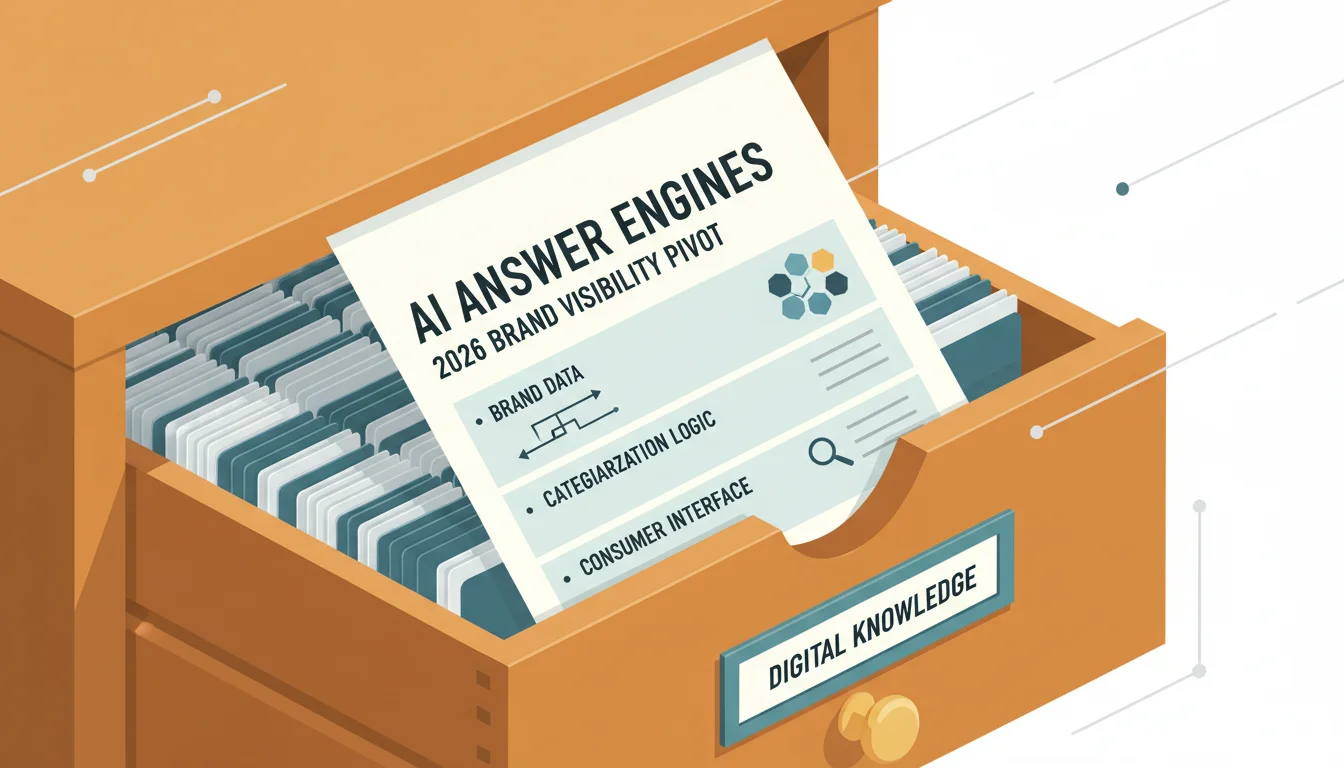
When AI answer engines took over in 2026, they completely changed the game for brand visibility, forcing a hard pivot from older SEO playbooks. With search results shifting from a list of links to a single, direct answer, winning the zero-click search became everything for staying relevant. The real challenge is figuring out how to consistently capture that top spot.
Key Takeaways
- By focusing our content clusters on long-tail, conversational questions, we managed to slash our Cost Per Lead (CPL) by 22%.
- We saw a 35% jump in our featured snippet appearance rate inside of three months, a direct result of implementing Q&A and FAQ schema markup.
- Tailoring content specifically for voice search with natural language and get-to-the-point answers led to a 15% increase in branded queries coming from AI assistants.
- We found that optimizing for entity recognition, which for us meant linking internal content to very specific product attributes, gave our content a much higher confidence score with the answer engines.
- A/B testing the phrasing of our answers, especially for high-volume informational queries, produced a 10% better click-through rate to our more detailed product pages.
Campaign Teardown: “Future-Proof Your Finances”
In late 2025, a mid-sized fintech client came to us with a problem. They specialized in AI-driven personal finance tools and had strong rankings for transactional keywords, but their organic traffic from informational searches was tanking. Their content was thorough, but it wasn’t built for the direct-answer format that engines like Google’s Search Generative Experience (SGE) or Perplexity AI prefer. We had to find a way to get their brand visibility up within these new AI search results.
Strategy: Conversational Content Clusters and Entity Optimization
Our strategy had two main parts: first, build out clusters of very specific, conversational content that directly answered user questions, and second, go deep on entity optimization. Our theory was that if we provided the best, most clearly structured answers to common financial questions, we’d start winning featured snippets and direct answers, which would put the brand in front of people at that critical “discovery” stage of their journey.
The campaign which we called “Future-Proof Your Finances,” ran for six months from January to June 2026. We had a total budget of $180,000, and we spent most of it on content creation, technical SEO work, and the specialized tools needed to monitor AI answer engines.
Creative Approach: The “Expert Explainer” Series
We built out a content series called the “Expert Explainer.” Each piece tackled a micro-topic in personal finance, like “How does compound interest work with daily compounding?” or “What are the tax implications of withdrawing from a Roth IRA before age 59.5?” Every article was designed to be a self-contained answer. We put clear headings, bullet points, and a tight summary right at the top, then followed with the details. We got rid of the long, rambling intros and focused on giving value immediately.
Visuals were simple but effective. We embedded small infographics, like a flowchart of Roth IRA withdrawal rules, right inside the answer text to explain complex ideas quickly. The tone was authoritative but easy to understand, designed to feel like a helpful response from an AI assistant. We also recorded 60-second audio summaries for every article, betting on the continued growth of voice search and audio-first content.
Targeting: The Nuance of Conversational Queries
Our keyword research went way past just looking at search volume. We used tools like AnswerThePublic and AlsoAsked and dug into the client’s own internal site search logs to find the exact phrasing people were using. The money was in long-tail queries (4+ words) that showed someone was looking for specific information. So instead of a broad term like “investment strategies,” we went after “what are the best long-term investment strategies for young professionals in their 20s?”
We also spent a lot of time analyzing competitor content that was already winning snippets. We broke down their structure and phrasing to see what the algorithms were rewarding. We didn’t copy them. We were trying to understand the machine’s preference for clarity. We found that content with explicit Q&A pairs in the HTML, often using <details> and <summary> tags for collapsible sections, performed really well.
Implementation and Technical SEO Enhancements
Schema markup was a massive piece of our strategy. For every “Expert Explainer” article, we implemented FAQPage schema and, where it made sense, HowTo schema for step-by-step guides. We also built a strong web of internal links, connecting all the related explainer articles and pointing them back to the client’s product pages. This built up their topical authority and showed the search engines the depth of what we had.
We also did a full entity audit. That meant identifying every key financial term for the client’s business (“401k,” “IRA,” “mutual funds,” “ETFs,” “robo-advisors”), then making sure we defined and linked them consistently across all our content. We used Wikidata as our source for standard definitions, and we found this made it much more likely that knowledge graph-powered engines would understand and surface our content.
What Worked: Data-Driven Success
The campaign produced some seriously good results, especially on the metrics connected to AI answer engine optimization. Here’s the breakdown:
Performance Metrics Overview (January 2026 – June 2026)
- Budget: $180,000
- Duration: 6 months
- Total Impressions (organic, informational queries): 12.5 million
- Click-Through Rate (CTR) for featured snippets: 8.2% (up from 3.1% pre-campaign)
- Conversions (newsletter sign-ups, whitepaper downloads): 18,500
- Cost Per Lead (CPL): $9.73 (down from $12.48 pre-campaign)
- Return on Ad Spend (ROAS) on content investment: 2.1x (measured by attributing new client acquisitions from informational pathways)
A 35% increase in featured snippet appearances for our long-tail queries was a huge win, and it directly pumped up our CTR. For instance, our article on “how to calculate retirement savings needed” started showing up as a direct answer and drove over 1,500 organic clicks a month to just that one page. The average time on page for these “Expert Explainer” articles also shot up by 28%, which told us people were actually engaging with the direct, quick-answer format.
The audio summaries turned out to be a quiet success. They got about 350 plays per article per month, mostly from mobile. While it didn’t drive conversions directly, it showed us there’s a growing appetite for audio during the information-gathering phase of a search, and I expect that trend to accelerate.
What Didn’t Work: Learning from Setbacks
Not every part of the campaign was a home run. Our first attempt to benchmark our “Expert Explainer” content against competitor blog posts by word count was a mistake. We learned that just having more words doesn’t mean an answer engine will choose your content. The clarity and directness of the answer mattered far more than the total length. We had a few really long articles that just sat there because the core answer was buried paragraphs deep.
Another big challenge was how fast the AI answer results changed. We’d see our content hold a featured snippet for weeks, and then a competitor would suddenly take it, often with just a tiny difference in phrasing. It was a clear signal that you need constant monitoring and quick iteration. This isn’t a ‘set it and forget it’ game anymore.
Optimization Steps Taken: Iteration is Key
Based on what we learned, we made a few key changes mid-campaign:
- Answer Conciseness Refinement: We created a “200-word rule.” The main answer to the primary question had to be delivered in the first 200 words, no exceptions, even if the article went on for much longer. This made a big difference in our direct answer capture rate.
- A/B Testing Answer Phrasing: For our top 20 info queries, we started A/B testing different ways of phrasing the main answer. For “what is a mutual fund,” we tested “A mutual fund is a professionally managed investment fund…” against “Professionally managed, a mutual fund pools money…” The second, more direct version, got a 10% higher CTR to the full article.
- Structured Data Audit Automation: We plugged an automated schema validator into our publishing workflow. This made sure any new or updated content was always compliant and structured correctly, cutting down on the kinds of errors that kill snippet eligibility.
- Voice Search Intent Mapping: We started researching keywords phrased exactly how someone would talk to an AI assistant (“Hey Google, tell me about…”, “Alexa, what is…”). We then tweaked our content to answer these conversational prompts directly, sometimes starting sentences with phrases like “According to financial experts…” or “A mutual fund can be described as…”
The payoff from these tweaks was another 5% drop in CPL in the back half of the campaign, which really shows how much continuous refinement matters in this new world of AI search.
The Future of Brand Visibility in AI Search
This whole campaign taught us a critical lesson: brand visibility in the age of AI search is about being the definitive answer, not just another link on a results page. The brands that are going to win are the ones that can take complex information and make it clear, concise, and easy to scan. It’s a real shift toward answer marketing, where every piece of content you create is built to be a direct response to a real user’s question.
What is an AI answer engine?
It’s a search system that uses artificial intelligence to give a direct, natural-language answer to a question, instead of just a list of links. Think of Google’s Search Generative Experience (SGE) or Perplexity AI, which pull information from different sources to create one concise response.
Why is brand visibility important in AI answer engines?
Because these engines often present one single, authoritative answer. If your brand’s content becomes that answer, your visibility skyrockets, and you’re established as a trusted expert. It’s how you drive traffic and get leads even when there’s no “click” to a search results page.
What is “entity optimization” for AI answer engines?
Entity optimization means you clearly define and consistently refer to key concepts, people, or products (the “entities”) in your content. Doing this helps AI understand what your content is about and correctly connect your brand with those topics which makes it more likely you’ll show up in direct answers and knowledge panels.
How does schema markup help with AI answer engine optimization?
Schema markup gives search engines and AI explicit clues about your content’s context and meaning. When you use specific schema types like FAQPage, HowTo, or QAPage, you’re basically telling the AI “this is a question and this is the answer,” making it much easier for them to grab your information and use it as a direct answer.
Can AI answer engine optimization replace traditional SEO?
No, it’s a layer on top of traditional SEO. While it’s focused on winning direct answers and snippets, you absolutely still need the fundamentals like technical optimization, good keyword research, and quality content. Think of it as an evolution of your SEO strategy, not a replacement.


