 By Editorial Team
Sarah’s artisanal plant delivery service, “Urban Bloom,” was a fantastic idea for Atlanta, but after six months, it was dead in the water. She’d built a beautiful website and was posting on social media, but sales were flat. “We were getting traffic, sure,” she told me at an industry thing at Ponce City Market, “but it wasn’t translating into actual plant purchases. My ad spend felt like I was just throwing money into the Chattahoochee River.” This is the classic problem for anyone using Facebook Ads in their Performance Marketing strategy: how do you get a real Conversion instead of just empty clicks?
Key Takeaways
- Build a full-funnel Facebook Ads strategy that walks customers from brand awareness down to a specific conversion, because a cold audience won’t buy on the first touch.
- E-commerce businesses should run Meta’s Advantage+ Shopping Campaigns. They automate much of the management and, according to Meta’s internal data, can boost return on ad spend by an average of 12% compared to manual campaigns.
- You must test your creative constantly with different formats like short-form video and carousels, and you should dedicate at least 20% of your ad budget to finding what actually works.
- Use your own first-party data with Meta’s Conversions API and custom audiences to sharpen your targeting, which can cut customer acquisition costs by up to 15%.
The issue with Sarah’s first stab at ads wasn’t a bad intention, it was a complete disconnect between what she was telling Facebook to do and what she actually wanted. She ran “traffic” campaigns thinking more website visitors would naturally lead to more sales. That’s a fundamental misunderstanding of how this works. I tell my clients all the time that just driving traffic without a conversion plan is like inviting a bunch of people to a party but not telling them where the drinks are. For Urban Bloom, a purchase was the whole point of the party, and her ads were leaving everyone wandering around lost.
So, the first thing we did was look under the hood of Urban Bloom’s Facebook Ads account. It was a predictable mess of broad interest targeting, generic ad copy, and that single “Traffic” campaign objective. This is where so many people go wrong. Facebook’s algorithm is a beast, but it’s a very literal one. If you tell it to find people who click links, it will find you a ton of people who love clicking links, regardless of whether they’ve ever bought anything online in their lives. Sarah didn’t need more clicks. She needed a real funnel to guide people from curiosity to purchase, which meant we had to stop chasing vanity metrics and start focusing on actual conversion events.
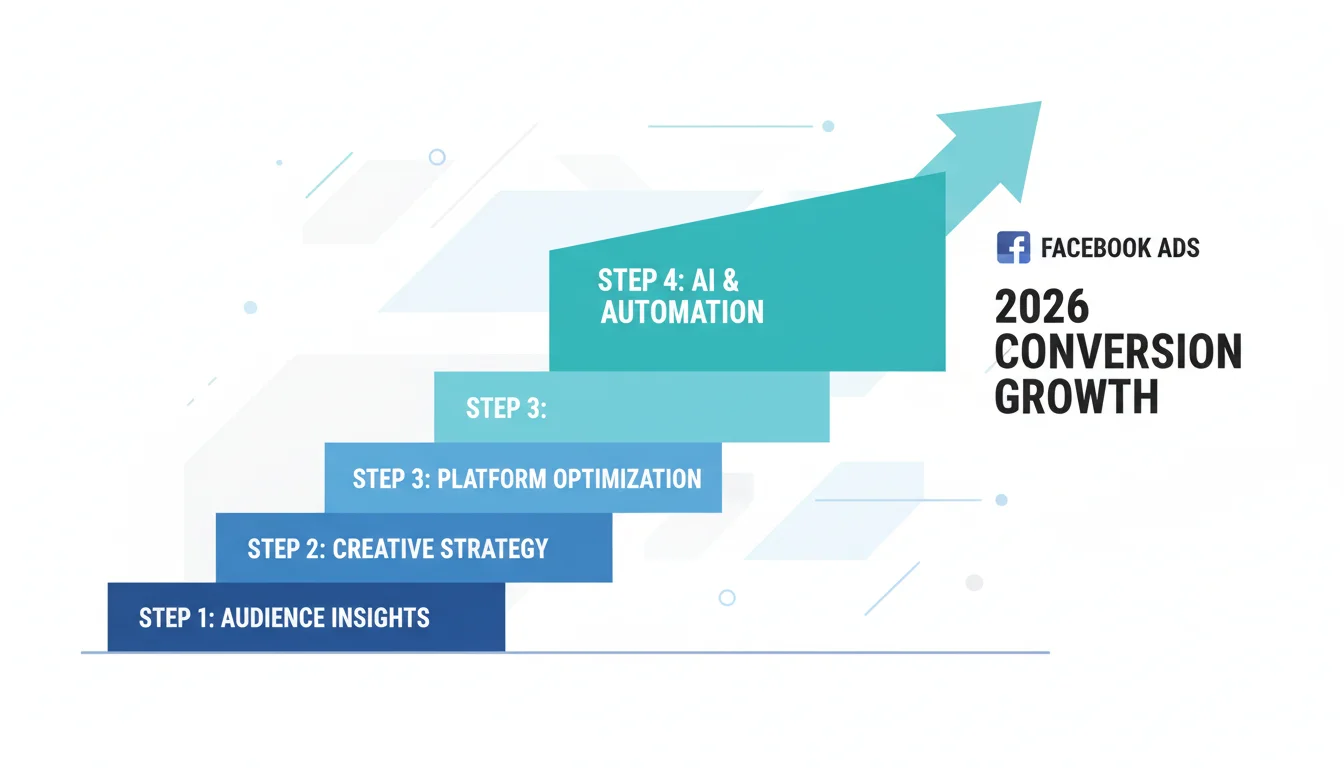
We started by breaking up her audience and campaigns to match a sales funnel. At the very top, we launched Brand Awareness and Reach campaigns. These had nothing to do with immediate sales. Their only job was to introduce Urban Bloom to a wide audience in Atlanta, especially in zip codes like 30308 and 30309, which are packed with the young professionals and apartment dwellers who make up her ideal demographic. We ran good-looking image and short video ads that showed off her unique plants and the fact that she delivered locally. A 2024 IAB report confirms this is a solid play, noting that spending on brand awareness campaigns went up 18% year-over-year as people recognize its value (IAB Internet Advertising Revenue Report).
The creative for these awareness ads wasn’t about “buy this plant for $49.99.” It was about selling a feeling, the calm of having plants inside your home or the happiness of giving one as a gift. We tested a few different angles, like one showing plants in cool home environments and another that really hammered the local, hand-delivered aspect. You have to test this stuff because you can’t just guess what your audience cares about. We used the A/B testing tools right inside Ads Manager to get statistically real answers on which headlines and ad copy worked before we spent more money. Sarah was hesitant at first and wanted to jump right to sales, but I had to explain that without building this foundation, her sales campaigns would always be fighting an uphill, and very expensive, battle.
After we built up that initial audience, we focused on the middle of the funnel: Consideration. The goal here changed to getting engagement and website visits from people who we already knew were interested. We made Custom Audiences of people who had interacted with our first set of ads (like watching 75% of a video) and another audience of website visitors who hadn’t put anything in their cart yet. For this group, we ran Traffic and Engagement campaigns with a slightly more direct message, highlighting product categories like “Low-Light Lovers” or “Pet-Friendly Plants” with calls to action like “Explore Our Collection.” The idea is to give them information and value before asking for the sale. A late 2025 Nielsen report confirmed this, showing that people need an average of 3 to 5 touchpoints with a brand before they’ll buy anything, so this nurturing stage is absolutely necessary (Nielsen Insights).
This is also when we got aggressive with retargeting. Anyone who looked at a specific plant but didn’t buy saw an ad for that plant again. Anyone who added a plant to their cart but bailed got a different ad with a bit more urgency. The level of segmentation you can achieve on Facebook’s ad platform in 2026 is what makes it so powerful. We could hit people who viewed a Monstera with an ad about getting a Monstera, maybe with a small nudge: “Still thinking about that Monstera? It’s waiting for you!”
The real engine of this whole performance marketing machine, though, was the bottom-of-the-funnel Conversion campaign. This is where we went for the kill: actual purchases. For an e-commerce store like Urban Bloom, Meta’s Advantage+ Shopping Campaigns are the single most important tool you have. These campaigns, which came on the scene in late 2024, use AI to automate almost the entire process of finding the right audience and placements which drastically cuts down on the manual work of building out dozens of ad sets. According to Meta’s own published data, businesses that use Advantage+ Shopping Campaigns see their return on ad spend (ROAS) improve by 12% on average compared to doing it all by hand (Meta Business Help Center).
We fed the Urban Bloom Advantage+ campaign a wide mix of creative assets, product catalog ads, customer testimonials, short videos of plants being unboxed, and the AI figured out the best combinations to show the people most likely to buy. This was a huge turning point. Sarah immediately saw sales go up and her cost per acquisition (CPA) go down. To make this work even better, we implemented the Conversions API (CAPI). CAPI creates a direct, server-to-server connection between her website and Facebook which gets around all the data loss from browser tracking blockers. It gives the algorithm much cleaner data to work with. A lot of advertisers are still just relying on the old Meta Pixel, but CAPI gives you a far more solid data connection that pays for itself in better campaign performance.
Creative strategy was the other huge piece of the puzzle. We found pretty quickly that short-form video, especially stuff that looked like user-generated content (UGC), worked incredibly well. Videos of real customers unboxing their plants built a kind of trust that our polished studio photos just couldn’t. We also had a lot of success with carousel ads that let people swipe through different plant options right in the ad itself. The biggest mistake you can make is creating one ad and letting it run forever until it dies. You need a pipeline of fresh creative, and you have to be ruthless about killing what isn’t working. We ended up dedicating about 25% of Sarah’s budget just to constant creative testing.
Getting the technicals right is one thing, but you also have to understand how to use Facebook’s audiences in 2026. While some of the old targeting options have changed, Custom Audiences and Lookalike Audiences are more powerful than ever. We uploaded Urban Bloom’s customer email list to create a high-value Custom Audience, then we told Facebook to generate Lookalike Audiences based on those existing buyers. This is how you find new people who share the same traits as your best customers. We even created Lookalikes from people who showed high intent on the website, like viewing several products. This use of your own first-party data is your best defense against privacy updates. It’s not about what Facebook can tell you about its users. It’s about what you can tell Facebook about your customers.
Here’s a perfect example of that in practice. During the spring planting season, we saw in Google Analytics that a lot of Urban Bloom’s site traffic was coming from the Buckhead neighborhood, but they weren’t buying as much as people from other parts of Atlanta. So, we made a special Custom Audience just for Buckhead residents who had visited the site but hadn’t purchased. Then we hit them with ads showing off more expensive, larger statement plants that fit the high-end aesthetic of that area. The ad copy even had a direct callout for “Buckhead Home & Garden Enthusiasts.” And it worked. The conversion rate from that specific segment jumped, proving that this kind of hyper-local, tailored messaging is worth the effort.
Finally, none of this works if you don’t watch it. Performance marketing isn’t a crock-pot. We had weekly meetings with Sarah to go over the essential metrics: ROAS (Return on Ad Spend), CPA (Cost Per Acquisition), CTR (Click-Through Rate), and CPM (Cost Per Mille/Thousand Impressions). We moved budget around, shut off ads that weren’t performing, and gave more money to the winners. For example, if an ad had a great CTR but a terrible conversion rate, that’s a red flag that the ad is making a promise the landing page can’t keep. That would trigger a review of both the ad copy and the page itself. Sarah eventually got so good at this that she could look at the data and start predicting what would work next, because she understood what the numbers were telling her about her audience.
Sarah’s journey with Urban Bloom shows what happens when you move beyond boosting posts and build a real performance marketing system. It’s a mix of a strategic funnel, advanced tools like Advantage+ Shopping and the Conversions API, and a serious commitment to testing your creative. She turned her ad spend from a gamble into a predictable source of growth. Her sales are climbing consistently, and she’s no longer skeptical about advertising. Sarah puts it best now: “You just have to know who to talk to, when to talk to them, and what to say.”
Getting Facebook Ads right for performance marketing is a constant dance between your audience, your creative, and your business goals. It requires a discipline for testing, a willingness to change what’s not working, and a laser focus on the numbers that actually matter to your bank account.
What’s the real difference between a traffic campaign and a conversion campaign on Facebook?
It’s simple. Traffic campaigns are optimized to get you the most clicks for your money, sending people to your website. Conversion campaigns are optimized to get you a specific action, like a sale or a lead, by showing your ads to people Facebook’s algorithm thinks are most likely to perform that action based on your Pixel or Conversions API data.
How often should I really change my ad creative?
It depends on your budget and audience size, but creative fatigue is real. If you’re hitting a small audience with a big budget, you might need new ads in 2-3 weeks. For bigger campaigns, you might get 4-6 weeks. The key is to watch your metrics. If your ad’s Frequency is climbing and its CTR is dropping, your audience is tired of seeing it. Time for something new.
What is Meta’s Conversions API and why do I need it?
The Conversions API (CAPI) lets you send conversion data directly from your website’s server to Meta’s server. It’s a backup and a supplement to the browser-based Meta Pixel, making your data more accurate and reliable as browsers crack down on tracking. Better data means the algorithm can do a better job optimizing your ads, which leads to better results.
Can I get good results from Facebook Ads with a small budget?
Yes, if you’re smart with your money. With a small budget, you can’t afford to run broad awareness campaigns. You need to focus your spend on high-intent audiences, like retargeting people who have already visited your website or creating Lookalike Audiences from your existing customer list. Every dollar should be aimed at people who are most likely to buy.
What are Advantage+ Shopping Campaigns and who should use them?
Advantage+ Shopping Campaigns are Meta’s automated solution for e-commerce advertisers. You give it your products, your creative, and a budget, and its AI finds the best audience and placement combinations to drive sales. If you’re an e-commerce business looking to scale and you have a solid product catalog, you should absolutely be testing these campaigns.
“A 2025 NBER working paper from OpenAI’s economic research team and Harvard’s David Deming found that about 49% of messages were “asking” messages. That means people were seeking information or advice to help them make a decisio”


