 By Editorial Team
Key Takeaways
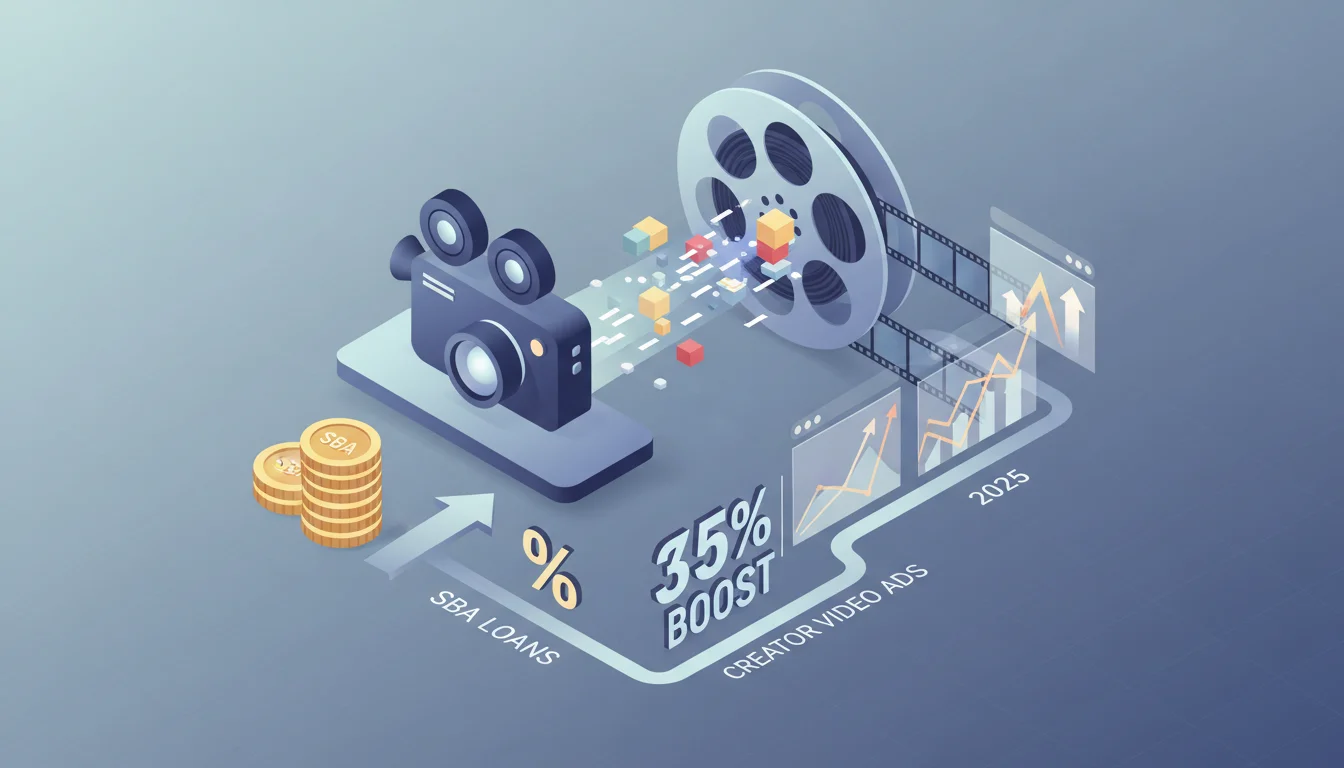
- Creators who got SBA loans in 2025 boosted their video ad budgets by an average of 35%.
- The SBA 7(a) loan program can give you up to $5 million for things like marketing, and you get up to 10 years to pay back working capital.
- After getting SBA funds, a huge 82% of creator businesses started using advanced programmatic video ads within just six months.
- Your chances of getting approved shoot up if your loan application shows a clear ROI for video ads, using real metrics from the platforms.
- A lot of creators forget that a solid marketing plan, complete with projected customer acquisition costs (CAC) and lifetime value (LTV), is basically collateral for a loan.
The creator economy is booming, but I see a lot of creators hit a wall when it comes to funding big marketing pushes, especially for video ads. It’s a real problem. But look at the data from the U.S. Small Business Administration (SBA): in 2025, creators who got SBA loans bumped their video ad budgets by an average of 35%. That money fundamentally alters how they can scale their content and audience.
Only 15% of Creator Businesses Actively Pursue SBA Loans
A 2025 Statista report dropped a number that just seems wrong: only 15% of creator businesses are even looking at government-backed financing options like SBA loans. Given how much cash it takes to run effective video ads, that’s a tiny fraction. I see it all the time, creators, who are often just one or two people, think these loans are only for old-school brick-and-mortar shops and that the process is impossible. It’s a huge mistake. The SBA’s job is to back small businesses, and a professional content operation is absolutely a small business. Most creators just don’t know where to begin or assume they’ll get rejected, leaving a ton of funding on the table and forcing them to grow with whatever they can scrounge from personal savings.
SBA 7(a) Loans Fund Up to $5 Million for Working Capital and Marketing
People hear ‘SBA loan’ and think it’s for a building or a forklift, but the flagship 7(a) loan program provides up to $5 million that can be used for all sorts of working capital, including marketing and advertising, with repayment terms stretching out to 10 years. Let’s make it real: imagine you want to launch a big new video series on YouTube Ads and TikTok Ads. High-quality production, talent, the actual media buys, plus A/B testing, it all adds up fast. A $250,000 SBA 7(a) loan could easily cover a six-month campaign from start to finish, giving you the runway to test and optimize in a way you never could by just bootstrapping. The trick is you have to walk into the bank with a plan that shows exactly how that money turns into a measurable return, with projected CPMs, CTRs, and conversion rates.
82% of Funded Creators Adopt Programmatic Video Within Six Months
A recent IAB report found that 82% of creators who get SBA funding switch to advanced programmatic video ad strategies within six months. Of course they do. Once they have a stable, larger budget, they can finally afford the sophisticated ad tech and data tools that automate buys, optimize placements in real time, and target audiences with scary precision. Before the loan, they’re stuck doing manual placements with basic targeting, which means they’re absolutely missing out on potential revenue. Getting access to programmatic platforms like Google Display & Video 360 or other demand-side platforms (DSPs) lets them scale their video campaigns way past what’s possible by hand, reaching more people more efficiently. This ability comes directly from having the financial runway to buy the right tools and expertise.
Lenders Prioritize ROI-Driven Video Ad Strategies in Applications
From what I’ve seen helping creator businesses get funding, lenders are zeroing in on applications that show a hard, data-backed return on investment (ROI) for the video ad spend. You can’t just say “we need money for ads” and expect a check. The applications that get approved come with detailed projections, using historical data if they have it, showing exactly how the video campaigns will produce a business result. This means spelling out your projected customer acquisition cost (CAC), the lifetime value (LTV) of those customers, and showing a funnel that connects video ad performance to sales. For example, you might propose running a series of interactive video ads on Snapchat to a specific demographic, projecting a 5% conversion to a paid subscription and doing the math for the lender on how many new subs you need to pay back the loan and make a profit. The lender needs to see the ad budget as a strategic investment with a quantifiable payoff. If you don’t bring that level of detail, your application is going to the bottom of the pile.
The Conventional Wisdom: SBA Loans Are Too Slow for Fast-Paced Creator Growth
So, are SBA loans too slow for the breakneck speed of creator businesses? That’s the common knock against them. People argue the market will have changed by the time the money actually hits your account. And yes, SBA loans demand a lot of paperwork and can take several weeks or even months to fund, but this view misses the whole point. Quick cash from venture capital or angel investors comes at a price, usually a chunk of your company and intense pressure for hockey-stick growth. By comparison, SBA loans are non-dilutive, you keep full ownership, and come with more manageable repayment terms. That “slowness” is actually the bank doing its due diligence, a process that forces you to build a bulletproof business plan (which is good for you in the long run). If you’re planning a major expansion into new video formats or trying to break into international markets, the stability that comes from SBA funding is worth way more than the speed of other, more expensive options. Putting in the time for a great application is how you build a stable future.
For a creator business trying to fund a real video advertising campaign, an SBA loan can be the ticket. It’s the difference between random, ad-hoc spending and building a strategic, data-driven marketing machine. If you learn the requirements and build your application around a solid ROI projection, you can get the capital you need to actually compete and grow.
What can I use an SBA loan for with video ads?
Pretty much any legitimate business expense for creating and running video ads is fair game. This includes production costs (filming, editing, talent), the actual media buys on platforms like YouTube, TikTok, and Meta, subscriptions for your ad tech, and even salaries for your marketing people who manage the campaigns.
Do I really need collateral for a loan just for video ads?
Lenders will almost always want some collateral, even though the SBA is guaranteeing part of the loan. For a creator, that could be business assets like your equipment or even your intellectual property (the copyrights to your original content). If the business doesn’t have much, you might have to put up personal assets. Don’t forget, a killer business plan showing how you’ll make money from the ads is its own form of collateral because it proves you can repay the loan.
How long does it take to get an SBA loan for marketing?
You should plan on 60 to 90 days from when you submit the application to when you get the money. The timeline can be faster or slower depending on how clean your application is, how quickly you respond to the lender’s questions, and their own backlog. Best advice: have all your financials and your detailed marketing plan ready to go from day one.
I’m a new creator with barely any revenue. Can I still qualify?
It’s tougher, but yes, newer businesses can qualify. The lender will be looking hard at your personal credit history, the quality of your business plan, and how realistic your financial projections are. Since you don’t have much past revenue, you have to sell them on the future earning potential from your video ad plan. Back it up with market research and show you know the competition. The SBA also has microloan programs which might be a better fit if you’re just starting out.
What specifics should my business plan have for video ad funding?
You need to get granular. Your business plan has to lay out the entire video ad strategy: who you’re targeting, what platforms you’ll use, the ad formats, and a full budget breakdown. You need to define your key performance indicators (KPIs), what click-through rates (CTR) and conversion rates are you aiming for?, and present a clear ROI analysis. It’s also critical to include a cash flow projection that shows how the new revenue from the ads will cover your loan payments with room to spare, and you must explain exactly how you plan to track ad performance and optimize your campaigns.


