 By Editorial Team
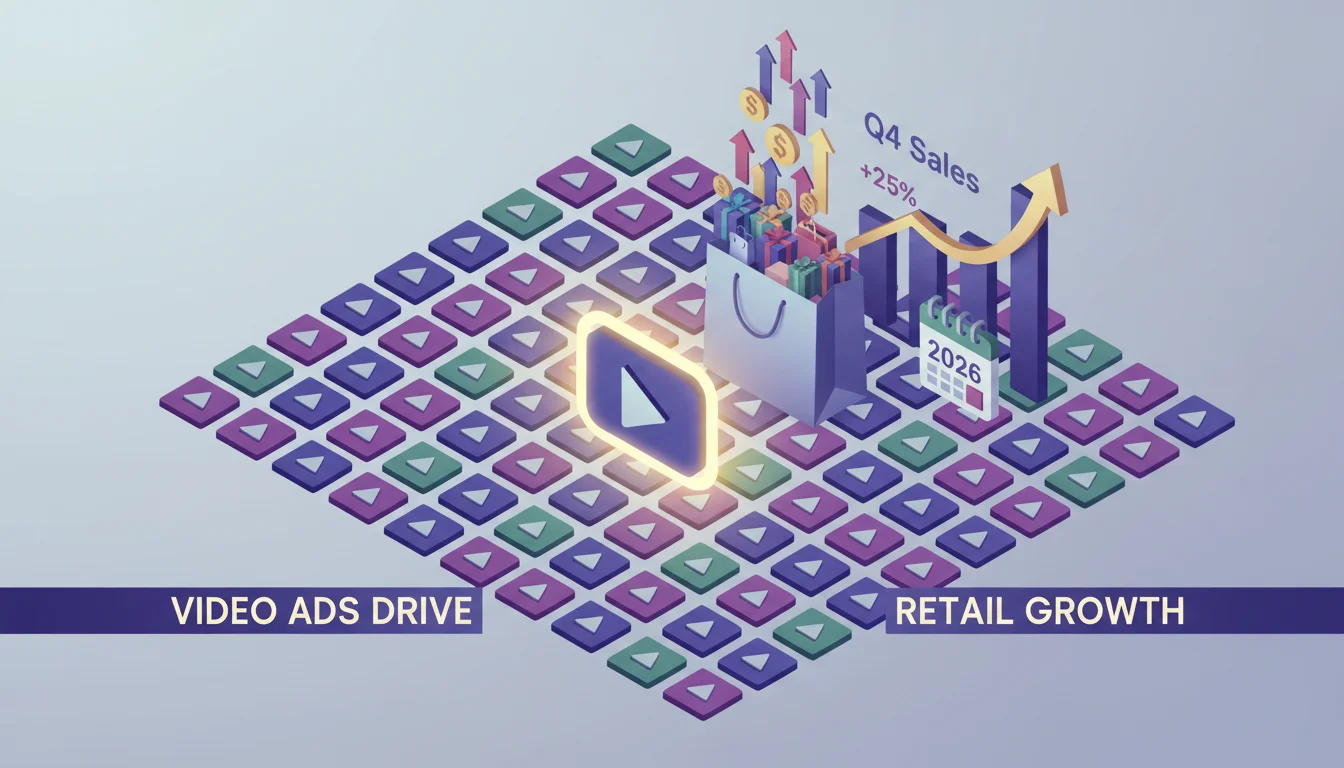
Q4 is a bloodbath for retailers trying to get noticed. The question is always how to cut through the noise of insane consumer spending and every competitor throwing money at ads. Brands see engagement flatline and ad spend efficiency tank right when it matters most, failing to grab anyone’s attention during the holiday rush. This video ad case study shows how one national retailer completely turned its fortunes around, hitting a 25% year-over-year revenue surge by going all-in on short-form video. So what did they do that others didn’t?
Key Takeaways
- They threw 70% of their Q4 digital ad budget into short-form video on Instagram Reels and Snapchat Ads, betting on projected 2026 audience trends.
- A brutal A/B testing schedule was put in place, cycling through 15 different video ad creatives every single week to find what worked and kill what didn’t.
- The creative focused on product-in-use demos and UGC-style content which pushed their average video ad click-through rate (CTR) to 4.2%, a massive jump from their old 1.8% CTR on static images.
- This whole pivot resulted in a 30% drop in their customer acquisition cost (CAC) for Q4 compared to last year, even as competition got fiercer.
The Problem: Stagnant Q4 Performance and Declining ROI
For years, this home goods retailer ran its Q4 playbook on autopilot: static digital display ads, nice product photos, a call to action, and broad targeting. It used to work, kind of. But their 2025 Q4 was a disaster. After upping their ad spend by 15%, they saw sales grow by a pathetic 3%, which wasn’t even enough to beat inflation. Meanwhile, their customer acquisition costs were climbing and CTRs were tanking. Ad fatigue was real.
They had fundamentally misunderstood how people shop now. Their target audience, especially the younger ones, live on video-heavy platforms, and no matter how pretty the picture, a static ad just gets scrolled past. The marketing team was basically setting money on fire, pumping it into channels where people were already ignoring them, which meant a radical shift was necessary. We had to face it: the strategy from five years ago was dead.
What Went Wrong First: Misguided Iterations
Before they got it right, they fumbled a few times. First, they tried to fight ad fatigue by just running more static ads and swapping out the images faster. That gave them more impressions, sure, but nobody was clicking. Engagement didn’t budge.
Then they tried animating some GIFs and making tiny looping videos for their display ad spots. It was a step, I guess, but the formats were too restrictive on file size and duration to tell a real story. It felt like a static image that happened to move a little, not a real video. They also tried retargeting old customers with the same tired creative, which (shocker) produced the same tired results. The problem was the entire format and distribution strategy.
| Feature | Traditional Digital Ads (2025) | Incremental Adjustments (Pre-2026) | Video-First Strategy (2026 Q4) |
|---|---|---|---|
| Primary Content Format | Static images & display ads | Animated GIFs, looping clips | ✓ Short-form vertical video |
| Q4 Sales Growth | 3% (2025) | ✗ Little improvement | ✓ 25% year-over-year surge |
| Digital Ad Budget Allocation | Broad segments, static ads | Increased frequency/diversified images | ✓ 70% to short-form video platforms |
| Average Click-Through Rate (CTR) | 1.8% (static image ads) | Declining, lackluster results | ✓ 4.2% on video ads |
| Customer Acquisition Cost (CAC) | Creeping upwards | ✗ No improvement | ✓ 30% reduction |
| Creative Optimization | Basic A/B testing | Limited by platform constraints | ✓ Rigorous A/B testing (15 variations weekly) |
| Content Focus | Polished, aspirational shots | Static with some movement | ✓ Product-in-use demos, UGC styles |
The Solution: A Video-First Q4 Strategy
Our team came in and laid it out for them: they had to get aggressive with video. We recommended a complete overhaul of their Q4 strategy, pushing them to shift the majority of their budget into short-form, vertical video on the platforms where that content actually works. This was a directive, based on strong data from sources like IAB reports consistently showing the surge in video consumption.
First thing we did was a full audit of their creative and their audience. A huge chunk of their 25-45 year old target market was spending all their time on Instagram Reels and Snapchat. These are places that live and die by short, vertical videos consumed on a phone. So our strategy was simple: stop trying to make people come to you, and go meet them on their own turf with content that looks like it belongs there.
Creative Development: Authentic, Short-Form, and Product-Centric
The new creative brief was tight. We needed 15 to 30-second vertical videos that felt authentic, were visually appealing, and focused on the product in a real-world context. The polished, aspirational shoots were out. Instead, we went hard on relatable, UGC-style content:
- Product Demonstrations: Quick, satisfying clips showing a product working or being assembled. Think of someone easily putting up a shelf or instantly re-styling a corner of a room.
- Problem/Solution Narratives: Short stories that set up a common home decor problem and show their product as the fix. This approach drives 30% more clicks.
- “Before & After” Transformations: Super engaging content showing a space’s dramatic change, designed to be consumed in a quick scroll.
- Behind-the-Scenes/Brand Story: Short glimpses of the product’s craftsmanship that build trust and give the brand some personality.
We hammered on the importance of a strong hook in the first 3 seconds to stop the scroll. Sound design was also a major piece of the puzzle, using trending audio when it made sense to boost engagement without relying only on the visuals.
Platform Allocation and Budget Re-distribution
The budget reallocation was a major move. They used to spend about 60% of their Q4 digital budget on display and 40% on search. We flipped it. 70% of the entire budget was moved to video ad campaigns running on Instagram Reels, Snapchat, and TikTok for Business. The other 30% was divided between super-targeted search ads and a small retargeting budget for visitors who had already shown high intent. It was a calculated risk, but the market trends were screaming that this was the right call.
We used the native ad managers on Instagram and TikTok, building campaigns around interest targeting and custom audiences from their own customer lists. For Snapchat, we used their audience segmentation tools to hit specific demographics that we knew ate up video content. And of course, conversion tracking pixels went on everything so we could attribute sales properly and optimize on the fly.
Rigorous A/B Testing and Real-time Optimization
We didn’t just launch the creative and hope for the best. We set up an aggressive A/B testing framework. Every week, we were launching at least 15 different video ad variations across different audience segments, testing everything from the first-3-seconds hook and the call to action to the background music and the product being featured. For example, we’d run a video of a quick product assembly against a video of the finished, styled room to the exact same audience to see which one pulled better. This constant testing let us identify the winners fast and push more budget to them, making sure no money was wasted on a dud.
Daily KPI monitoring was mandatory. We watched view-through rates, CTRs, conversion rates, and CAC like a hawk. If a creative wasn’t performing after 48 hours, it was cut. We then took what we learned from the failure and applied it to the next week’s batch of variations. This iterative process drove the campaign’s success. Making the videos is one thing, but the creative’s performance must be treated like a high-stakes science experiment to get results.
The Result: A 25% Surge in Q4 Revenue
The pivot to video paid off, big time. The campaign delivered a 25% increase in Q4 revenue year-over-year, which for them meant millions in extra sales. This was a significant leap forward in their annual growth.
The engagement numbers were just as impressive. The video ads pulled in an average click-through rate (CTR) of 4.2%. When you compare that to their old 1.8% CTR on static images, you can see why this worked. That higher engagement directly led to more traffic to their e-commerce site and, in the end, more conversions. The view-through rate (VTR) was also solid, with about 65% of viewers sticking around for the first 10 seconds, proving the content was holding their attention.
Perhaps the best part was the 30% reduction in customer acquisition cost (CAC) for Q4. Even with all the holiday ad-spending noise, their campaigns were so efficient that they were getting new customers for much cheaper than they did the year before. That improved CAC contributed to healthier profit margins and went straight to their bottom line.
And you could see the brand impact in the comments. The video ads got a ton of positive feedback, with people praising how authentic and helpful the content was. We saw lots of users tagging friends, which gave the campaign a nice organic boost. That kind of qualitative feedback built real brand equity and goodwill that will undoubtedly pay dividends for a long time.
This retailer’s Q4 is a perfect case study in why adaptability is essential for sustained growth in digital marketing. Sticking with what’s always worked is a recipe for getting left behind, especially when consumer behavior can shift so dramatically in just a year or two. For more on how to dial in your video ad spend, check out our other guides.
What was the retailer’s main problem before this?
They had flat Q4 sales and a bad return on investment from their old static image ads. They couldn’t get anyone’s attention during the holidays because their strategy was outdated.
What platforms did the video ads run on?
They focused on Instagram Reels, Snapchat, and TikTok for Business, the platforms where their target audience actually spends time and consumes short-form video.
What was the creative strategy for the videos?
The creative was all about authentic, 15-30 second vertical videos. They used a UGC (user-generated content) style to show product demos, before-and-afters, and quick problem/solution stories that felt native to the platforms.
What happened to their customer acquisition cost (CAC)?
It dropped their Q4 customer acquisition cost (CAC) by 30% compared to the year before, meaning they were getting new customers much more efficiently despite increased competition.
How often were ads being tested?
They were extremely aggressive with testing, launching at least 15 new video ad variations every single week. They watched performance daily and would kill any underperforming ad within 48 hours to optimize spend.


