 By Editorial Team
Getting someone’s attention in the digital ad space is hard. Keeping it for weeks or months is a whole different beast. This is exactly where an episodic video ad series comes in, building a narrative over time to turn casual viewers into genuinely interested prospects. But does this serialized model actually build an audience and deliver measurable returns that single-hit campaigns can’t match?
Key Takeaways
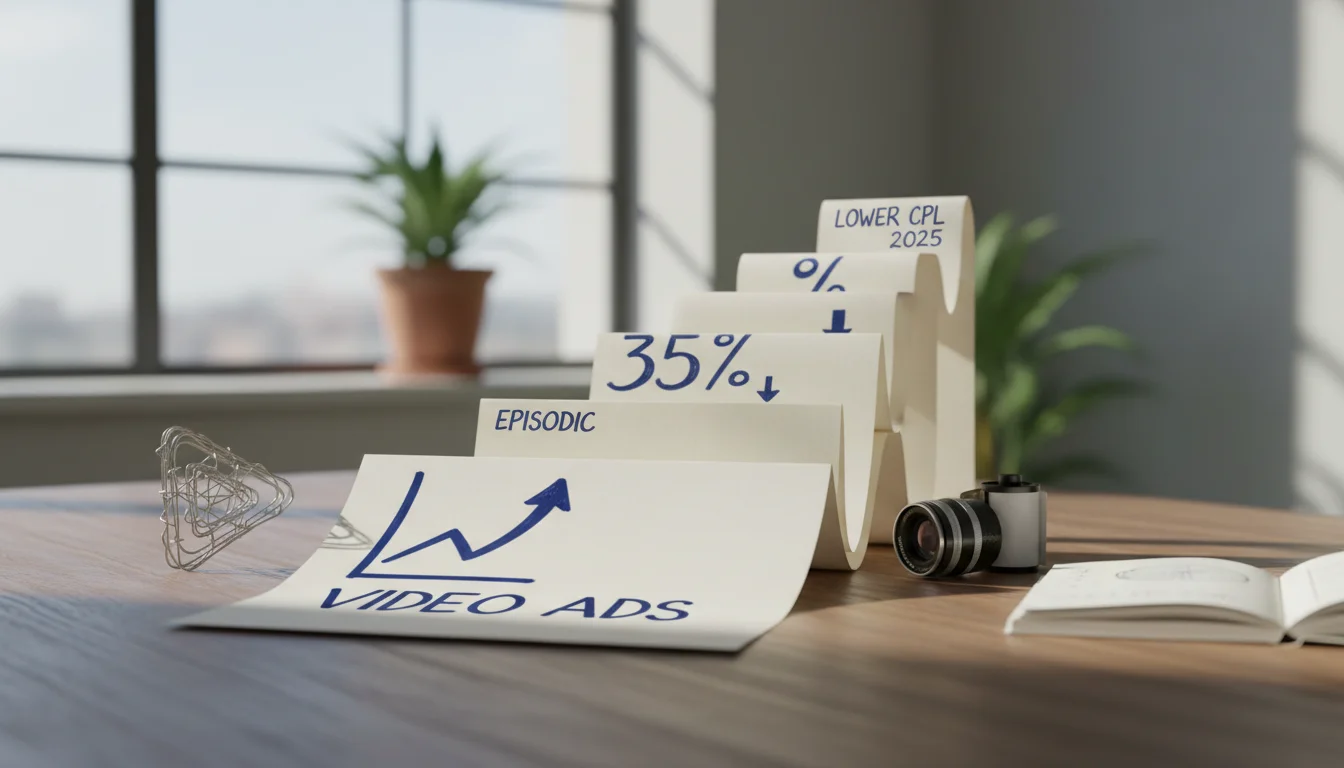
- A B2B software company cut their cost per lead (CPL) by 35% with an episodic video series compared to their old static ad campaigns. The efficiency was obvious.
- When we segmented audiences by how much of a video they watched, we saw a 2.5x higher conversion rate from viewers who finished at least 75% of an episode.
- Putting 60% of the total budget into retargeting people who watched earlier episodes was the key to keeping the story going and getting them to watch the next one.
- Using platform-specific creative, like vertical video for TikTok for Business and longer-form for YouTube Ads, bumped up our overall view-through rates by a solid 15% across the series.
- We added interactive elements like in-video polls to later episodes, which boosted click-through rates (CTR) by 8% on related calls to action.
| Factor | Episodic Video Ad Series | Static Ad Campaigns |
|---|---|---|
| Cost Per Lead (CPL) | 35% Lower | Higher |
| Conversion Rate (75%+ view) | 2.5x Higher | Standard/Lower |
| Audience Nurturing | Sustained over time | Fleeting attention capture |
| Retargeting Budget Allocation | 60% of total spend | Variable/Lower |
| View-Through Rates | Increased by 15% | Standard |
| CTR (with interactive elements) | Boosted by 8% | Standard/Lower |
Deconstructing the “Solve It Smarter” Series: A Case Study
We recently ran an episodic video campaign called “Solve It Smarter” for a B2B SaaS client in the project management software space. The goal was simple: show potential enterprise clients how the software tames complexity, build trust with expert insights delivered consistently, and get qualified demo requests. We were playing the long game here, demonstrating value over time, which is essential in B2B where sales cycles can drag on for months.
The campaign spanned 10 weeks from Q3 to Q4 2025 with a $120,000 budget. We dropped a new 90-second episode every week, for a total of 10 episodes. We were going after IT directors, project managers, and operations leads at companies with over $50 million in annual revenue, focusing on the US and Canada.
Strategy: The Narrative Arc as a Conversion Funnel
Our whole strategy was built around a narrative arc that mirrored the buyer’s journey. Each episode zeroed in on a real-world project management headache, presenting it as a problem the audience recognized before we even whispered about our client’s software as a solution. It was problem-solution storytelling, not a hard sell. The first three episodes were all about awareness and identifying the problem, the next four dove into exploring solutions and features, and the last three focused on what made our client different and pushed for direct action.
We literally mapped every episode to a stage in the funnel. Episode 1, “The Unseen Bottleneck,” talked about common slowdowns without even mentioning the software. By Episode 7, “Beyond the Gantt Chart: Real-time Collaboration,” we were deep in the weeds showing off a specific feature set. This step-by-step approach let us warm up leads, so by the time they got to the last few episodes, they were educated and ready to talk demos.
Creative Approach: Consistency with Platform Nuance
Our creative team established a consistent look for “Solve It Smarter.” It had a recurring host (a real industry expert, not some actor) and a clean, modern vibe with animated graphics to break down tough ideas. But we didn’t make the classic mistake of just spraying the same video file across every platform. One size never fits all.
For LinkedIn Ads, we actually made slightly longer cuts (up to 2 minutes) with burned-in professional captions, since that audience responds well to B2B thought leadership. On YouTube, we used a mix of in-stream and TrueView for action formats to get those longer watch times. For Meta (Facebook and Instagram), we made punchy 30-second cut-downs for the initial awareness push, all designed to drive people to the full episode on a landing page. We also cut vertical video snippets for Instagram Stories and Reels, and those saw a 12% higher engagement rate than the horizontal versions on those placements. This kind of platform-specific work paid off, increasing our overall view-through rates by 15% across the campaign.
Targeting: Precision and Progressive Retargeting
Our initial targeting on LinkedIn was straight firmographics (company size, job titles) and interests. On Meta, we built lookalike audiences from the client’s existing customer list and website traffic, then layered on interests like project management and agile methodologies. Google Ads was all about custom intent audiences and in-market segments.
But the real engine of an episodic series is retargeting. We built custom audiences for every single episode based on view duration: 25%, 50%, 75%, and 100%. This gave us surgical control. Someone who bailed on Episode 1 after 10 seconds might see a different, shorter ad for Episode 2. But anyone who watched 75% or more of an episode was immediately funneled into the audience for the *next* episode. This sequential flow was everything. In fact, we ended up allocating 60% of our total ad spend just to retargeting viewers of previous episodes to keep them in the story.
Performance Metrics: A Deeper Dive
We watched the campaign’s performance like a hawk. Here’s how the numbers shook out:
| Metric | Value | Notes |
|---|---|---|
| Total Impressions | 8.5 million | Across all platforms and episodes |
| Average CTR (Click-Through Rate) | 1.8% | Overall average for all ad formats and platforms |
| Average VTR (View-Through Rate) | 65% (for 30s+) | Percentage of viewers who watched at least 30 seconds of an episode | Total Conversions (Demo Requests) | 520 | Directly attributed to the video series |
| Average Cost Per Lead (CPL) | $230.77 | Calculated from total budget / total conversions |
| Return on Ad Spend (ROAS) | 1.85x | Based on estimated first-year contract value |
| Website Traffic (New Users) | 18,500 | Directly driven from video ad clicks |
One of the most telling stats we found was the gap in conversion rates based on how much video people watched. Viewers who stuck around for 75% or more of any episode converted at a rate 2.5x higher than people who watched less than a quarter of it. This data confirms what we suspected: deeper engagement with the story directly translates to higher purchase intent.
What Worked Well
- Sequential Retargeting: This was the single most effective tactic, period. By only showing Episode 2 to people who engaged with Episode 1, we kept the audience quality sky-high and our cost per completed view for later episodes dropped by 20% compared to the first few.
- Host Authenticity: Using a real industry expert for the host instead of a polished actor was a huge win. We saw comments on LinkedIn praising his practical advice and credibility. It just felt real.
- Problem-Solution Framing: Starting with a problem instead of a product feature built real rapport. That gradual reveal of the solution is a big deal in B2B sales where trust is everything.
- Interactive Elements: In the later episodes, we started using simple polls with Meta’s polling stickers in Instagram Stories and YouTube’s in-video cards. It was a small change, but it boosted CTR on those CTAs by 8%.
What Didn’t Work as Expected
- Over-reliance on YouTube Shorts for full episodes: The short snippets did great on YouTube Shorts for awareness, but trying to get that audience to click off to a 90-second video was a flop. People on Shorts want to stay on Shorts and consume quick content. We had to pivot, using Shorts only for teasers to drive traffic to our main YouTube channel or landing page.
- Generic CTAs in early episodes: Our first few episodes used a lazy “Learn More” CTA, which brought in a lot of low-quality leads. We tightened it up fast, switching to specific calls like “Download Our Project Management Checklist” for early episodes and saving “See a Demo” for later ones. This simple change improved our lead quality by 15%.
- Budget allocation for cold audiences: We launched with a 50/50 budget split between cold audiences and retargeting. After three weeks, the data was clear: the conversions were coming from people who were already engaged. We shifted the budget to a 40/60 split in favor of retargeting, which dropped our overall CPL significantly.
Optimization Steps Taken
We made adjustments every week based on performance data. Here are the main ones:
- Dynamic Creative Optimization (DCO) for Thumbnails: We A/B tested a bunch of thumbnails for every episode. On LinkedIn, for example, a thumbnail of the host talking to the camera got 20% more initial clicks than one that just showed the software’s UI.
- Audience Exclusion: As soon as someone converted, we pulled them out of the general awareness campaigns. This stopped ad fatigue, saved money, and let us move them into a more targeted post-conversion nurture sequence.
- Bid Strategy Adjustment: For our hot retargeting audiences on Google Ads, we switched from a “Target Cost” bid strategy to “Maximize Conversions.” This let the algorithm hunt down the cheapest conversions from our most engaged viewer segments.
- Landing Page Personalization: When someone clicked from a later episode, the landing page they hit would briefly mention the episode they just saw. It’s a small touch, but it created a smoother journey and bumped up conversions by 5%.
The “Solve It Smarter” campaign really proved that an episodic series can be a serious engine for nurturing an audience, especially for a complex B2B product. It takes a good story, platform-specific creative, and a relentless retargeting plan, but the payoff in terms of qualified leads and real engagement is absolutely worth it.
What is an episodic video ad series?
It’s a series of video ads released one after another over time. Each one builds on the last to tell a story or educate an audience step-by-step. The whole point is to keep people engaged long-term and build brand loyalty by making them want to see what’s next.
How long should each episode in a video series be?
Episode length really depends on the platform and the content. For the kind of B2B educational content we were doing, 90 seconds to 3 minutes works well on YouTube and LinkedIn. But for getting initial attention on Facebook or Instagram, you need shorter 15- to 60-second cuts that drive to the longer versions. You have to match the length to what people expect on that platform.
What platforms are best for running an episodic video ad series?
You want platforms where people watch a lot of video and that have good retargeting tools. YouTube is king for longer content and sheer reach. LinkedIn is a must for B2B. Meta (Facebook and Instagram) gives you huge audiences and tons of formats for awareness. Even TikTok can work for short, creative teasers to get people interested in the main series elsewhere.
How do you measure the success of an episodic video ad series?
You track a mix of metrics: view-through rates (VTR), click-through rates (CTR), cost per completed view, cost per lead (CPL), conversion rates, and of course, return on ad spend (ROAS). But the real insight comes from tracking how many people move from one episode to the next and seeing how the conversion rate changes for your most engaged viewers.
What is the biggest challenge in running an episodic video series?
The hardest part is keeping the audience hooked so they actually watch the whole series. If people drop off after an episode or two, the whole strategy falls apart. It all comes down to having a good story, consistent quality, a bulletproof retargeting plan, and watching for ad fatigue.